The xAI Minnesota nudify lawsuit puts Elon Musk’s AI company in the unpleasant but familiar role of challenging a law aimed at a real abuse with language that may reach far beyond that abuse. In a federal complaint, xAI seeks to block Minnesota’s HF 1606, a new law targeting AI systems that alter images or video to depict a person’s “intimate part.”
The law is aimed at so-called nudification tools, apps and models that can make clothed people appear nude or partly nude. Those tools have been used to sexualize people without consent, including minors. xAI’s Grok has drawn criticism for image-generation behavior around bathing-suit and sexualized edits. Grok is a large language model-based product, and prompts are the instructions users send to systems like it; Kernel has an explainer on how LLMs work when they answer a prompt.
xAI’s argument is narrower than a defense of those uses. The company says Minnesota wrote HF 1606 so broadly that it punishes AI platforms even when a depicted adult consents, creates the image themselves, or never distributes the result.
Why is xAI suing Minnesota over the nudify app ban?
According to xAI’s complaint, HF 1606 has no knowledge, intent, or purpose requirement for AI providers. The company says liability turns on whether a user manages to create a covered image with the platform, even if the provider bans that use, deploys safeguards, or tries to police violations.
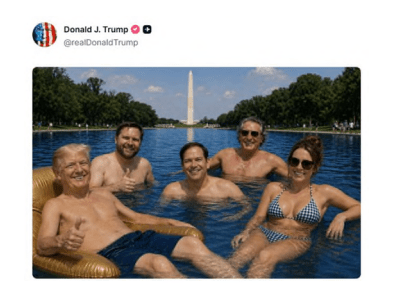
The complaint also attacks the law’s definition of “intimate part.” Minnesota borrowed language from a sexual-contact statute covering the primary genital area, groin, inner thigh, buttocks, or breast. xAI argues that definition can sweep in ordinary images of shirtless men, people in shorts, swimsuits, and other body parts commonly shown in public.
Legal commentator Kathryn Tewson flagged the same problem in examples posted on Bluesky. She wrote that, under her reading, an adult uploading a photo of herself and asking Grok to show her in a bikini could trigger the law. She also pointed to an edit of a performer’s stockings that made legs appear more skin-like as the kind of image that could fall inside the statute’s wording.
The First Amendment issue turns on how much protected speech the state can burden while targeting harmful conduct. Minnesota has been here before. In 2020, the Minnesota Supreme Court upheld the state’s law against disseminating nonconsensual private sexual images, but did so after treating it as a content-based speech restriction that had to survive strict scrutiny.
Strict scrutiny means the government must show a compelling interest and use the least restrictive means, with tight drafting. In that earlier case, the court emphasized limits that HF 1606 allegedly lacks: consent, intent, privacy expectations, and exemptions for areas such as medical treatment, journalism, education, scientific research, and matters of public interest.
xAI says HF 1606 contains no comparable safe harbor for artistic, scientific, political, satirical, educational, medical, or religious value. The complaint also says liability can attach even when the image is never shared.
Minnesota lawmakers have defended the statute. According to KARE 11, state Sen. Erin Maye Quade, the bill’s principal sponsor, said she does not view the law as a free speech issue and described it as regulating conduct rather than art or content. She also said, “Prompts are not art,” and framed the law as protecting children from being turned into child sexual abuse material.
Child sexual abuse material is already illegal under state and federal law. HF 1606, as described in the complaint and the bill text, is not limited to minors. xAI also cites a Senate Judiciary and Public Safety Committee exchange in which a staff member said the prohibition applies to consensual images, and Maye Quade responded that this was intentional.
The lawsuit also gives context for xAI’s recent move against one of its own users over alleged CSAM creation with Grok. xAI’s complaint says its terms of service include indemnity language making users responsible for legal costs tied to their use of the product. The company’s filing signals that if Minnesota pursues xAI over a user’s generated image, xAI may try to pass those costs back to the user.
The case now asks a federal court to decide whether Minnesota’s nudification ban is a permissible regulation of harmful AI conduct or an overbroad speech restriction. The answer will matter beyond Grok, because other states are also trying to write laws for AI-generated sexual imagery without detonating the First Amendment in the process.
This story draws on original reporting from Techdirt.