Police agencies in the United States have used Flock Safety’s camera system hundreds of times to look for people by descriptions such as clothing, body type, accessories and, in some cases, race or political signifiers, according to data reviewed by 404 Media.
The records show a use case far beyond the license plate searches most commonly associated with Flock. The company’s network is known for automatic license plate reader cameras that let officers search for vehicles across jurisdictions. But 404 Media reported that Flock’s FreeForm search feature lets police type natural-language prompts into the system, which then uses AI video analysis to find matching footage across camera networks.
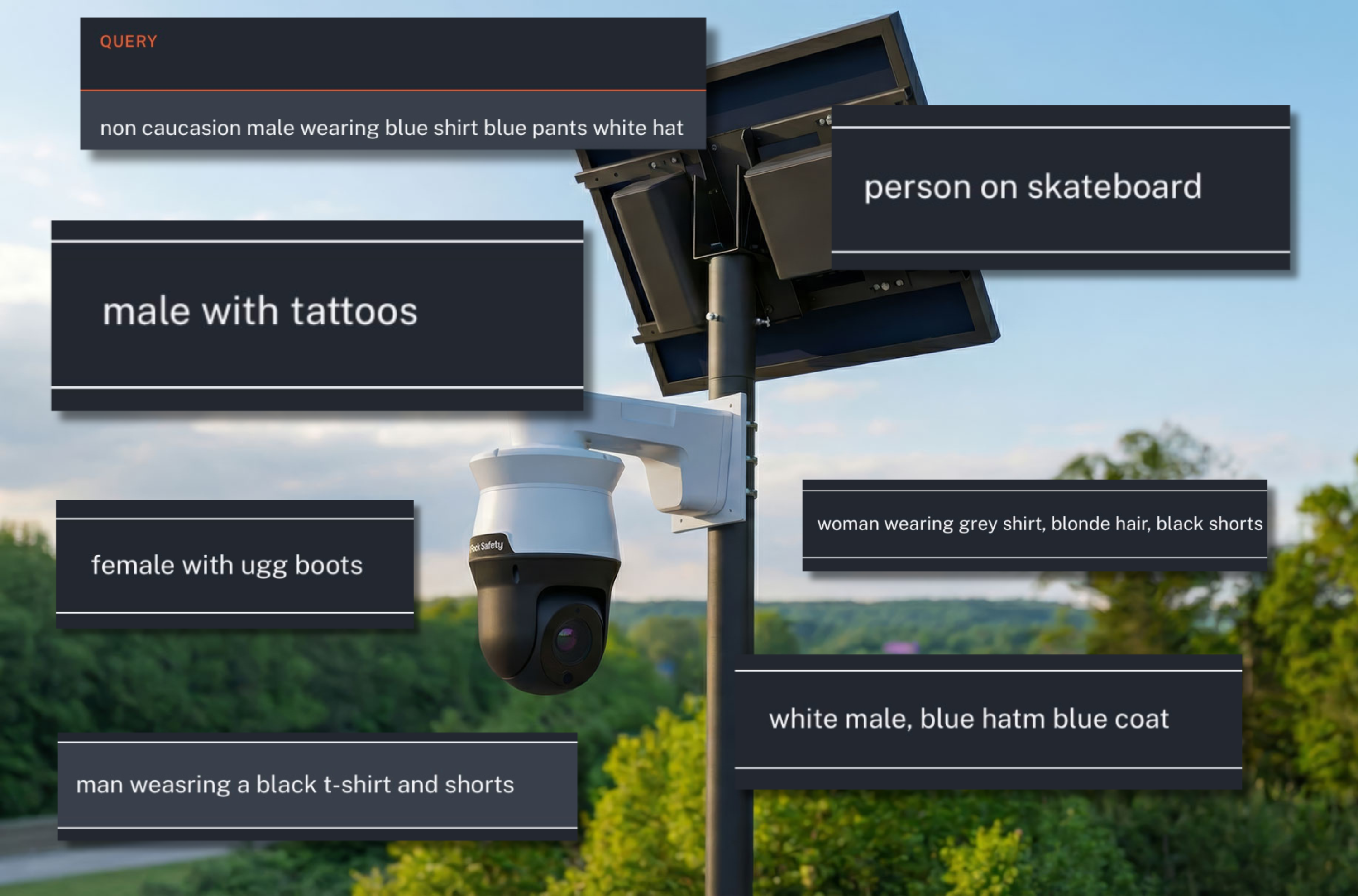
Examples reviewed by 404 Media included searches for a “heavy-set male with a black and white hat,” a “person on skateboard,” and a “person wearing orange vest and construction hat.” Other searches were broader: Dunwoody, Georgia police searched for a “backpack,” “person walking,” and “black sweatshirt,” while Brookhaven, Georgia police searched for a “tall man.”
Some agencies searched large numbers of cameras or networks. 404 Media reported that the California Highway Patrol searched 274 cameras for someone in a gray shirt. Milford, Connecticut police searched more than 100 cameras using terms including “male with tattoos,” “male with brown hair,” and “woman blue shirt.” The Texas Department of Public Safety searched 96 camera networks for a man in a black T-shirt and shorts, according to the data.
Other entries referenced race. 404 Media reported that the California Highway Patrol searched for a white male with a detailed physical and clothing description. Atlanta police searched for a “non caucasion” male wearing blue clothing and a white hat, according to the records. One Anne Arundel County, Maryland police search across 198 networks referenced a white Jeep with a Trump flag.
How the searches work
404 Media said it reviewed data collected by HaveIBeenFlocked.com, which compiles Flock-related records obtained through public records requests. The relevant spreadsheets, called Network Audits, can show when an officer queried Flock cameras, how many cameras were searched and the stated reason for the query.
A field called “text_prompt” shows FreeForm searches. Those prompts can describe vehicles, but 404 Media found many that describe people. Some records listed the reason as an investigation or missing-person case; other reasons were redacted.
Flock announced FreeForm in February 2025, with its public description focused on vehicle evidence, according to 404 Media. The company primarily markets the feature for its Condor video cameras, which are distinct from its license plate readers. Flock’s website says those cameras include people detection alerts and a mode that automatically zooms in on people and vehicles.
Flock told 404 Media that FreeForm is meant to help investigators search large volumes of footage when they have limited information, including witness descriptions of a person or vehicle. The company said the feature is not facial recognition, cannot identify a person by name and cannot search for a particular face. Flock also said it has no facial recognition technology in development.
The company said FreeForm has restrictions, including blocks on searches for attributes such as race, ethnicity, religion and nationality. Flock told 404 Media that attempts to search those attributes generate alerts for agency administrators. The records reviewed by 404 Media nevertheless included searches that described race.
Civil liberties groups warn of broader surveillance
Jay Stanley, a senior policy analyst with the American Civil Liberties Union’s Speech, Privacy, and Technology Project, told 404 Media that AI video analysis has made surveillance footage searchable in ways that can include sensitive visual details, such as shirts, tattoos and bumper stickers. He said that capability expands surveillance even without facial recognition.
Beryl Lipton, senior investigative researcher at the Electronic Frontier Foundation, told 404 Media that searching video like a search engine increases the risk that people doing nothing unlawful are observed by police and potentially treated as suspects.
Tom Bowman, policy counsel for security and surveillance at the Center for Democracy and Technology, told 404 Media that cities were often sold Flock as a tool for stolen cars and missing children, while the system now supports searches for people across many camera networks.
The FreeForm findings follow earlier 404 Media reporting on Flock. In May 2025, the outlet reported that Flock had planned to use hacked data in a people lookup tool, a plan the company later dropped after coverage and internal pressure. In December 2025, 404 Media reported that at least 60 Flock Condor people-tracking cameras were exposed to the public internet, allowing real-time viewing.
This story draws on original reporting from 404 Media.