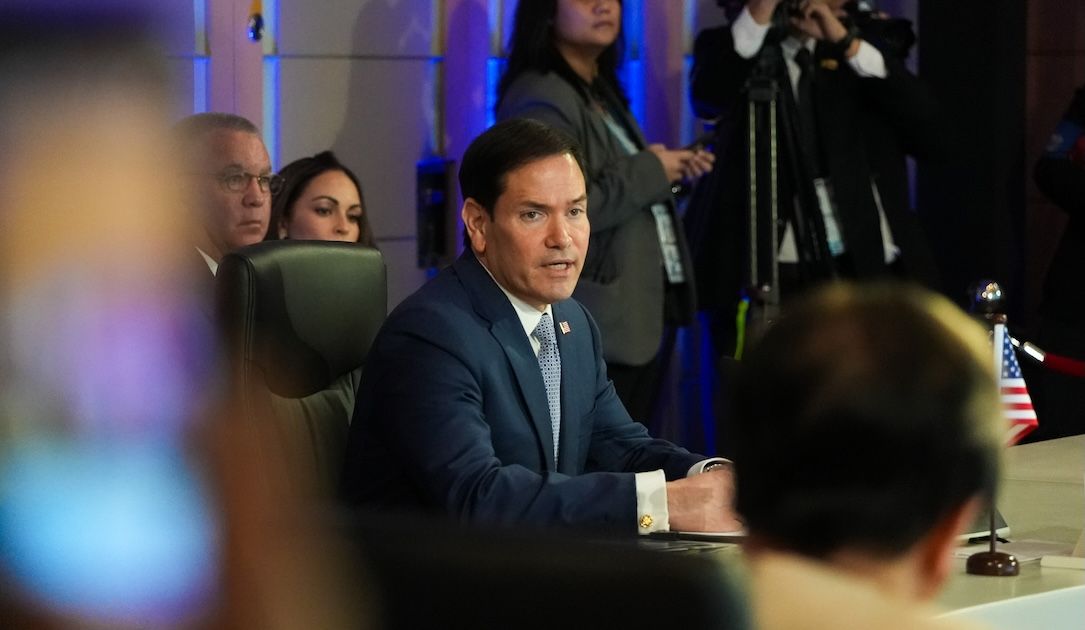
The State Department cyber scammers visa restrictions announced Thursday give U.S. officials another immigration tool against foreign cybercrime networks, including people accused of running or helping cyberscams and sextortion schemes. Secretary of State Marco Rubio said the policy also covers immediate family members of those targeted.
Rubio announced the policy on the final day of a trip to the Philippines for meetings with the Association of Southeast Asian Nations. Southeast Asia has become a major center for industrialized scam compounds, where criminal groups run online fraud operations at scale and, in many cases, rely on trafficked workers.
The State Department said Rubio discussed scam centers Thursday with Cambodia’s foreign minister. FBI Director Kash Patel also held separate meetings with regional leaders this week on efforts to combat those operations, according to ABC News.
Who can be denied a U.S. visa under the cyber scam policy?
Rubio said the restrictions apply to people responsible for, or complicit in, cybercrime and cyber-enabled crime, including cyberscams and sextortion. The State Department said immediate family members may also be affected, a familiar pressure tactic when Washington wants to make overseas enablers less comfortable parking themselves or their families in the United States.
The policy follows President Donald Trump’s March executive order focused on cybercrime, fraud and predatory schemes. Rubio framed the visa move as part of an effort to deter and dismantle scam networks that target Americans.
According to Rubio, Chinese transnational criminal groups are often behind these scam operations. He said the enterprises can also involve human trafficking and money laundering. The U.S. government estimates that such scams cost Americans $10 billion in 2024.
A report released this week by the U.N. Office on Drugs and Crime said criminal syndicates in the region have become more sophisticated and more connected in recent years. The U.N. agency said those groups have combined drug production and distribution, cyber-enabled fraud, trafficking in persons, underground banking and real estate investment inside shared operational and financial systems.
That matters because these scams are not just call-center grifts with better laptops. The U.N. description points to integrated criminal infrastructure: fraud teams, money movement, forced labor and investments that help wash proceeds through the broader economy.
How do visa restrictions fit into U.S. cyber policy?
Visa restrictions do not seize servers, arrest suspects or return stolen money. They let the State Department deny entry to named categories of foreign nationals, which can raise the personal cost for operators, facilitators and their families when U.S. prosecutors or local police cannot easily reach them.
Rubio said the United States is sending a message that it will pursue people who prey on U.S. citizens by restricting visas for those tied to the criminal enterprises.
The State Department has used the same basic playbook in other technology abuse cases. In February 2024, then-Secretary of State Antony Blinken announced visa restrictions for people involved in the misuse of commercial spyware, a policy that also extended to immediate family members.
This story draws on original reporting from The Record.