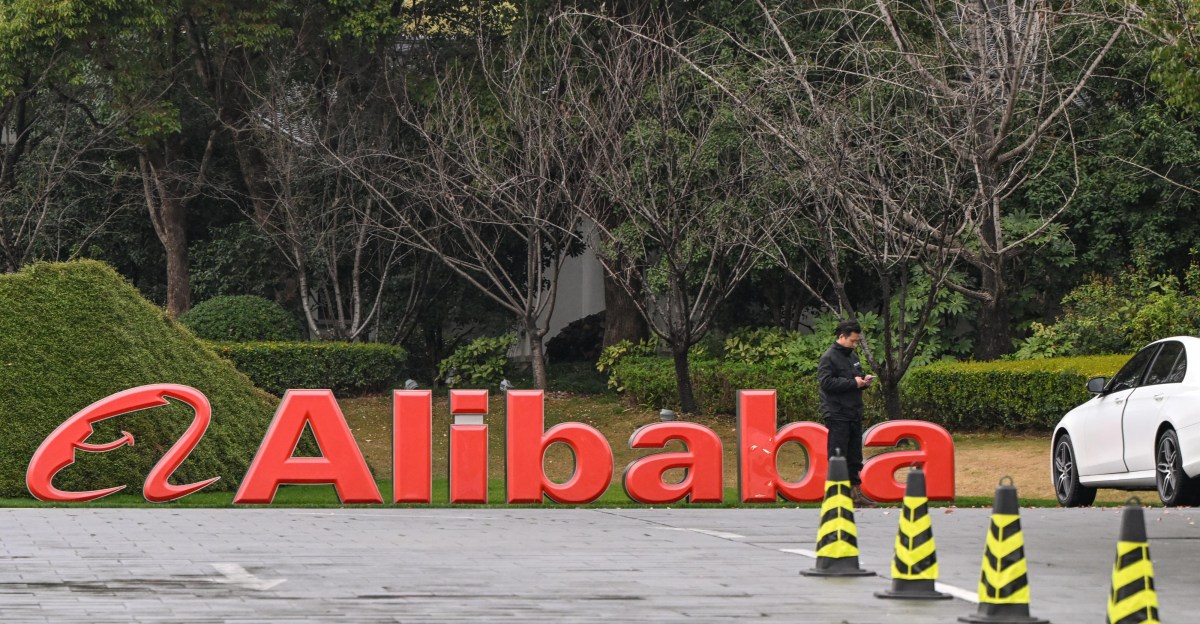
Alibaba Qwen3.8-Max is the Chinese company’s newly announced flagship AI model, and Alibaba says it is its largest and most capable system so far. The company says the model can contend with leading U.S. systems from Anthropic and OpenAI, a claim that matters in the widening U.S.-China AI contest but is not independently settled by a launch post.
Alibaba says Qwen3.8-Max contains 2.4 trillion parameters. Parameters are the learned numerical settings a model uses to identify patterns and generate outputs. They are part of what makes a large language model work, though a bigger count alone does not establish that one model is better than another. LLMs generate responses from learned parameters and the prompt context, not from a parameter total on a spec sheet.
Reuters reported that Moonshot AI’s Kimi K3 has 2.8 trillion parameters. Both systems are reported to handle text, images and video, with context windows of up to 1 million tokens. That permits a model to take in a large amount of material in one request, such as lengthy documents or a software codebase.
How does Alibaba Qwen3.8-Max compare with Anthropic models?
Alibaba’s internal testing says Qwen3.8-Max broadly matched, and in some tests exceeded, Anthropic’s Fable 5, according to The Verge. That is a company result, not an independent verdict, and should be treated accordingly.
A separate signal comes from Arena.AI, which Reuters and The Verge describe as a crowdsourced model-comparison platform. The reporting places Qwen3.8-Max behind Fable 5 and three Anthropic Opus variants on its text-model leaderboard, while placing it second globally in visual analysis behind a Fable 5 variant. Reuters also reported that it was the highest-ranked Chinese model for text on the platform. Those standings are a comparison signal, not conclusive proof of overall capability.
Alibaba says the model uses a mixture-of-experts design, which routes a request through specialized parts of the system rather than activating the full model every time. The company says 95 billion parameters are active at once, out of the 2.4 trillion total, reducing serving costs and response delays. That efficiency assertion is Alibaba’s, not an independently verified operating-cost measurement.
Why does the Qwen3.8-Max release matter?
The announcement lands amid a run of Chinese models from companies including Alibaba, Moonshot, DeepSeek, Tencent, Zhipu AI and MiniMax. Chinese companies have become a significant force in open-weight AI models, Reuters reported. Open-weight means the learned settings can be made available for others to download and adapt, unlike the closed models offered by companies such as OpenAI, Anthropic and Google.
The strategic argument goes beyond a single benchmark. A CNBC op-ed contends that the U.S.-China contest includes cost, deployment, customization, financing, standards, developer adoption and global reach alongside raw model performance. That is analysis, rather than a scorecard, but it explains why another competitive Chinese model release draws attention in Washington and Silicon Valley.
There is one mundane but relevant loose end: reporting differs on access. The Verge said Alibaba made Qwen3.8-Max widely available to users, while Reuters reported that it was due to be released the following week through Alibaba Cloud’s Model Studio. The available reporting does not resolve that discrepancy.
This story draws on original reporting from The Verge.