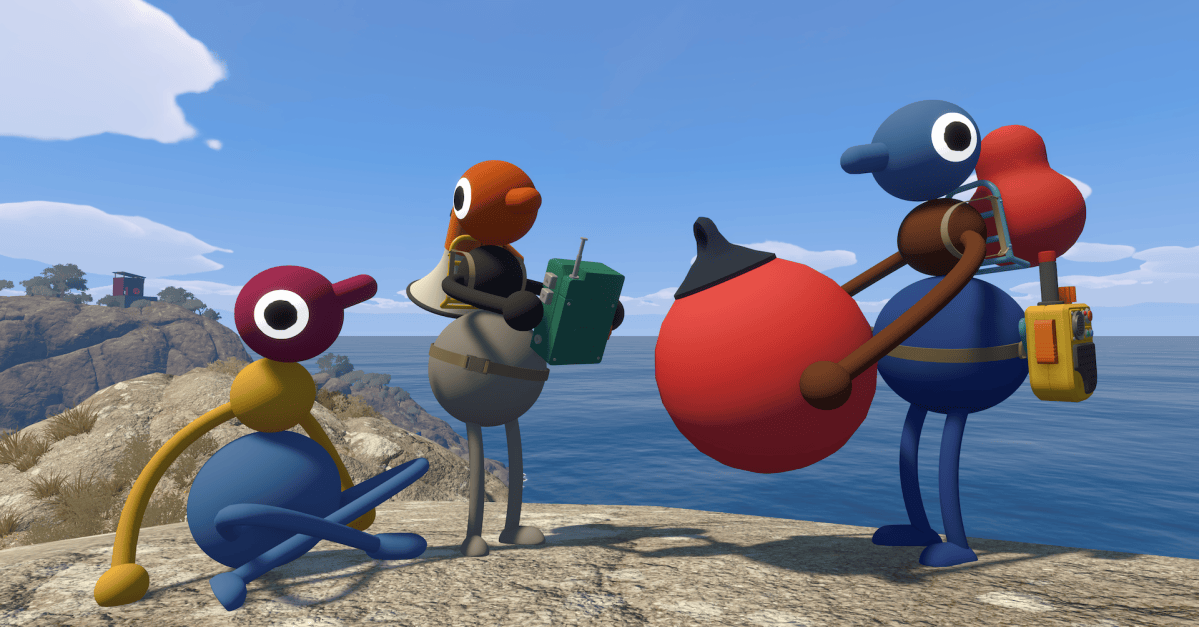
Big Walk AI use is now at the center of an awards dispute after a group of Independent Games Festival jurors said they will not vote for any game that uses generative AI in any capacity. House House, the developer of Big Walk, responded by disclosing limited use of large language model chatbots during the game’s late development, according to statements reported by Aftermath and The Verge.
The signatories’ stance is their own voting position, not an IGF rule. The group said it does not speak for the festival as an organization or for every jury member. It said this year’s submissions included a significant increase in games developed with generative-AI tools, prompting extensive disagreement among judges and jurors without a shared conclusion.
That distinction is doing a lot of work here. The available statements do not establish an IGF-wide ban, a finding that Big Walk is ineligible, or a campaign to boycott the game. They describe a fight over what an individual juror believes an award vote should endorse.
What did House House say AI was used for in Big Walk?
House House said LLMs were used sparingly near the end of development to investigate difficult technical problems and bugs. In some cases, the studio said, a response from an LLM provided a starting point for code that developers later changed. House House estimated that this use was connected to well under 0.1% of Big Walk’s code and said generative AI was not used elsewhere in making the game.
The studio described its main use as chatbot-assisted research into problems with third-party code. In one example, House House said it was trying to fix a Unity Universal Render Pipeline shadow-rendering problem that slowed the game at sunrise and sunset. After its own research and a discussion with a Unity engineer did not produce a solution, the studio said an LLM suggested a possible fix. Developers substantially altered that suggestion, and House House said the resulting change was about 10 lines of code in URP.
House House said it had included a version of the disclosure in its IGF submission. It said it had not posted the information on Steam because the platform does not request disclosure of code or chatbot use, and published the fuller account once the issue became a matter of public interest.
Why are some IGF jurors rejecting AI-assisted code?
The jurors’ statement says their objections apply to AI-generated code as well as AI-generated art, writing, music, voice work and marketing materials. The signatories cited what they describe as ecological, economic, cognitive and psychological, information-system, and labor harms from generative AI. They argued that programming is creative labor and that code should not receive a special exemption from those concerns.
The group urged the IGF to adopt a future policy barring games containing AI-generated work. That request is not the same thing as an adopted policy.
House House said its disclosure was not an endorsement of AI tools. The studio also said it was concerned that voluntary disclosure could help normalize their use. It acknowledged that Big Walk was made without an internal AI-use policy, called that a failure, and said it would work toward a more comprehensive policy for future projects. The immediate argument, then, is unusually specific: whether a small amount of LLM-assisted, subsequently modified troubleshooting code crosses a line that some award jurors have decided to draw at any use.
Readers can review House House’s detailed account as reported by Aftermath.
This story draws on original reporting from The Verge.