Canva has released the Canva Craft image model, its first in-house image generator, to all users globally through Dream Lab. The company says Craft converts a prompt into a design plan before it renders an image, an approach intended for work where placement, scale and readable words matter as much as the picture itself.
The launch was reported on October 22. Canva is entering a field already crowded by image models from companies including OpenAI, Google, Meta and ByteDance. The confirmed part is the product release and its stated workflow. The claims about better images are Canva’s, and the available reporting includes no independent hands-on testing or benchmark method that verifies them.
How does the Canva Craft image model plan a design?
Canva describes Craft as a two-stage system. First, it interprets the user’s prompt and produces a plan covering the spatial relationship between elements, their relative size, visual hierarchy and information needed to generate text. It then uses that plan to generate the image.
That is a more concrete description than the usual “understands your prompt” boilerplate. A request for a poster, for example, requires the system to decide where the headline sits, how prominent it should be and where any objects belong before it attempts the final image. Canva says the process gives users more precision, consistency and control.
The company further says the system improves object accuracy and text legibility in complex images, and can support targeted edits without disturbing other parts of an image. Those outcomes have not been independently established in the supplied reporting.
Where is Craft available, and what can it generate?
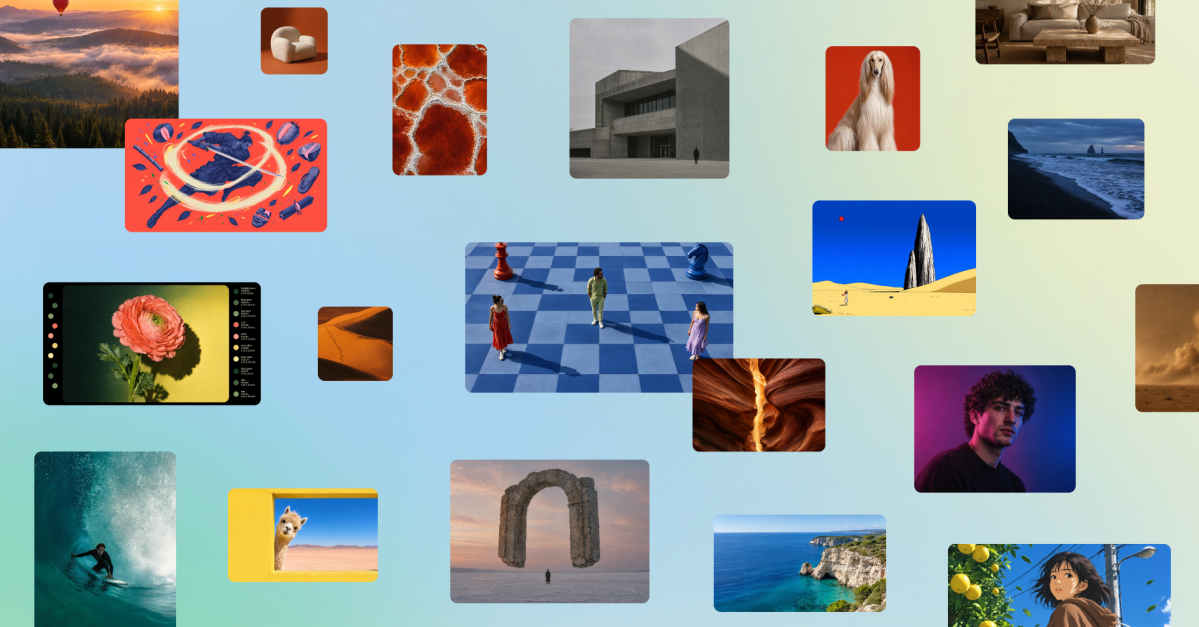
Craft is available in Dream Lab for all Canva users worldwide. Canva says it can produce images at up to 2K resolution and supports roughly 30 or more aspect ratios. The company says it built the model for outputs ranging from social posts and marketing material to realistic scenes, art and environmental imagery.
Canva said it trained Craft using millions of human-made templates from its library, including posters, social posts, presentations, infographics, menus and typography-heavy layouts. TechCrunch reported that Canva described those materials as designs rather than photographs; the reporting does not establish that they were the model’s only training data.
The model follows Canva’s earlier additions of prompt-based design editing and layers for AI-generated images, which are meant to let users alter one area while retaining the rest. Canva acquired Leonardo.ai in 2024, and said researchers from that company contributed to Craft.
Canva also says Craft includes input and output moderation, privacy and safety controls, and reporting tools. It plans integrations through its API and Model Context Protocol support, including possible use by third-party chatbots. Two lower-cost versions, Craftfast and Craft-ultrafast, are in development, according to the company; no release date was reported.
This story draws on original reporting from The Verge.