Chinese open-weight AI models are forcing a fresh argument inside the AI business after Moonshot AI said it plans to release the weights for Kimi K3 for free, according to The Verge. The Chinese startup’s model is being watched in Silicon Valley because it is said to rival some leading US systems at far lower cost, while also being aimed clearly at US users.
The Verge reported that Kimi K3’s arrival has intensified concern among American AI companies about whether closed, proprietary models can keep their advantage as capable open alternatives spread. The companies named in that debate are the obvious incumbents: OpenAI, Google and Anthropic, all of which sell access to models whose internals and deployment options are tightly controlled.
Moonshot’s move matters because model access is not just a branding fight. Developers choosing between an open-weight model and a locked API are also choosing who controls infrastructure, pricing, customization and product risk. If a model can run on a company’s own machines and be adjusted for a specific job, the API landlord has less leverage. Funny how that part rarely makes it into the glossy benchmark chart.
What are open-weight AI models?
Open-weight AI models make the trained model weights available, giving developers more control than they get from a proprietary service. The Verge reported that this can let developers examine how the system works, run it locally, customize it and build products without relying on one outside provider.
That does not mean Kimi K3 is fully open source. The Verge noted that Kimi K3, like other open-weight AI models, falls short of traditional open-source software. The Open Source Initiative’s definition says source code must be available for free use, modification and redistribution, with openness preserved downstream. AI models are messier than ordinary software, and very few meet that standard in the classic sense.
The distinction is more than pedantry. Open weights can be valuable without handing over every ingredient needed to recreate the system. A lab may disclose enough for developers to run and adapt the model while still withholding other parts of the training process, data pipeline or source code. That makes “open” a spectrum in AI, and vendors have been happy to blur the line when it helps marketing.
Why would Moonshot release Kimi K3’s weights for free?
The Verge framed the question as the core tension around Moonshot’s strategy: why spend heavily to train a model and then give away some of its most valuable components? The report does not provide Moonshot’s full business rationale, so the confirmed fact is narrower: Moonshot plans to make Kimi K3’s weights free, and that decision is making US rivals rethink what they keep locked down.
The pressure comes from the economics. Open-weight systems are often cheaper for developers, according to The Verge, and they reduce dependence on a single AI provider. If models from Chinese labs such as Moonshot can compete on capability while being easier to control and cheaper to use, US companies built around closed access may have to justify their restrictions with more than a login screen and a pricing page.
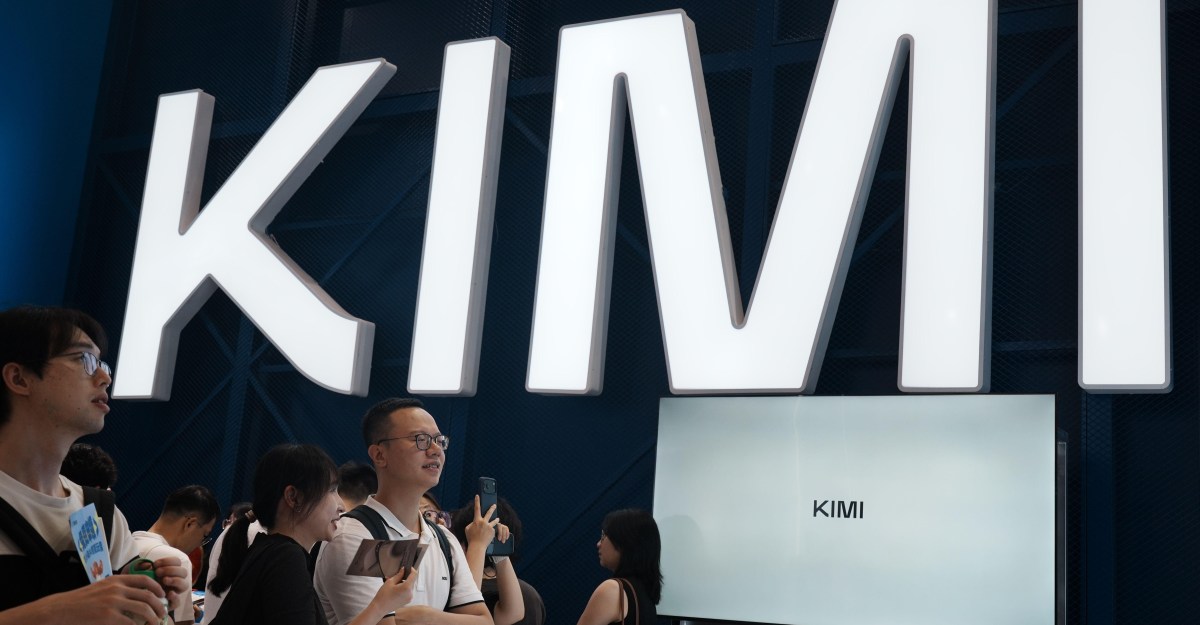
Kimi’s public presence is also not theoretical. A Kimi booth appeared at the World AI Conference in Shanghai on July 20, according to a Getty Images caption cited by The Verge. The product is being presented in public while the fight over openness, cost and control moves from research labs into the developer market.
This story draws on original reporting from The Verge.