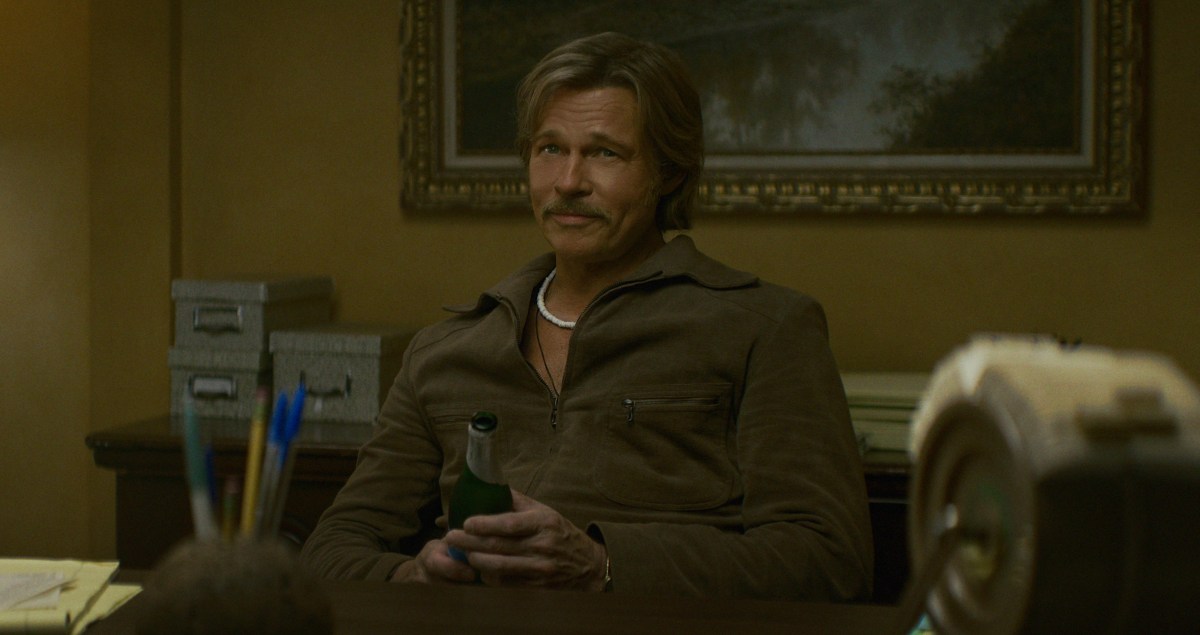
The David Fincher Cliff Booth AI controversy rests, for now, on audience suspicion rather than a confirmed production disclosure. Viewers who attended early critics’ screenings of The Further Mis-Adventures of Cliff Booth said online that parts of the film looked uncanny or visually inconsistent. Netflix had neither confirmed nor denied that generative AI was used in making it, according to The Verge.
The reaction arrived ahead of the film’s November 25 premiere. Fincher directed the Brad Pitt-starring follow-up to Once Upon a Time in Hollywood, but the reported objections have focused on particular images, not on a documented account of the movie’s visual-effects workflow.
Was AI used in David Fincher’s Cliff Booth film?
There is no confirmation in the available reporting that generative AI was used in The Further Mis-Adventures of Cliff Booth. Netflix had not said whether AI played any role, The Verge reported. That matters because the online argument has outrun the evidence: claims about what viewers saw are not the same as a credit, a production statement, or a technical explanation from the filmmakers.
YouTuber and director Patrick Tomasso was among the people alleging AI use after seeing the film. In posts on X, he said he believed the production contained conspicuous examples of AI-generated material and argued that footage in its trailers showed it. Other commenters made similar allegations.
Some critics offered a less novel explanation: the images being identified as AI could be conventional CGI that did not land particularly well. The reporting does not settle that disagreement.
What made viewers suspect AI?
The complaints centered on imagery that viewers characterized as strange or internally inconsistent. One trailer includes a shot that appears to show passengers seated backward in a horse-drawn carriage, according to The Verge. That image has fueled the speculation, though trailer footage alone does not establish how a shot was made.
Netflix’s production involvement and its recent investments in generative-AI technology also helped feed suspicion among some viewers, The Verge reported. Neither fact demonstrates that the technology was used on this film. A company can invest in a tool without deploying it on every production, a distinction that has been conspicuously absent from parts of the social-media pile-on.
What did Fincher actually say about AI?
Fincher’s recent comments to the Los Angeles Times were broad remarks about artistic and technical change, not a stated admission about Cliff Booth. He said he was not a “Luddite” who feared the unknown and questioned whether filmmakers should stop revising their methods when new capabilities exist.
Those comments may explain why some viewers read the trailer and screening reports through an AI lens. They do not answer the narrow factual question of whether generative tools were used in this production. Until Netflix, Fincher, or the film’s production team provides specifics, the alleged AI use remains unverified.
This story draws on original reporting from The Verge.