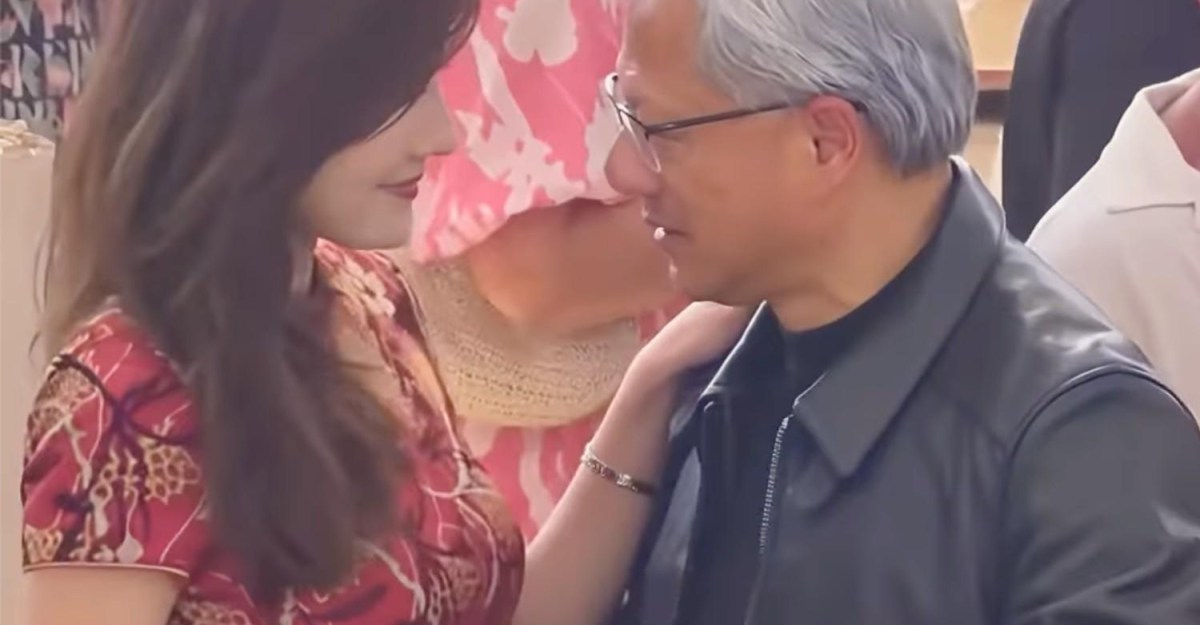
Jensen Huang deepfakes are spreading across social platforms in two very different forms: conspicuous meme remixes that place the Nvidia co-founder in familiar entertainment clips, and fabricated posts that make false claims about him. The distinction matters because the same AI-video churn can produce a joke, a fake statement or a bogus political image, and the clip itself does not settle which one it is.
The Verge reported on November 24 that creators had inserted Huang into the existing “Ibiza Final Boss” club meme, scenes resembling The Office, George Michael’s “Careless Whisper” video and the Coldplay concert kiss-cam format. An Instagram Reel using the Ibiza template had nearly 6 million views, according to the outlet.
The account behind that Reel made three Huang versions of the same scene, each of which drew millions of views, The Verge reported. An unnamed creator told the publication he had spent thousands of dollars on AI-video generation, naming ByteDance’s Seedance 2.5 and Alibaba’s Wan 3 among the models he used. That is the creator’s account, not an independent audit of how any particular clip was made.
How do Jensen Huang deepfakes differ from false AI posts?
The reports describe many video remixes as memes or jokes, but visual absurdity is not a dependable fact-checking tool. A practical distinction is whether a post also presents a verifiable factual assertion, such as claiming a person made a statement, took a job or participated in a political event. Viewers need to check that accompanying claim and its source rather than infer authenticity from a video’s format.
France 24 identified several examples in the second category. It reported that an audio recording attributed to Huang’s wife, Lori Huang, was not authentic; NewsGuard’s voice detector assessed the audio as having a 99% likelihood of AI generation. France 24 also reported fake LinkedIn profiles claiming Huang had taken a job in China, stepped back to focus on family, or returned to work at Denny’s.
The outlet further found that an image purporting to show Huang alongside Donald Trump and Elon Musk pledging allegiance to the Chinese Communist Party was AI-generated. It said there was no evidence that the depicted event occurred or appeared on China’s CCTV.
Why are familiar clips being reused?
The reported creators reused recognizable video templates and issued variants while Huang was a timely subject. The Verge’s examples show how a public figure can be dropped into a clip audiences already recognize, then circulated as another variation on the same joke. That reuse is visible in the Ibiza sequence, not proof that any one format caused its reach.
There is an unpleasant industry in-joke here. The Verge reported that video-diffusion models in many cases rely heavily on Nvidia’s technology stack, while Nvidia GPUs power much of the generative-AI industry. That does not establish which hardware produced each Huang video. It does explain why the wave has been framed as ironic: a company central to AI computing is seeing its co-founder become raw material for the output.
WeRSM, commenting on the trend, said some of the meme language included sexist portrayals and racist “honeypot” stereotypes involving Asian American women. That is a critique of material in this wave, not a rule about AI parody generally. The more defensible takeaway is narrower: synthetic posts require scrutiny when they claim to document real speech, employment, conduct or political allegiance.
This story draws on original reporting from The Verge.