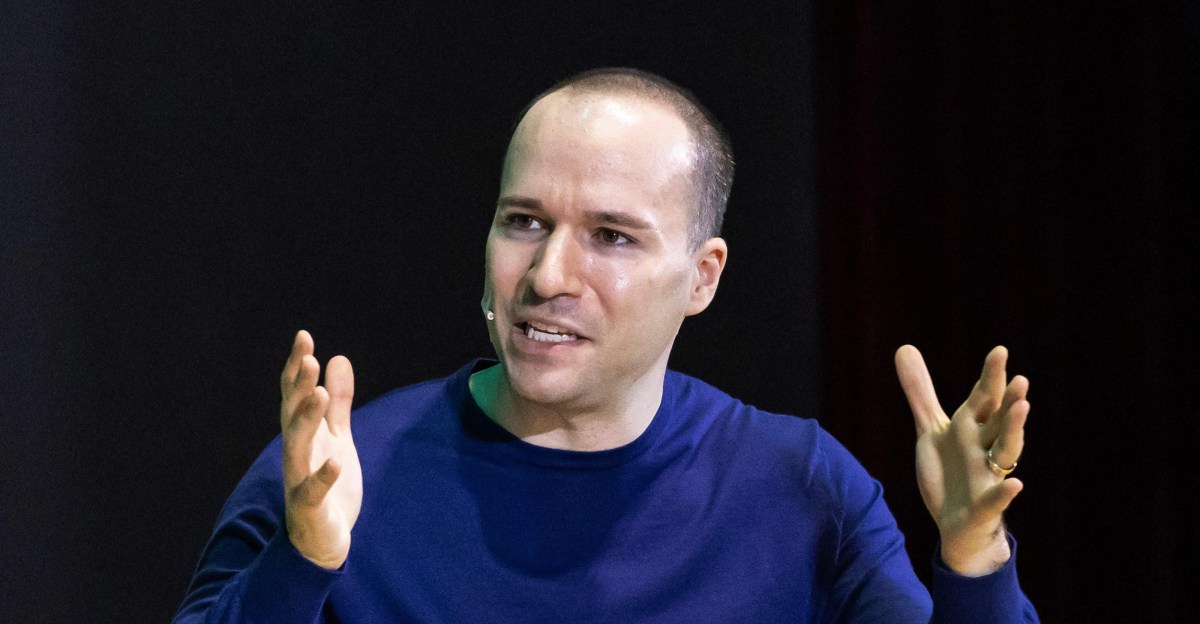
OpenAI hardware devices are no longer just rumor fuel. OpenAI president Greg Brockman told Joanna Stern in a YouTube interview that the company is working on a “family of devices” meant for interacting with its AI models. He did not say what the devices are, when they will ship, or how much they might cost.
Brockman’s comment puts a little official weight behind months of speculation about OpenAI’s hardware plans, while carefully avoiding the parts people actually want confirmed. The Verge has reported that OpenAI is rumored to be preparing a smart speaker for 2027. Earlier rumors suggested the company could be exploring a wearable device, in the general zone of Humane’s AI Pin. Brockman confirmed neither idea.
Asked for timing, Brockman only said people could expect the devices “soon.” In hardware, “soon” is not a launch window. It is a fog machine.
What OpenAI hardware devices is it building?
Brockman described the work as a “family of devices,” which suggests more than one form factor, but he did not identify any specific product. Based on what he said, the confirmed fact is narrower: OpenAI is building hardware for people to use its AI systems outside the standard chat box.
The obvious bet is voice. Brockman said he expects people to talk to computers rather than type for the “vast majority” of tasks. That would make OpenAI’s device work less about making another screen and more about putting its chatbot interface into microphones, speakers, wearables, or some other object the company has not named.
That shift would also change the operating assumptions around AI assistants. Typing to a chatbot is private enough in an office if your screen is not being watched. Speaking every calendar edit, search query, and half-formed email draft out loud is a social and privacy mess. Brockman acknowledged the open-office problem by pointing to soundproof “beak” masks that some people have started using for voice interactions. He said he does not use one, and said that while people agree the masks are not a good answer, their existence shows demand for the use case.
OpenAI’s models are software systems trained to predict and generate responses from prompts. For readers who want the machinery rather than the magic trick, Kernel has an explainer on how LLMs answer prompts.
How does Apple’s lawsuit fit into OpenAI’s device plans?
Stern also asked Brockman whether Apple’s lawsuit against OpenAI could affect the company’s hardware work with former Apple designer Jony Ive. Brockman said OpenAI is focused on its own development and technology, and said the company has no interest in other companies’ trade secrets.
His answer did not add specifics about the lawsuit or OpenAI’s collaboration with Ive. It did show the line OpenAI wants to draw: its device plans, according to Brockman, are being built from OpenAI’s own ideas rather than information taken from rivals.
Brockman also addressed trust problems around OpenAI’s AI systems. One example raised in the interview was whether ChatGPT’s temporary chat mode is as private as users expect. Brockman said OpenAI is working on technical ways to provide “verifiable, auditable guarantees” that only the AI can inspect users’ private data.
That promise is still a goal, not a shipped guarantee described in technical detail. If OpenAI wants people talking to its models through new hardware in homes, offices, and public spaces, the company will need more than sleek industrial design. It will need to prove where the audio goes, who can review it, how long data persists, and whether “temporary” means what ordinary users think it means.
This story draws on original reporting from The Verge.