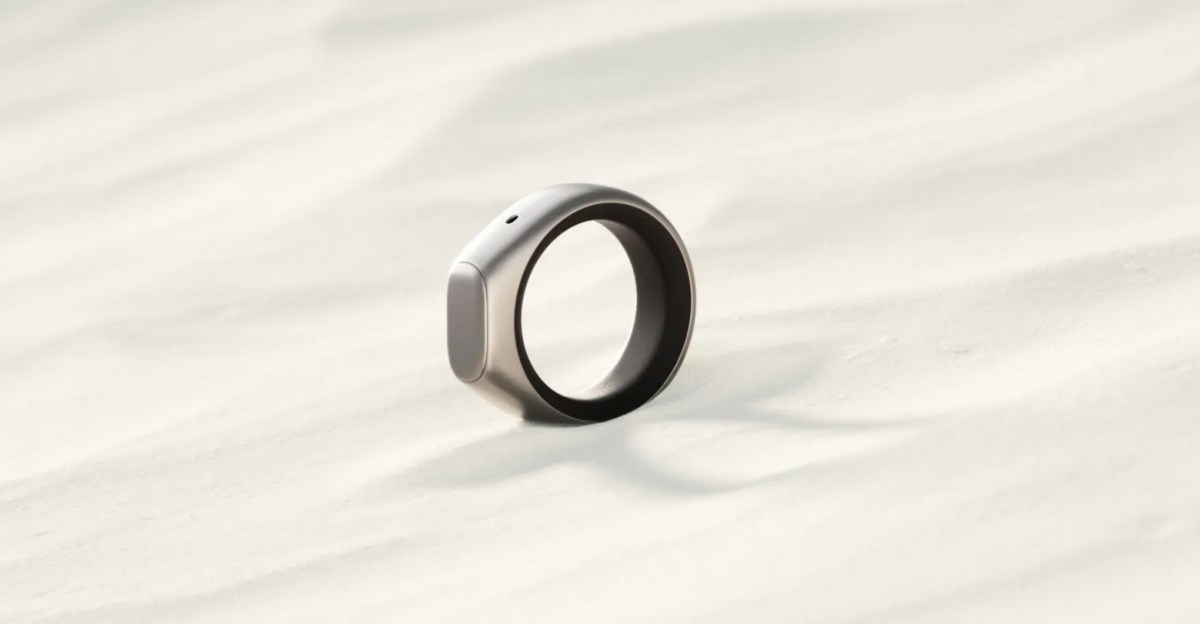
Sandbar Stream ring dictation is the company’s latest pitch for an AI wearable that does less theater and more input. Sandbar CEO Mina Fahmi demonstrated a new dictation feature for the Stream, a smart ring due to ship later this year, according to The Verge’s David Pierce.
In the demo, Fahmi opened Apple Notes, brought the ring near his mouth, pressed its touchpad with his thumb and spoke quietly. Pierce reported that two complete, accurately transcribed sentences appeared in the note shortly after Fahmi finished speaking.
Fahmi also posted on X on July 16 that Stream’s “Universal Dictation” supports push-to-talk dictation across iOS and Mac without switching apps or reconnecting. During the demo reported by The Verge, Fahmi loaded new firmware onto the ring, paired it with a Mac and an iPhone, and dictated text into one device and then the other. He did not explain how the connection works.
What is the Sandbar Stream ring?
Stream is a smart ring built around a microphone, battery and Bluetooth connection to a phone, according to The Verge. Its three advertised jobs are starting a chat with an AI assistant, taking notes and dictating text.
That makes Stream different from the pocket recorders and clip-on devices being sold by companies such as Plaud, Pocket, FoCase and Mobvoi, which are often pitched for recording meetings or calls and generating summaries. Sandbar’s approach, as described by Fahmi, is aimed at capturing the wearer’s own voice rather than the room.
Fahmi told The Verge that the idea came from walking and wanting a faster way to capture ideas or ask an AI assistant for something without pulling out a phone. The current Stream experience relies heavily on a companion app, but Fahmi said Sandbar’s longer-term goal is for the ring to work with the tools people already use, including note apps, assistants and ordinary text fields.
Why use a ring for AI dictation?
A ring puts the microphone close to the mouth without requiring the user to hold a phone, wear glasses or speak loudly into earbuds. The interaction is mechanical and blunt: raise hand, press control, talk. For a product category full of devices pretending to be companions, that is refreshingly unromantic.
The hard part is not the ring hardware. As Pierce noted, the device is basically a close-range microphone with a wireless link. The transcription and AI processing happen elsewhere, on the phone, Mac or cloud-connected software stack the user is already carrying around. That also means the product will live or die on latency, accuracy, privacy choices and whether it can enter text where users actually need it.
Sandbar is not alone. Pebble founder Eric Migicovsky has introduced the Index 01, another smart ring designed for quickly capturing ideas, reminders and notes. Vocci is also working on a more meeting-focused ring. The Verge noted that existing smart ring makers such as Oura and Ultrahuman could add similar microphone-based features over time, though no such plans were confirmed in the report.
For now, many of these AI rings remain unfinished or unreleased products. Stream’s dictation demo shows a plausible use for AI hardware that does not try to replace the phone. It tries to make the phone less necessary every time a stray thought needs to become text.
This story draws on original reporting from The Verge.