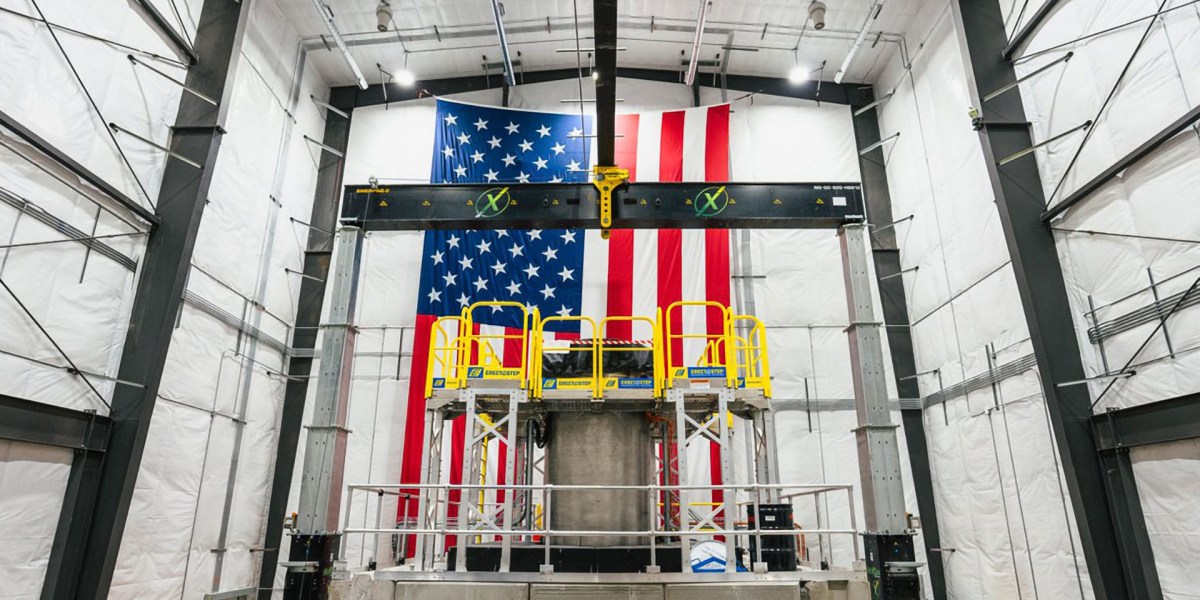
Four nuclear microreactors in the United States have reached criticality, passing a physics milestone the Trump administration had set as a symbolic test for the country’s next wave of nuclear hardware, MIT Technology Review’s Casey Crownhart reported.
Criticality means a reactor can maintain a nuclear chain reaction. That is a real threshold, not a ribbon-cutting for commercial power. Crownhart noted that a critical reactor may still be far from supplying electricity to the grid, and may not supply electricity at all.
The administration last year set a goal for three new microreactors to reach that state by July 4, the nation’s 250th birthday. Four did so by the deadline, according to Crownhart. The result gives the sector a cleaner talking point at a time when U.S. electricity demand is rising and utilities, companies and policymakers are hunting for power sources that do not emit carbon during operation.
The milestone also shows the gap between nuclear engineering progress and nuclear deployment. Sustaining a chain reaction answers one technical question. It does not answer the harder set: whether a reactor can run reliably, clear regulators, connect to customers, and produce power at a price anyone wants to pay.
China may loosen access to Nvidia’s H200 chips
In AI hardware, The Information reported that China plans to allow some of its largest AI companies to buy limited quantities of Nvidia H200 chips. Alibaba, ByteDance and DeepSeek are expected to receive permission, according to that report.
Reuters reported that China had previously held back approval even after the United States authorized the sales. That means the bottleneck, at least in this case, was not only Washington’s export-control machinery. Beijing also had to decide whether its leading AI companies could use Nvidia’s hardware.
The H200 approvals, if they go through as reported, would give those companies access to a constrained supply of Nvidia chips rather than an open channel. The Information described the planned purchases as limited, so this is not a clean return to pre-export-control normality. It is a managed exception in the middle of a chip fight that both governments keep pretending is tidy.
Other technology reports
- Business Insider reported that NATO is building a system using sensors, drones, satellites and AI to detect Russian attackers.
- Wired reported on researchers studying whether reflecting solar energy could cool the ocean and reduce future El Niño risks. New Scientist reported that such geoengineering ideas could carry unintended effects.
- 404 Media reported that Meta has patented an AI device that would record users and analyze emotions, with the stated aim of tailoring workout plans to a user’s mood.
- The Economist reported that chipmakers are stacking transistors vertically as conventional chip scaling slows. MIT Technology Review has separately reported that IBM is working on related sub-1-nanometer chip techniques.
- Ars Technica reported that students suspected of AI cheating at Brown University saw scores fall from 96% to 48% when tested in person.
- Bloomberg reported on a study finding that parents’ phone addiction can harm bonds with children and worsen insecure attachment.
- Reuters reported that a judge approved Elon Musk’s $1.5 million settlement with the SEC over allegations that he skirted stock disclosure rules in his Twitter stake, despite what the judge called “serious misgivings” and “red flags.”
- CNBC reported that Google Search traffic hit a new record after Argentina’s comeback against Egypt in a World Cup match.
This story draws on original reporting from MIT Technology Review.