The AMD ATI acquisition is 20 years old: on July 24, 2006, Advanced Micro Devices said it would buy Canadian graphics-chip company ATI Technologies in a cash-and-stock transaction valued at $5.4 billion. The deal mattered because AMD, then a CPU company fighting Intel, bought the graphics IP that would later sit inside Radeon cards, PC processors and game consoles.
AMD chief executive Hector Ruiz and ATI chief executive Dave Orton announced the agreement together in New York. AMD said at the time that the boards of both companies had approved the transaction unanimously. Ruiz described the combination as a move that would “reinvent our industry,” while Orton said joining AMD would let ATI push harder on PC-platform work.
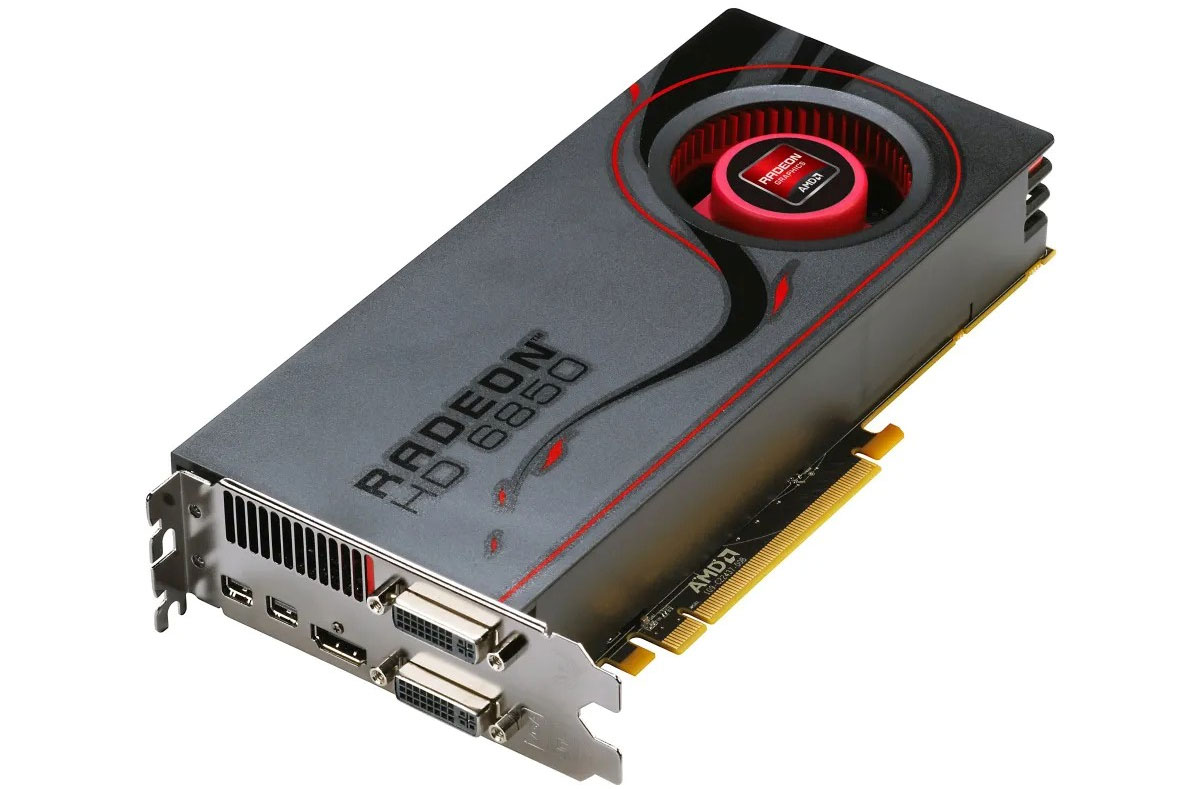
The branding took longer to settle than the ownership. ATI’s name did not vanish overnight. Tom’s Hardware notes that the R600 GPU, already in development when AMD bought ATI, reached market as the Radeon HD 2900 series under AMD, though some early HD 2900 XT retail packaging still carried ATI marks. Even after AMD’s graphics cards wore AMD branding, some GPUs under the cooler still carried ATI identifiers into roughly 2010, according to Tom’s Hardware.
What did AMD's ATI acquisition change?
The acquisition gave AMD a graphics business it could keep selling as discrete Radeon GPUs, and it also gave the company graphics technology it could put beside CPU cores. An APU, or accelerated processing unit, combines general-purpose CPU cores and graphics hardware in one processor package, reducing the need for a separate GPU in systems where integrated graphics are good enough.
AMD began turning that idea into a mainstream product line with its Fusion processors in 2011, according to Tom’s Hardware. The same basic CPU-plus-GPU approach is still visible in newer AMD parts, including Ryzen AI Max and Max+ processors based on Strix Halo and Gorgon Halo designs. Tom’s Hardware reports those chips can include up to 40 RDNA 3.5 compute units and use unified memory, letting the processor and graphics hardware draw from the same memory pool.
The console business became another payoff. As AMD’s graphics architecture moved from GCN to RDNA, the company’s semi-custom APUs became attractive to console makers in the early and mid-2010s, according to Tom’s Hardware. The publication says AMD still holds that console position tightly, and that the same work has carried over into handheld gaming devices.
Competition has not disappeared. Tom’s Hardware points to Intel’s Panther Lake and B390 integrated graphics as signs that Intel is taking gaming graphics more seriously. It also notes that Nvidia could be a console threat with Arm and GeForce-based semi-custom chips, though Nvidia’s current incentives are tilted toward the more profitable AI market.
Did AMD consider Nvidia before ATI?
Tom’s Hardware reported in 2012 that AMD had looked at a possible combination with Nvidia before settling on ATI. According to that report, talks were complicated by Nvidia co-founder Jensen Huang’s demand that he become chief executive of the merged company. Ruiz cooled on that structure, and AMD turned its attention to ATI.
Two decades later, the ATI purchase looks less like a bolt-on graphics acquisition and more like the hinge for several AMD businesses. Radeon survived the rebrand, APUs became a core product idea, and AMD gained the ingredients for the semi-custom chips that now define much of the console market.
This story draws on original reporting from Tom's Hardware.