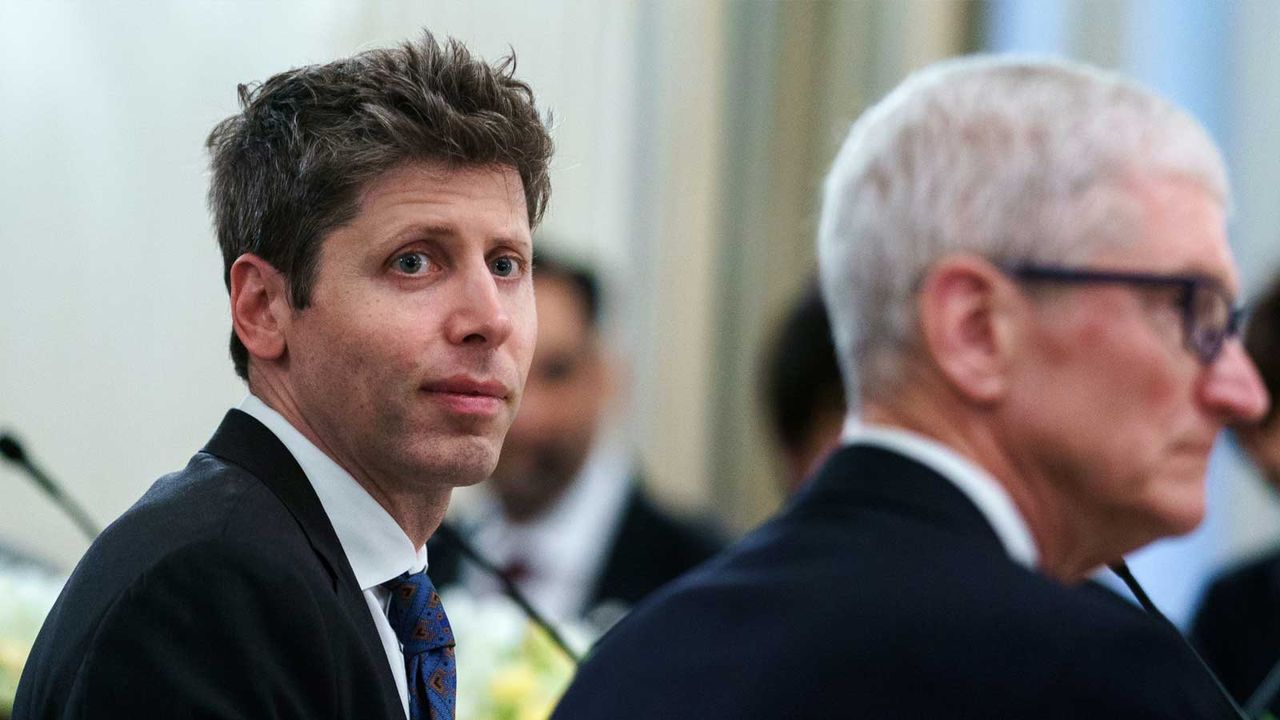
Apple’s OpenAI trade secrets lawsuit has turned a 2024 AI partnership into a federal court fight over the ChatGPT maker’s planned consumer hardware. Filed July 10 in the U.S. District Court for the Northern District of California, the complaint names OpenAI Foundation, OpenAI Group PBC, io Products, and former Apple employees Chang Liu and Tang Yew Tan. Apple seeks damages, injunctions and an order barring use of its alleged trade secrets, according to CNBC’s report on the filing.
The claims remain unproven. OpenAI has denied wrongdoing, saying it has no interest in other companies’ trade secrets and is focused on building technology for users.
What does Apple allege OpenAI took?
Apple says OpenAI’s hardware effort obtained confidential Apple information through former employees, hiring activity and supplier relationships. The allegation is not that hiring Apple people is unlawful by itself. The company says confidential hardware material was acquired and used to speed OpenAI’s move into consumer devices.
Apple alleges Liu kept an Apple-issued work laptop after leaving, exploited an authentication flaw to reach Apple’s internal network, and downloaded dozens of confidential hardware files, Reuters reported. It also alleges Tan, OpenAI’s chief hardware officer and a former Apple executive, sent himself supplier information and internal industry summaries before his departure.
Apple further alleges Tan asked candidates who still worked at Apple to bring actual Apple parts to OpenAI interviews for “show and tell” sessions. In a separate supplier-related claim, Apple says OpenAI sought use of a metal-finishing technique that Apple considers secret while leading a partner to believe Apple had authorized it. Those are allegations from Apple’s complaint, not findings by a court.
Apple said it raised concerns with OpenAI in February and received no response, according to Reuters. The company has also alleged that more than 400 former Apple employees now work at OpenAI. That figure is Apple’s assertion in litigation, rather than an independently verified headcount.
Why are Apple and OpenAI fighting over hardware?
Apple and OpenAI became public partners in 2024, when Apple integrated ChatGPT access into its devices and Siri workflows. Their interests have since collided more directly as OpenAI moves into hardware. OpenAI acquired io Products, the company co-founded by former Apple designer Jony Ive and Tan, in a transaction reported at about $6.4 billion to $6.5 billion.
OpenAI has not publicly specified the device it intends to sell or set a release date. Apple’s case therefore does not establish that a particular product exists, that it incorporates Apple technology, or that it is ready for market. It asks the court to determine whether protected information was taken and used during that development work.
What must Apple prove in the lawsuit?
A former employee can generally join a competitor in California. Stanford Law School professor Mark Lemley told Reuters that hiring hundreds of Apple alumni is not itself illegal under California law. The dispute turns on Apple’s more specific claims that confidential documents or other protected information were taken and then used by OpenAI.
Apple has reportedly also sought expedited discovery, depositions involving Liu, Tan and OpenAI or io Products representatives, plus a preliminary injunction while the case proceeds. Those requests have not decided the underlying allegations. The court will first have to assess Apple’s evidence and OpenAI’s defense, with no liability established at this early stage.
This story draws on original reporting from Tom's Hardware.