Overclocker Safedisk has published early manual-tuning results for DDR5 memory built with ChangXing Memory Technologies dies, and the takeaway is awkward for buyers hoping China’s homegrown DRAM will behave like the best SK hynix kits. The memory can run fast, according to the test, but it appears harder to tune and less consistent from batch to batch.
The result matters because CXMT parts are no longer confined to obscure listings. Chinese memory vendors have been using CXMT chips in retail DDR5 kits, and larger PC brands have started qualifying or shipping systems with the company’s DRAM in China-focused products. If CXMT becomes a serious alternative to Samsung, Micron and SK hynix, speed bins and supply volume are only part of the story. Enthusiasts also care about how the chips respond when pushed outside their rated profile.
What Safedisk tested
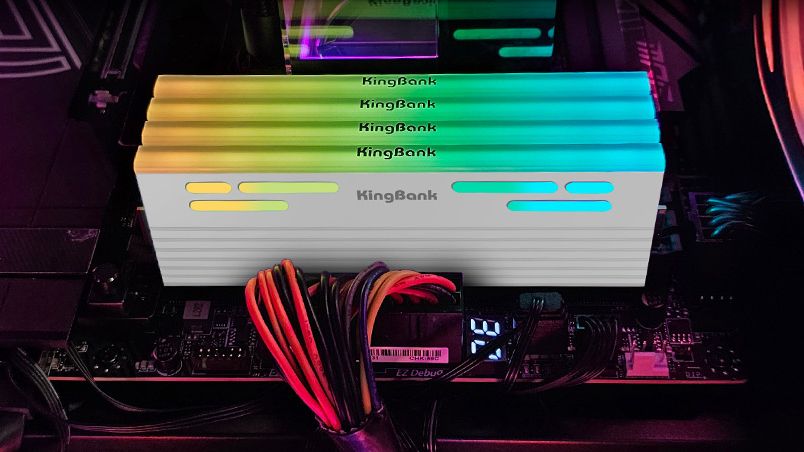
Safedisk’s test, shared by Uniko’s Hardware, used a Kingbank 48GB kit with two 24GB modules. The kit is rated for DDR5-6000 at CL36 and uses CXMT 3GB dies. On an Asus C10A motherboard, Safedisk reported a manual overclock to 8,600 MT/s at CL44.
That headline number is respectable, but Safedisk’s notes were less flattering. He said the CXMT dies did not scale with extra voltage, which means adding voltage did not produce the usual headroom for higher clocks or tighter settings. He also reported that timings could not be tightened much, leaving the kit at comparatively loose latency settings once pushed to higher transfer rates.
For DDR5 overclocking, those two limits matter. Frequency raises bandwidth, while tighter timings reduce delay. A module that reaches a high MT/s figure only with loose timings can look good on a label and still trail a better-tuned rival in workloads that care about latency.
The Hynix comparison is still thin
Safedisk said SK hynix-based DDR5 was stronger at the same transfer rate and better suited to manual overclocking. He also described CXMT batch variance as large, suggesting that two kits with the same retail branding may not behave the same way.
There is an obvious caveat: the public post did not include a full set of comparative benchmark results. That makes the Hynix comparison a skilled overclocker’s report rather than a broad performance review. It is useful signal, especially for people who tune memory by hand, but it is not enough to rank every CXMT kit against every Hynix kit.
CXMT began producing DDR5 in late 2025 despite lacking cutting-edge EUV lithography tools, according to prior reports. Other reports have claimed the company could approach Micron’s memory capacity this year, a scale that would put China in a much stronger position in DRAM manufacturing.
Motherboard vendors have also moved quickly. During 2026, board makers have added BIOS support and validation for CXMT DDR5 at speeds beyond 8,000 MT/s. MSI, for example, has validated faster CXMT memory operation on some AMD boards. Dell and HP have been reported using CXMT memory in region-bound systems, while Corsair, Lexar, Kingbank, Netac, Asgard and Gloaway have all been tied to retail kits using CXMT chips.
The early overclocking data does not mean CXMT DDR5 is unusable. It means buyers should separate availability from quality. More supply may help the consumer memory market, especially while AI buyers absorb high-end DRAM capacity. Safedisk’s test suggests CXMT still has work to do before its enthusiast parts match the tuning behavior that made SK hynix dies the default choice for many overclockers.
This story draws on original reporting from Tom's Hardware.