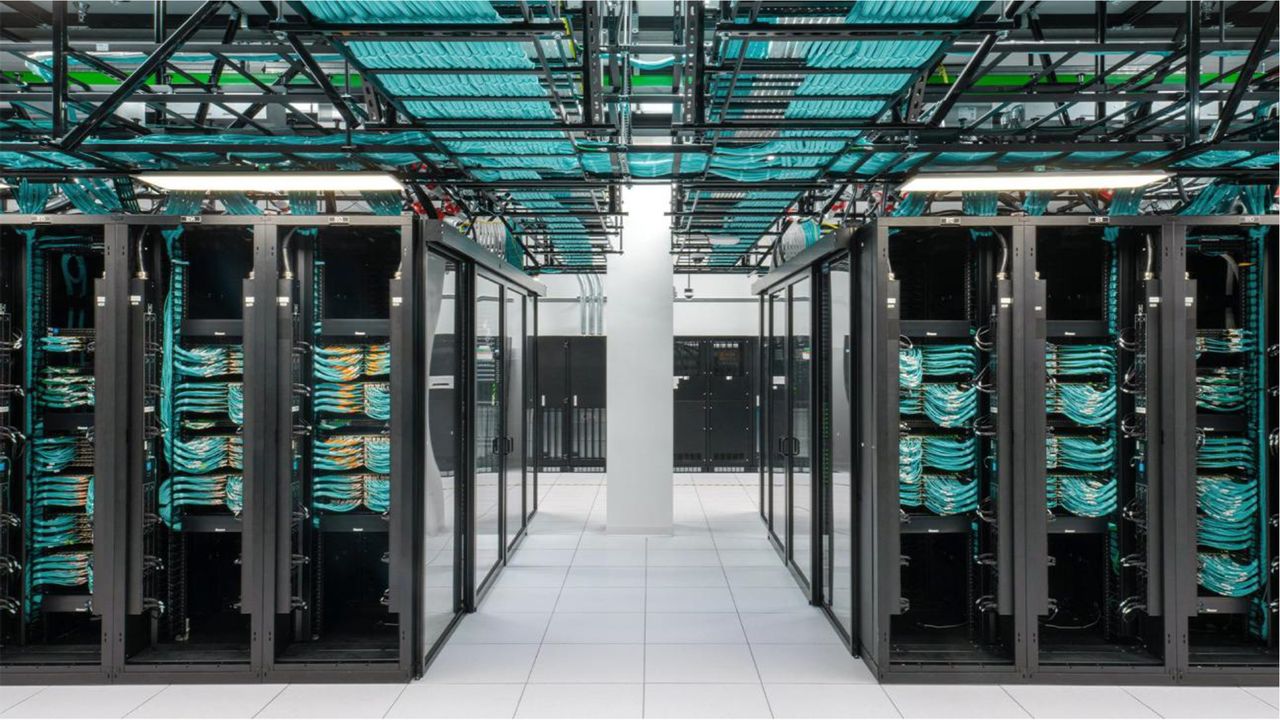
Nvidia openai guarantee talks have reached an eye-watering scale: Nvidia is discussing a roughly $250 billion financing backstop that could help OpenAI lease SB Energy's planned 10-gigawatt data center campus in Piketon, Ohio, according to the Wall Street Journal, which cited unnamed people familiar with the matter.
The deal is not done. The Journal reported that the terms remain unsettled and the arrangement could still fall apart. If completed, the Ohio site would mark a shift for OpenAI: it would be leasing a major campus directly, rather than buying cloud capacity from Microsoft, Amazon, or Oracle. Nvidia is also discussing a separate financing package for the chips that would fill the campus, which the Journal said could add another $350 billion.
What is Nvidia guaranteeing for OpenAI?
A guarantee would mean Nvidia is putting its balance sheet behind some of the financing used to build or operate the campus. OpenAI lacks an investment-grade credit rating, according to the Journal, so Nvidia's backing would let SB Energy raise debt with lenders looking more to Nvidia's credit strength than OpenAI's.
That mechanism is familiar in miniature. Nvidia's Q1 fiscal 2027 10-Q says its maximum gross exposure across partner facility lease guarantees was capped at $3.5 billion, with $712 million held in escrow and the exposure shrinking as partners pay landlords. Nvidia says it received warrants in exchange for those guarantees and records them as credit derivatives, with fair value described as immaterial.
The Ohio discussions are a different animal by size. A $250 billion guarantee would be about 71 times Nvidia's disclosed guarantee book, more than a year of the company's revenue, and roughly four times its cash, cash equivalents, and marketable securities at the end of fiscal 2026. Nvidia reported $62.6 billion in those liquid assets as of Jan. 25, with full-year revenue of $215.9 billion and net income of $117 billion.
The first partner lease guarantee Nvidia disclosed, in the third quarter of fiscal 2026, was capped at $860 million and backed by $470 million in escrow. In that case, the partner had separately contracted to sell data center cloud capacity, while Nvidia kept the option to take over the lease for its own use or sublease it if the escrow and contract did not cover the obligation. No equivalent remedy has been reported for a 10 GW campus on federal land.
Why does the Ohio site matter?
SB Energy broke ground March 20 at the former Portsmouth Gaseous Diffusion Plant with Energy Secretary Chris Wright, Commerce Secretary Howard Lutnick, and SoftBank chairman Masayoshi Son in attendance. The facility enriched uranium for the U.S. weapons program from 1954 until 2001 and remains under decontamination.
The Department of Energy had listed the location among 16 federal sites opened for data center construction. SB Energy leases the land rather than owning it. Power is the scarce commodity: the campus would require 9.2 GW of new natural gas generation and $4.2 billion of transmission work with AEP Ohio, funded from $33.3 billion Japan committed under its trade agreement with the United States. The first phase, about 800 MW, is expected in 2028.
Lutnick controls allocation of the site's power, and the Journal reported that Anthropic, Microsoft, and Google have spoken with him about it in recent weeks. OpenAI's appetite is large by any normal accounting standard: the Journal said Nvidia has already invested $30 billion in OpenAI, and OpenAI has lifted its projected compute spending through 2030 to about $750 billion from roughly $600 billion earlier this year.
OpenAI shifted last year from building its own data centers to leasing capacity. SoftBank, meanwhile, carries more than $130 billion of debt while funding data center projects in Ohio, France, and other locations. That makes Nvidia's possible role less like a vendor selling chips and more like the financial scaffolding under the AI buildout.
This story draws on original reporting from Tom's Hardware.