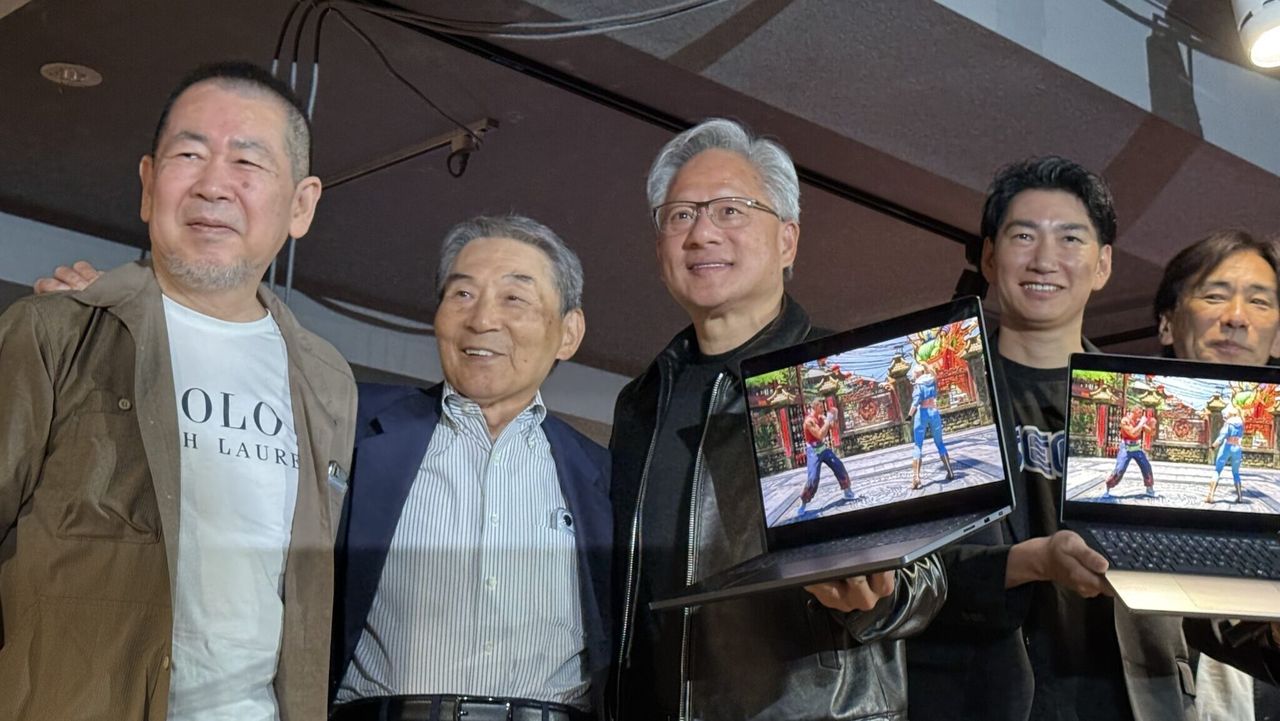
Nvidia and Sega have announced support for Nvidia’s RTX Spark platform in upcoming Sega PC games, starting with Virtua Fighter Crossroads, which Sega plans to release in 2027.
The deal matters if Nvidia’s next PC bet actually ships as advertised: RTX Spark is built around the GB10 Superchip and is aimed at Windows machines designed for Nvidia’s “agentic AI PC” pitch. Sega is now one of the publishers Nvidia can point to while it tries to make sure Windows software, and not just benchmark slides, is ready for the new hardware.
Nvidia said RTX Spark is due later this year. Sega’s first named game for the platform is Virtua Fighter Crossroads, and the companies also said future Sega titles will support RTX Spark. They did not name those additional games.
What “support” means is still vague
The announcement leaves the useful technical questions unanswered. Nvidia and Sega did not say whether Sega’s games will ship as native Windows on Arm builds, whether they will rely on Microsoft’s Prism x86 compatibility layer, or whether RTX Spark support refers mainly to graphics features and platform validation.
That distinction is not trivia. If the GB10-based systems run Windows on Arm, native builds would avoid the overhead and compatibility weirdness that can come with translation. Compatibility layers can work well, but game engines, anti-cheat systems, launchers, and graphics middleware have a long record of finding creative ways to break assumptions.
The companies also did not specify which Nvidia rendering features Sega plans to use. RTX Spark support could include DLSS upscaling or Multi Frame Generation, but neither company confirmed those features for Virtua Fighter Crossroads in the announcement.
That omission is notable because Nvidia’s GB10 Superchip is described as having GPU compute in the neighborhood of a desktop RTX 5070 on paper, while using a unified memory design with more limited memory bandwidth than a conventional desktop gaming card. Those tradeoffs can make image reconstruction and frame generation more important if Nvidia wants small-form-factor AI PCs to play demanding games smoothly.
A long Nvidia and Sega connection
Nvidia and Sega also have history. Their relationship goes back more than 30 years to Sega’s work on the Dreamcast. Nvidia had been involved in development of a graphics chip for the console, but Sega ultimately used an NEC-produced PowerVR GPU instead.
After that change, Sega gave Nvidia a $5 million investment that helped the company finish and ship the Riva 128, Nvidia’s first DirectX-compatible GPU. Nvidia is now valued at more than $5 trillion and is pushing its Grace Blackwell and forthcoming Vera Rubin platforms in data centers.
RTX Spark is a smaller, riskier question: whether Nvidia can make an Arm-based Windows PC platform feel like a normal gaming PC rather than another compatibility science project. Sega’s commitment gives Nvidia a recognizable publisher and a named 2027 title. The harder part, the part the announcement does not answer, is whether the games will run well enough that players notice the game instead of the platform.
This story draws on original reporting from Tom's Hardware.