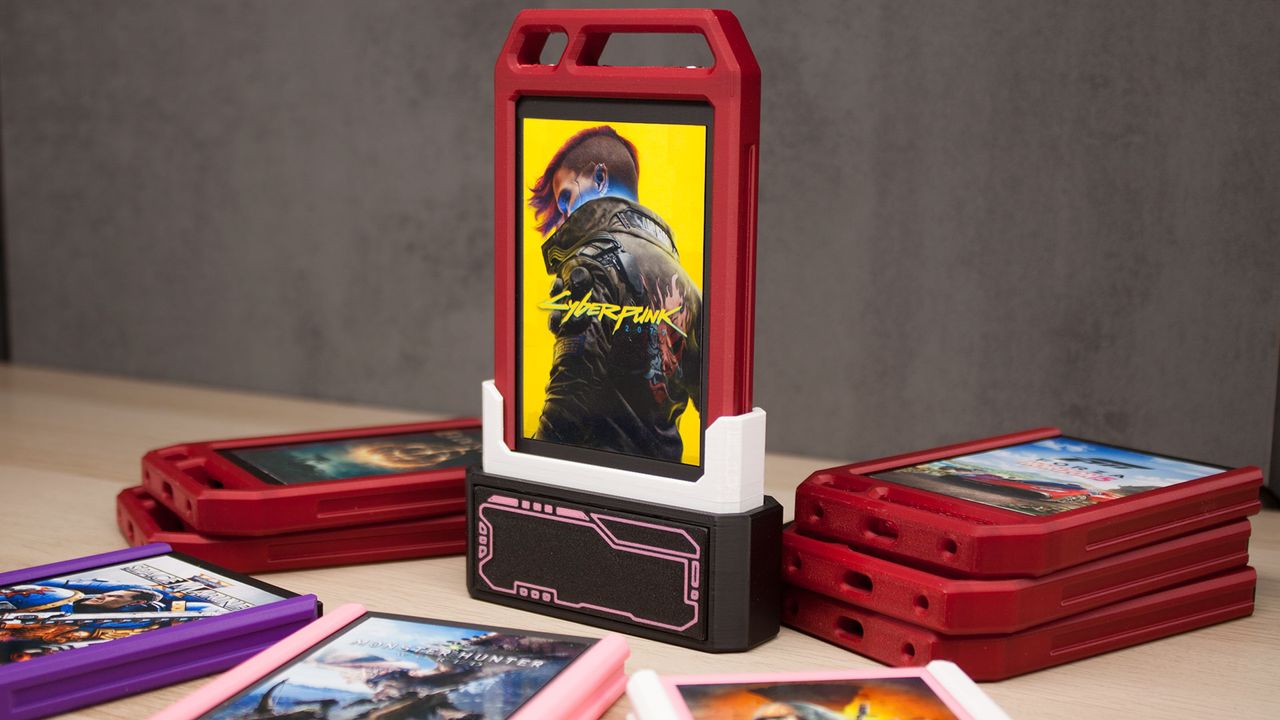
A PC gamer has shown off a cartridge-style system for Steam games, using cheap 2.5-inch SATA SSDs as removable game media. The build, posted by Reddit user Jibril-sama on the PCMR subreddit and reported by Tom’s Hardware, stores each game on its own drive and uses Linux automation to open or start the matching Steam title when the drive is plugged in.
The hardware is deliberately ordinary: used 128GB SATA SSDs dropped into colorful, labeled cartridge shells and inserted through a SATA dock. Jibril-sama said in Reddit comments that the drives cost €7 each, about $8. That is not a bad use for older SSDs, especially for players whose Steam libraries are eating the boot drive one 80GB install at a time.
The result looks like a console cartridge system grafted onto a PC, except the cartridge is a standard SSD and the console is Steam behaving under instruction.
How the launch trick works
Tom’s Hardware said it contacted Jibril-sama for details on the software side. According to Jibril-sama, the demo system runs Linux and uses Valve’s Steam browser protocol, which can send Steam commands through URL-style links. Those links can open a game’s Steam page or launch the game directly.
The removable drive contains both the game data and a script. On insertion, a udev rule notices the new disk event. That rule triggers a systemd template service. The service checks the mounted SSD, finds the script, and runs it. The script then calls Steam through Valve’s URL protocol.
Jibril-sama summarized the chain to Tom’s Hardware as: plug in the SSD, let udev detect it, trigger systemd, find the script on the drive, then execute it. It is a very Linux answer to a very cartridge-shaped problem, which is to say it is practical, configurable, and probably not what Valve had in mind when it built Steam library folders.
The creator said automatic game launching is possible, although the Reddit post described the current setup as opening Steam to the game’s page. The distinction matters: one version behaves like a launcher shortcut, the other behaves more like inserting a cartridge and pressing power.
Updates still belong to Steam
PCMR commenters asked the obvious maintenance question: what happens when a game on a removable SSD needs a multi-gigabyte update. Jibril-sama told Tom’s Hardware the cartridges are mostly for games they want to replay occasionally, not live-service titles that expect constant patching.
When Steam flags an update, Jibril-sama said they let Steam handle it and wait before playing. That means the cartridge idea does not evade Steam’s update model or turn modern PC games into immutable physical media. It mostly gives each selected game its own swappable storage and a launch script.
Some Reddit commenters also asked about expanding the idea to GOG libraries, according to Tom’s Hardware. No finished guide, scripts, or shell files were reported as released, though Tom’s Hardware said fuller implementation resources may follow.
For now, the project is a clever prototype rather than a retail product: cheap SSDs, a SATA dock, Steam’s existing URL hooks, and enough Linux glue to make PC gaming feel briefly like blowing dust off a cartridge, minus the actual blowing and the terrible contact pins.
This story draws on original reporting from Tom's Hardware.