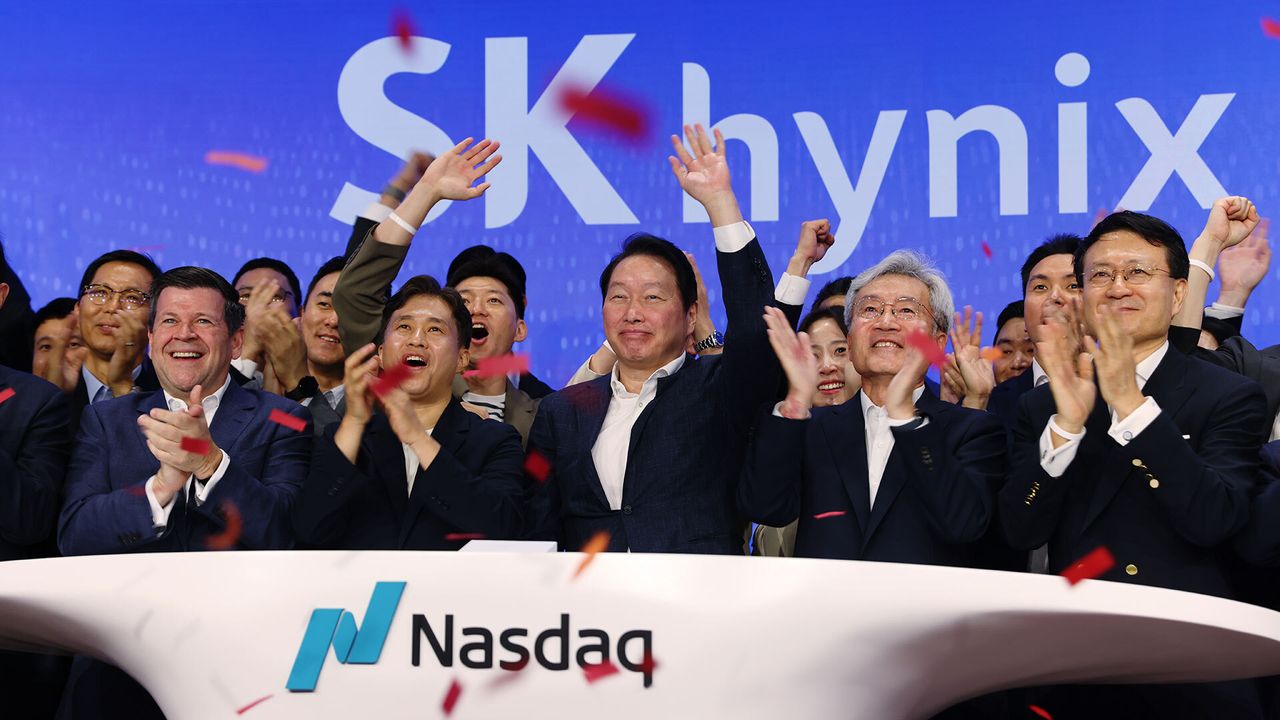
SK Group Chairman Chey Tae-won says memory chip prices have climbed beyond normal levels, and he is floating the old-fashioned remedy: make more chips.
Chey, who leads the conglomerate that owns SK hynix, told reporters at an industry forum that the company is considering a memory semiconductor plant in the United States, according to The Chosun Daily. The goal, he said, would be to expand supply and take pressure off prices that are spilling into consumer electronics.
“Memory prices are currently at an abnormally high level,” Chey told the media, according to The Chosun Daily. He said artificial intelligence companies can cover higher component costs through investment, while PC and smartphone makers are more likely to push those costs into retail prices. Because those products are sold largely to individual buyers, he said, there is a limit to how far prices can rise.
Chey used the term “chipflation” for the chain reaction in which higher semiconductor costs raise finished product prices. His proposed answer was direct: increase supply.
AI demand has distorted the memory market
The pressure point is memory capacity. AI infrastructure has pulled manufacturers toward high-margin products such as high-bandwidth memory, while ordinary DRAM for PCs and phones remains exposed to tighter supply and higher prices. The result is awkward for chipmakers: the money is good, but the shortage creates incentives for customers to look elsewhere.
That risk is already visible in procurement decisions reported by Tom’s Hardware. Some Chinese brands have shifted toward domestic suppliers including CXMT and YMTC. Tom’s Hardware has also reported that Corsair and Lenovo have sourced parts from those companies, and that Apple has sought Washington’s permission to buy memory from blacklisted CXMT.
Chey also cited Elon Musk’s interest in building his own chip fabrication capacity as a potential threat to incumbent memory suppliers, according to the reporting cited by Tom’s Hardware. The warning is not subtle. If customers with enough money and enough pain decide supply is unreliable, they may fund alternatives rather than wait politely for Samsung, SK hynix and Micron to catch up.
High margins can cut both ways
For now, demand appears broad enough to support both established suppliers and newer entrants. Tom’s Hardware noted that AI demand and richer margins also give memory companies an explanation for why they prioritized high-bandwidth memory and cut back on conventional DRAM output, an issue that may matter as Samsung, SK hynix and Micron face price-fixing lawsuits.
The longer-term problem is the memory industry’s familiar boom-and-bust cycle. Before the AI buildout, memory makers were coming off one of their worst downturns in more than a decade, according to Tom’s Hardware. If the current shortage eases after new suppliers have gained customers, incumbents could face a more crowded market when prices fall again.
Chey’s comments amount to an admission that today’s high prices are not an uncomplicated victory for SK hynix and its peers. Expensive memory fattens margins, but it also irritates customers, raises device prices, and makes rival supply chains look less theoretical.
This story draws on original reporting from Tom's Hardware.