President Donald Trump said on Nov. 20 that he wants to stop U.S. companies from building data centers abroad, floating a ban or a “tremendous tax” for firms that proceed. The Trump overseas data center ban is a presidential proposal, not a documented policy: no executive order, tax rate, legal authority, administering agency, effective date or enforcement process was announced.
Trump made the remarks at a White House briefing after returning from Asia. He said he had not previously told his staff about the plan, according to CNBC and the BBC. He tied the idea to competition with China, saying he did not want China to “take” the facilities. That is Trump’s stated rationale, not an explanation backed by an implementation document.
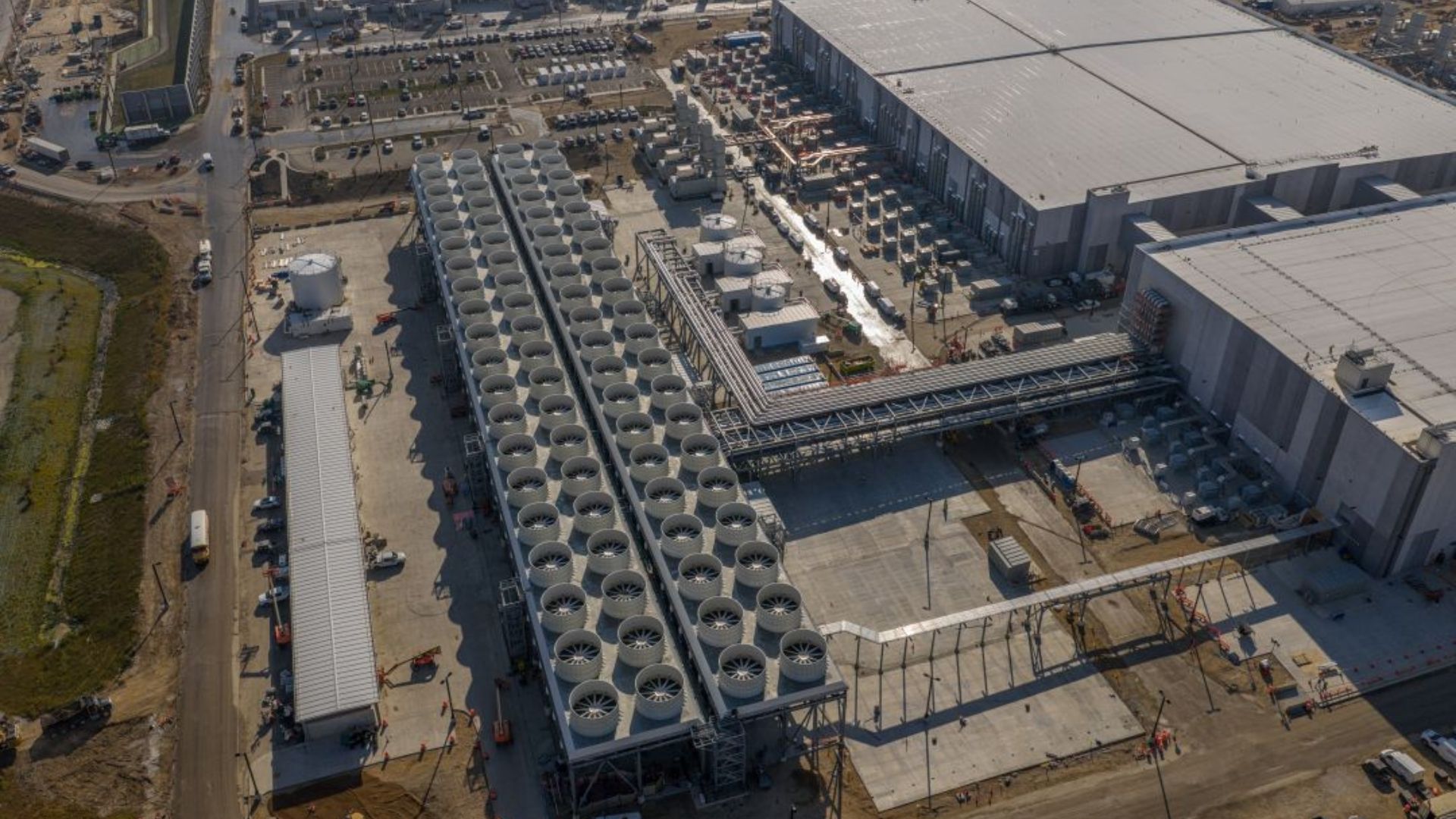
The distinction is doing a lot of work here. A data center is the physical facility that houses servers, networking equipment, power systems and cooling needed to run cloud services and AI workloads. Data centers turn power and network connections into computing services, which is why their location matters to customers, regulators and grid operators.
Is Trump’s overseas data center ban in effect?
No enacted blanket restriction is established by the available reporting. Trump said companies could face a “tremendous tax” or penalties for building abroad, but neither he nor the White House specified how the government would decide what projects were covered or collect such a charge. NBC News reported that a White House representative did not immediately respond to a request for comment.
The proposal is also separate from existing U.S. controls on advanced chips and remote access to overseas computing. The BBC reported that Washington announced licensing requirements for buyers of advanced chips so officials can monitor whether the chips are used to serve Chinese companies or smuggled into China. The Straits Times reported that third-country data centers need U.S. licenses before supplying significant AI compute to Chinese-owned or Chinese-headquartered firms. Those controls regulate particular chips and compute access; they are not the broad overseas-construction prohibition Trump described.
Why would a ban affect cloud companies?
Major U.S. cloud providers already operate internationally. CNBC reported that Alphabet, Amazon, Microsoft, Meta and Oracle have built data centers in other countries. Providers use overseas capacity to serve nearby customers and, in some cases, comply with regulatory requirements.
There are recent examples. The BBC reported that Meta broke ground on an Alberta data center, Anthropic agreed to lease a proposed site in Nova Scotia, and Google announced €13 billion in AI-infrastructure investment in Finland that included funding for three data centers. The same report said construction on two Finnish sites was later halted over forest-clearance concerns.
Trump’s pitch to keep projects in the United States runs into a fairly obvious domestic siting fight. The BBC cited Pew Research Center data showing roughly 3,000 U.S. data centers as of April, with another 1,500 in approval or construction. It also reported that concerns over power use and noise helped drive support for tougher construction rules. CNBC’s All-America Economic Survey found 64% of registered voters opposed an AI data center within 10 miles of their home, while 13% supported one.
For now, companies have a political threat to assess, not a published federal rule to follow.
This story draws on original reporting from Tom's Hardware.