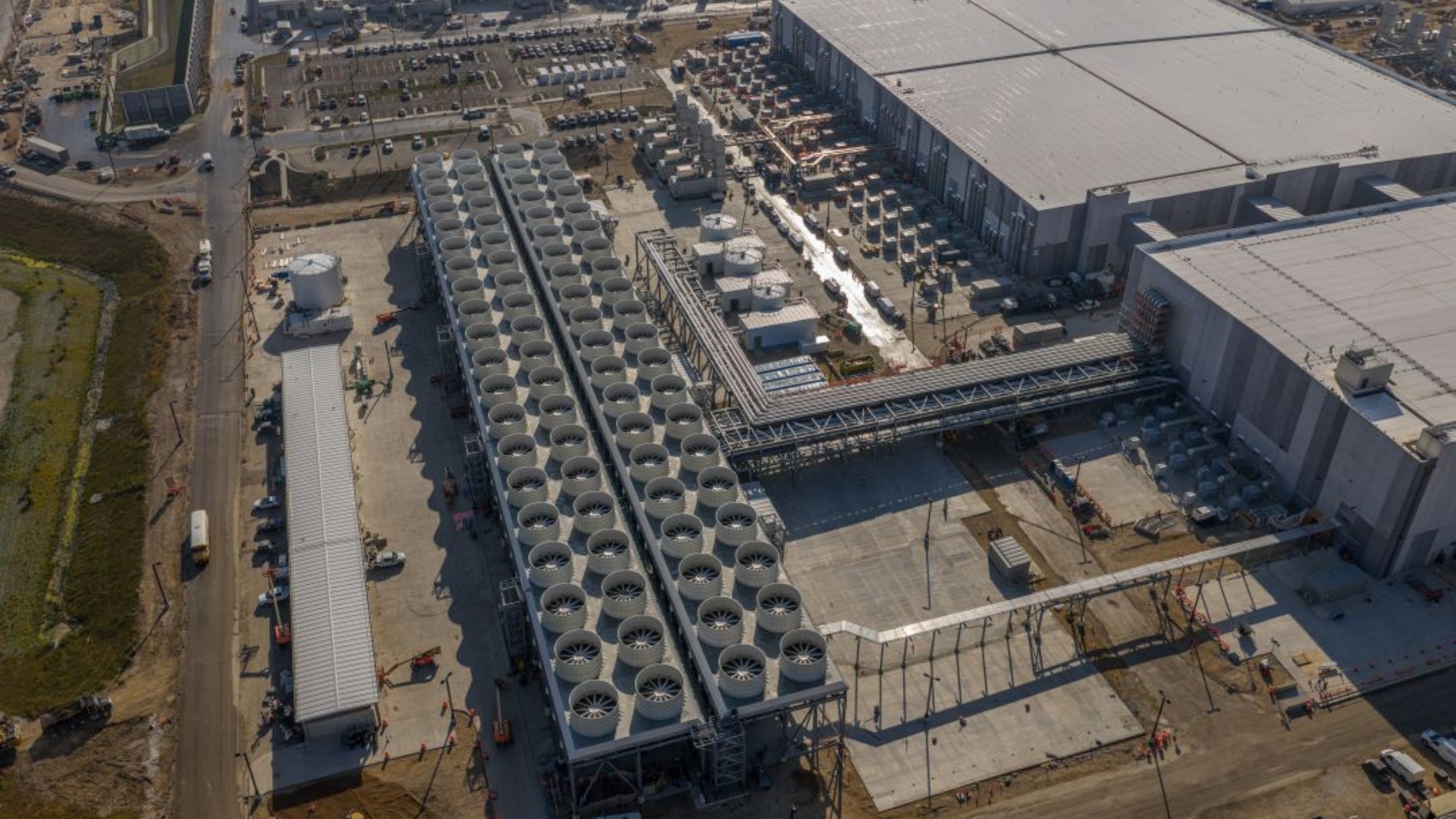
Z.ai, the Chinese AI company formerly known as Zhipu, has completed a 1-gigawatt data center built with chips made in China and has started running part of the facility, Bloomberg reported Monday, citing a person familiar with the matter.
The site is intended to train Z.ai’s GLM family of models, according to Bloomberg. The same person told the publication that Z.ai has built or operates multiple compute clusters, each containing more than 10,000 chips. A 1-gigawatt electrical draw is roughly comparable to the power used by 750,000 homes, which gives a sense of the scale before anyone starts pretending rack count and training throughput are the same thing.
Bloomberg’s report did not identify the chip supplier, the facility’s location, its cost, or its construction schedule. The key point is the absence of Nvidia hardware. Z.ai has been on the U.S. Commerce Department’s entity list since January 2025, a status that restricts its legal access to Nvidia accelerators and other U.S.-controlled technology.
Huawei is the obvious suspect, though not confirmed
Z.ai’s recent training work points toward Huawei, although Bloomberg’s cited source did not name the silicon vendor. In June, Z.ai released GLM-5.2, an open-weight model described as trained entirely on Huawei Ascend accelerators, with no Nvidia chips involved. That model reached the top of open-weight leaderboards within a week, according to prior reporting.
If the new facility is using Huawei Ascend-class parts, the power number needs context. Chinese AI accelerators generally lag Nvidia’s current Blackwell systems in performance per watt, according to the report. A gigawatt of domestic accelerators therefore does not imply the same amount of usable AI training compute as a gigawatt of Nvidia-based infrastructure.
That distinction matters for China’s broader plan. Beijing is drafting a roughly 2 trillion yuan, or $295 billion, five-year program to build a national grid of AI data centers, with at least 80% of the underlying technology sourced from Chinese suppliers, according to reporting cited in the account. Buildings, substations, and cooling systems can scale faster than leading-edge chips.
The supply side is tight. SMIC’s most advanced stable manufacturing process, described as a roughly 7-nanometer-class N+2 node, is reportedly running above 93% utilization. Domestic high-bandwidth memory is also scarce, limiting how many Ascend-class accelerators Huawei can assemble. Huawei shipped about 812,000 AI chips last year, according to the report.
Compute shortages are already visible
Z.ai is not the only Chinese AI company trying to stretch available compute. Rival Moonshot suspended new subscriptions on Sunday, saying in a social media post that it wanted to reserve capacity for existing users after launching its Kimi K3 model.
Bloomberg has previously reported, citing people familiar with the matter, that Z.ai is on pace for $1 billion in annual recurring revenue after reaching its 2026 sales target in July. The company also recently raised billions of dollars through a Hong Kong initial public offering and a later share sale.
The reported data center shows that Chinese AI labs can assemble large domestic compute installations despite U.S. export controls. It does not show that China has erased the gap in accelerator efficiency, memory supply, or chip manufacturing capacity. Those bottlenecks are where the less photogenic parts of the AI buildout still live.
This story draws on original reporting from Tom's Hardware.