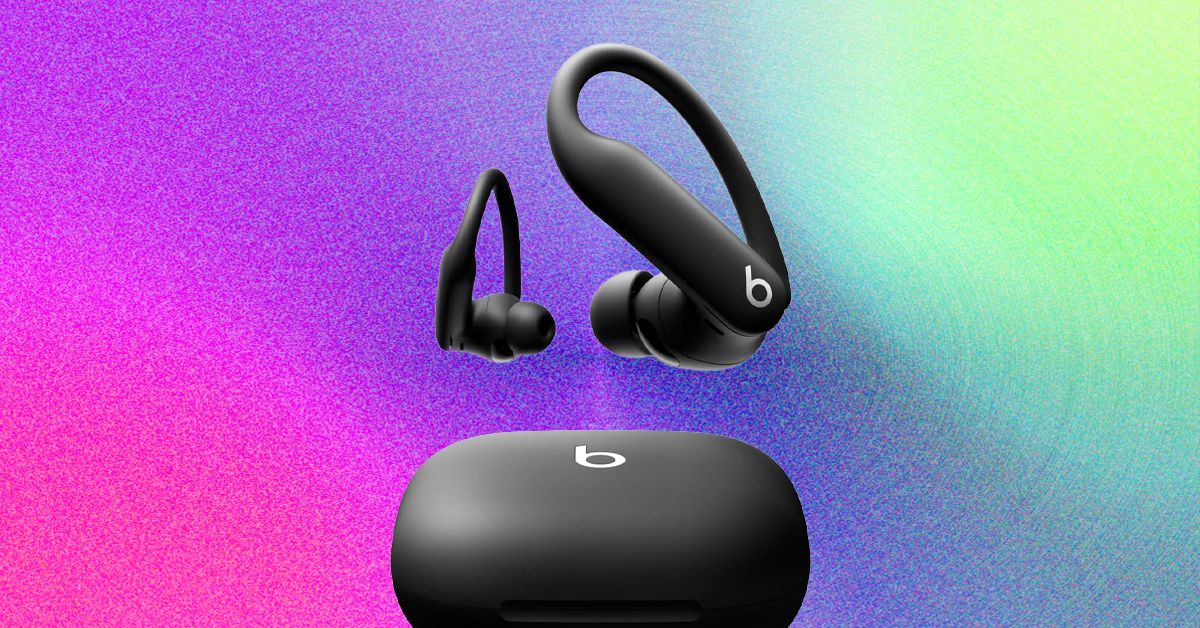
The best workout earbuds 2026 list is less a contest over sound signatures than a test of whether the things stay in your ears when you move. In its April roundup, Consumer Reports named eight wireless models after evaluating sound, features, comfort and fit. Its testers specifically checked whether earbuds remained in place through vigorous head movement and whether incidental contact could pause playback, skip a track or knock a bud loose.
That is the right order of operations for a gym or running purchase. A great-sounding earbud that needs to be shoved back in every few minutes is not a workout tool. It is a tiny, expensive distraction.
Which workout earbuds should you choose in 2026?
Consumer Reports’ eight-model list is: Apple AirPods Pro 3, Beats Fit Pro, Bose Ultra Open Earbuds, Sennheiser CX 150BT, Shure AONIC 215 Gen 2, Skullcandy Dime 2 True Wireless, Sony WF-1000XM6/B and Sony LinkBuds. The available testing detail is uneven, so this is a shortlist rather than a defensible one-through-eight ranking.
- Apple AirPods Pro 3: Consumer Reports calls these its exercise-oriented AirPods choice. Testers found the five sizes of memory-foam silicone tips, including an XXS option, stable across ear sizes. The buds also have noise cancellation and a transparency mode for bringing in outside sound. Consumer Reports says the workout mode tracks heart rate and can provide workout basics through Siri.
- Beats Fit Pro: Consumer Reports presents these as a fit-focused option. The excerpt does not provide comparative test details beyond that placement.
- Shure AONIC 215 Gen 2: Its substantial ear clip is designed to help retain the earbuds during exercise, according to Consumer Reports.
- Bose Ultra Open Earbuds and Sony LinkBuds: Consumer Reports identifies both as designs that let in background noise without relying on electronic transparency processing.
- Sennheiser CX 150BT, Skullcandy Dime 2 True Wireless and Sony WF-1000XM6/B: All appear in the workout list, though the published excerpt does not give enough model-specific results to assign each a narrower role.
Should runners use noise cancellation near traffic?
Consumer Reports warns that suppressing surrounding sound can create risk when walking, running or cycling near traffic. Transparency and ambient modes can pass some outside sound through microphones, while open designs leave the ear less blocked. Neither approach makes a road run safe; it only avoids choosing audio gear that deliberately erases useful cues.
Fit hardware is the next trade-off. RTINGS says lightweight earbuds with fins or ear hooks can add stability, while clip-on and bone-conduction designs can leave ears unobstructed. Its broader point holds: secure placement without discomfort comes first, followed by openness, phone compatibility and whether the same pair must work for commuting and calls.
Phone ecosystem still matters, but it should not overrule fit. TechGearLab’s general earbud roundup identifies AirPods Pro 3 as its iPhone choice and Samsung Galaxy Buds4 Pro as its Android choice. The latter is not part of Consumer Reports’ workout-specific eight. TechGearLab also rates Bose QuietComfort Ultra Earbuds (Gen 2) highly for general use, while describing their fit as bulky and not secure for most, a useful reminder that strong sound and active noise cancellation do not automatically produce a reliable training pair.
Finally, do not turn a water-resistance badge into a swim warranty. Consumer Reports says the models it includes are advertised as water-resistant to some degree, and explicitly says it does not test that claim. Check the manufacturer’s rating and intended use before exposing any pair to more than sweat.
This story draws on original reporting from WIRED.


