WIRED has put together a brain boosting toys for kids list that leans hard into hands-on mechanics, sensors, music tools and a little AI, rather than another pile of glowing rectangles. The picks, selected by WIRED editors, range from a $19 Bluetooth dance mat to HoverAir’s $1,299 Aqua camera drone.
WIRED disclosed that its featured products are independently chosen by editors, while the publication may receive compensation from retailers or purchases made through its links. In other words, useful list, commerce plumbing attached. Read it accordingly.
What are brain boosting toys for kids?
In WIRED’s framing, these are toys that make children test coordination, memory, sequencing, building, repair or creative problem-solving through play. The strongest entries have an actual mechanism to learn from: a sensor, a circuit, a musical loop, a balance challenge or a physical system that reacts when a kid changes it.
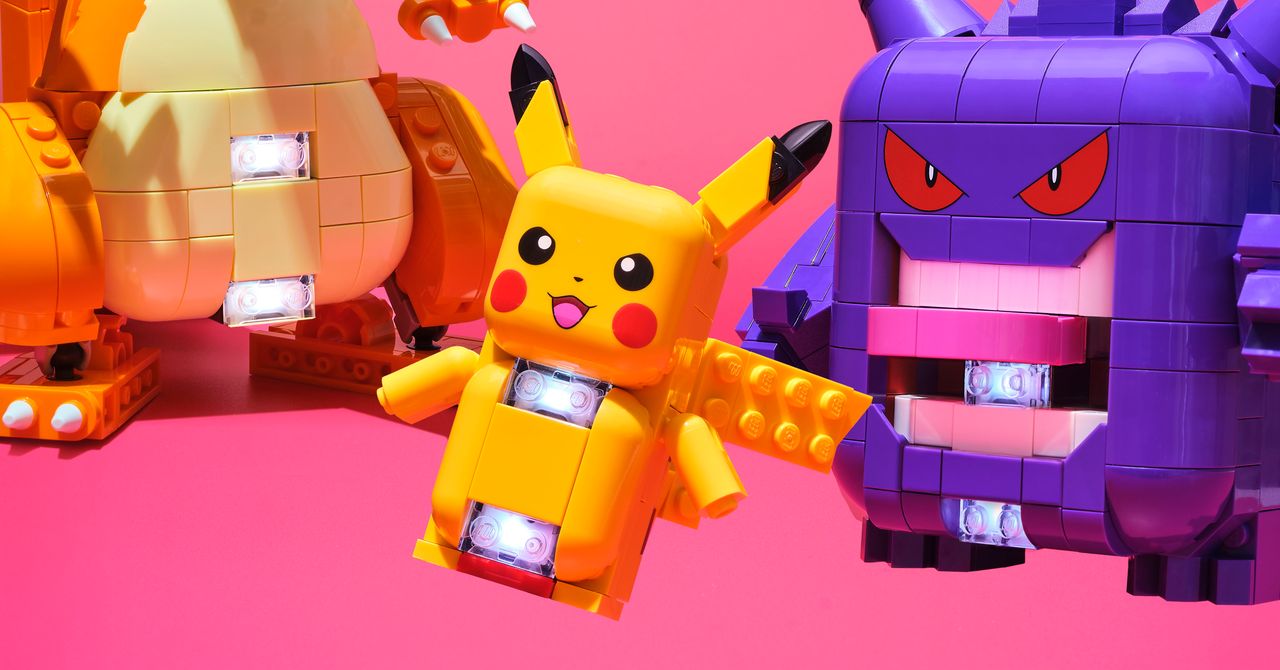
The most technically loaded item is Lego’s Smart Play System Pokémon line. WIRED says the kits combine a rechargeable 2-by-4-stud smart brick with programmable NFC tags and minifigures. The brick includes a synthesizer, speaker, accelerometer, gyroscope, light and sound sensors, and LEDs, while a positioning system can detect orientation between multiple smart bricks. The first two all-in-one Pokémon kits named by WIRED are Pikachu’s 400-piece Training House and a 751-piece Charizard-Jolteon battle set, priced from $70.
Music gets several entries. Playtronica’s Orbita MIDI Color Sequencer, priced at $458, uses colored magnets placed on four concentric rings to control simultaneous MIDI loops once connected to a phone or computer and music software. WIRED says each magnet represents a note or sound, with pitch controls and loop muting. Blipblox After Dark, at $219, is presented as a child-friendly synthesizer for beats and electronic sounds. The Gibson x Loog Les Paul, at $229, shrinks the Les Paul electric guitar idea into a three-string instrument for smaller hands.
Orbita MIDI Color Sequencer: $458, a physical MIDI sequencer built around magnets and spinning loops.
Lego Smart Play System Pokémon sets: $70 and up, screen-free smart bricks, tags, lights and sounds.
Gibson x Loog Les Paul: $229, a three-string electric guitar adapted for smaller players.
Blipblox After Dark: $219, a synthesizer aimed at kids making beats and bleeps.
Several picks move the learning out of the chair. Stapelstein’s $299 Rainbow Set uses 11-inch tiles that children can stack, arrange, walk on or play on to practice balance. Woom’s $199 Wow Balance Bike is designed for children as young as 9 months, provided they are 28 to 40 inches tall and can sit and stand independently, according to WIRED. Modu’s $203 Balance Track lets families build elevated walkways, starting with simpler layouts for children as young as 3.
AI shows up, because of course it does. Takway’s $149 Sweekar is described as a Tamagotchi-style pet with an AI system that listens and remembers as it grows. Looi Robot, at $239, turns a phone into a small tracked robot through a snap-on body and companion app; WIRED says the app gives it an expressive face and a ChatGPT-powered personality. Dex Camera, at $249, identifies objects in photos, teaches the word in one of 16 languages, makes flash cards and uses spoken stories.
The cheaper or simpler end of the list includes KidzLane’s $19 Electronic Dance Mat, Marvin’s Miniblocks at $55 for Tetris-like wooden shape play, a $49 Timex dinosaur watch, a $25 UNO Canvas x MoMA card game and $70 Super Mario Crocs with Nintendo-themed Jibbitz charms. Kibu’s $73 headphones are the repairability pick: children assemble snap-together parts, the components are 3D-printed from plant-based materials, the jack is standard 3.5 mm, and WIRED says volume is capped at 85 dB.
The outlier is HoverAir Aqua, a $1,299 license-free 4K camera drone with 10 flight modes, including follow-me, plus floating waterproof housing for water takeoffs and landings. That is less toy-box filler than expensive flying camera, but it fits the list’s broader theme: the kid presses a button, the machine responds, and the lesson is in figuring out why.
This story draws on original reporting from WIRED.