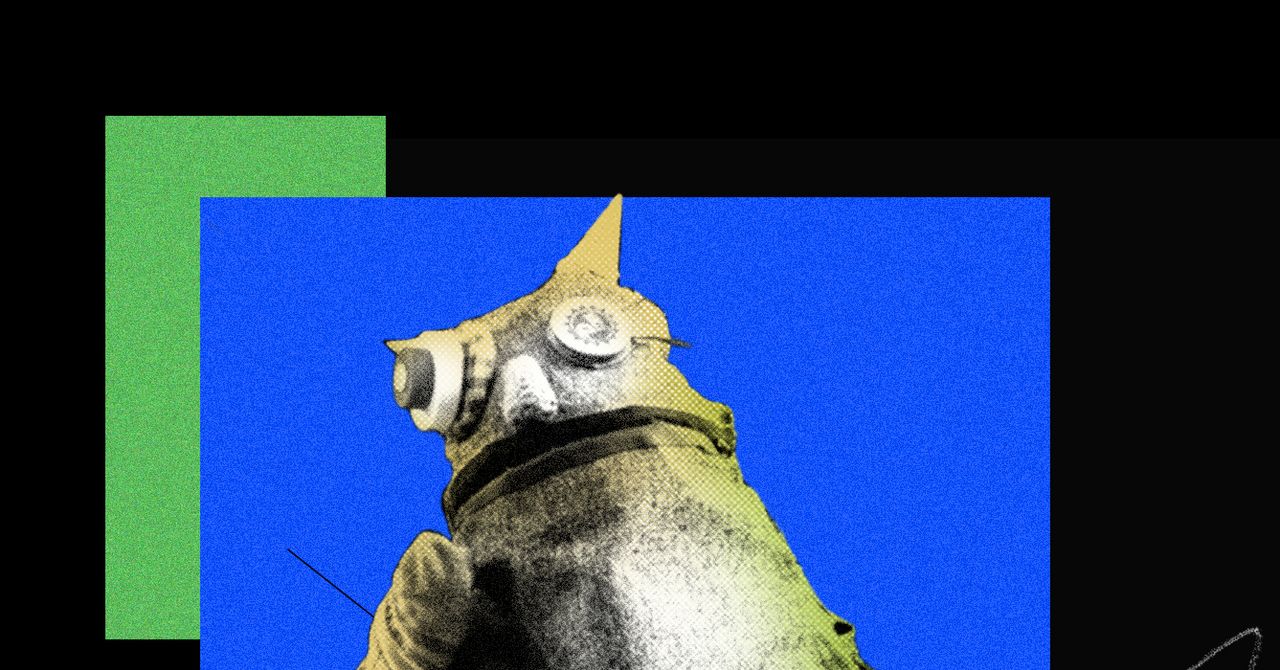
Summer of Ludd, a New York festival for people trying to claw back attention from Big Tech platforms, has a media representative with felt, trash, and a contractual objection to short-form video.
The representative is Gowanus, a puppet whose organizers say he was born in a dumpster in the Brooklyn neighborhood of the same name. In an interview with WIRED’s Manisha Krishnan, Gowanus said the puppet format is meant to preserve anonymity for the people behind the project, drawing from the original Luddites: British textile workers who organized against automation and exploitative working conditions in the early 1800s.
The festival, which WIRED attended, asked participants to follow three rules: be present, bring no phones, and make no recordings or photographs. Its programming included workshops on flirting in person, a box for written accounts of harms attributed to Big Tech, and communal app-deletion events.
Gowanus still showed up at Condé Nast’s Manhattan offices for a podcast recording. The compromise came with paperwork. He presented a handwritten contract asking WIRED not to cut the interview into short clips, saying the group wants people to give time and attention to a full conversation rather than scroll past fragments. WIRED agreed to clip only the part in which Gowanus explained the contract.
A Luddite project aimed at platforms
Gowanus told WIRED the movement is not a blanket rejection of tools, despite the insult value the word “Luddite” has picked up in modern speech. He framed the project as a critique of technologies that consolidate power, accelerate inequality, or weaken communities.
His target list is familiar: social media platforms, dating apps, artificial intelligence systems, data centers, and platform-controlled information flows. Gowanus argued that the default Silicon Valley story, technology equals progress, has obscured who benefits from specific systems and who pays for them.
The group’s stated principle comes from the older Luddite tradition. Gowanus cited opposition to “machines harmful to commonality,” which he interpreted as tools that fray communities and push people into more isolated lives.
He told WIRED that Summer of Ludd draws a mix of participants, including people cutting back from heavy tech use and people who had already avoided phones or online life for years. He also pushed back on coverage that treats the trend mainly as Gen Z buying flip phones. The group’s emphasis, he said, is collective action in public space rather than private digital detox as a lifestyle accessory.
Deleting apps, rebuilding calendars
One Summer of Ludd event, called Delete Day, had people gather to remove apps from one another’s phones. Gowanus said the point was to acknowledge that dropping Instagram, Hinge, or another sticky service is harder when done alone.
Another session, “What Are You Doing Tonight? How to Create Your Own Events Calendar,” brought together people who run newsletters, RSS feeds, and other alternative information systems. Gowanus said communities have been pushed into posting updates on Instagram because that is where audiences are, which then bends local organizing toward whatever the platform’s algorithm rewards.
The festival also ran two “Luddite Rizz” workshops. Gowanus told WIRED they were less about pickup technique than handling rejection face to face, a response to dating apps that he said have made romantic interaction more transactional.
For its Fourth of July protest, the group used an evidence box tied to an event called SHITPHONE, an acronym for “Scathing Hatred of Information Technology and the Passionate Hemorrhaging of Our Neoliberal Experiences.” Participants wore gnome hats and put technologies “on trial,” according to Gowanus. Subtle branding, this is not.
This story draws on original reporting from WIRED.


