Facial recognition is starting to look less ridiculous on the front door, at least in one smart home reviewer’s testing. The Verge’s Jennifer Pattison Tuohy tested four smart locks that can open after recognizing a user’s face and concluded that the feature is worth considering, even though she still rates ultrawideband, or UWB, as the better hands-free unlocking method.
The appeal is obvious enough: a lock that identifies you as you approach removes the keypad shuffle, the app tap, and the pocket search for keys. It also avoids one of the old smart-lock compromises, where “automatic” unlocking depends on phone location rules that can be late, brittle, and tied to an app staying alive in the background. Anyone who has watched a smart home routine miss its cue will recognize the genre.
Tuohy’s broader point is that the newer approaches are more convincing. Facial recognition lets the lock authenticate the person in front of it. UWB, by contrast, uses a radio in a phone or watch to identify the authorized user nearby and estimate proximity more precisely than basic Bluetooth-style presence detection. In Tuohy’s testing, UWB was faster and more dependable than face unlock because it worked as long as the user had the device on them.
That caveat is also where face unlock gets its opening. Tuohy wrote that she had previously treated facial recognition locks as an overbuilt answer to a problem already handled by other smart-lock methods. Her view changed while reviewing Schlage’s Sense Pro, a UWB-equipped lock, because her husband often leaves his phone inside while working outdoors or in the garage. A UWB lock cannot recognize a phone that is sitting in the house. A face-recognition lock can still work for the person standing at the door.
UWB is better, but still scarce
The trade-off, according to Tuohy, is availability and cost. UWB smart locks remain expensive, and only a small number are on the market. That leaves facial recognition as a more plausible option for buyers who want some form of hands-free entry now, assuming they are comfortable with the privacy and security implications of putting biometric access control on an exterior door.
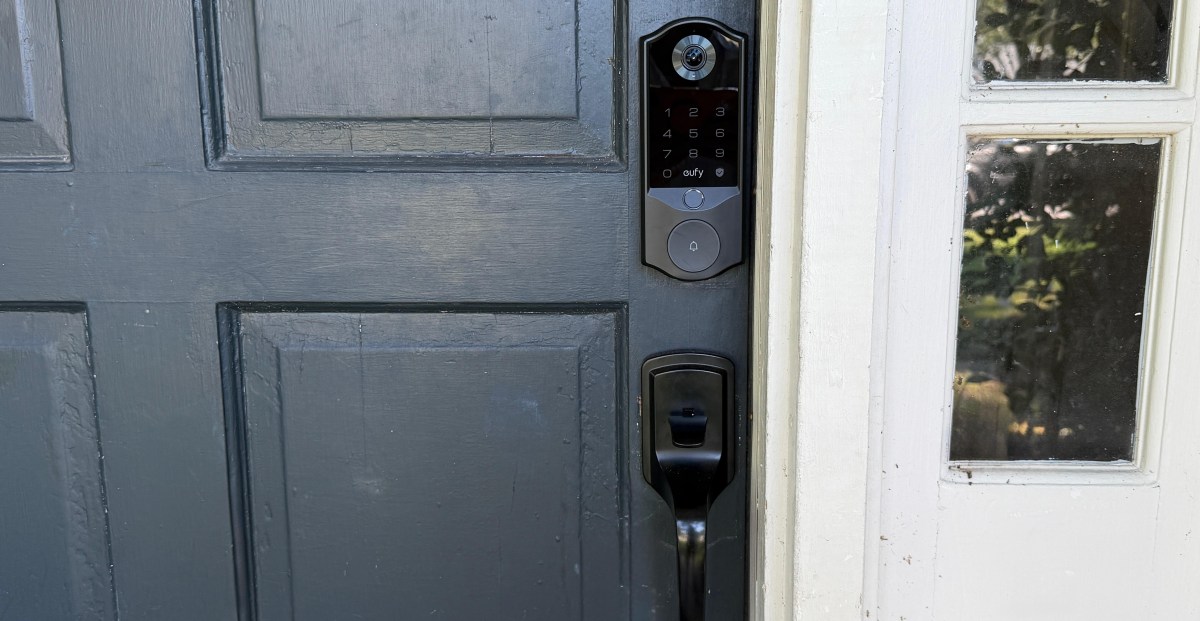
The Verge identified the Eufy FamilLock E40 in its imagery, and Tuohy’s review also discusses the Schlage Sense Pro in the context of UWB unlocking. The public portion of her report does not provide the full list of the four face-recognition models tested or detailed results for each one.
The useful takeaway is narrower than the usual smart-home sales pitch: face unlock is not automatically a gimmick, and UWB is not a universal fix if the credential lives on a phone that may be elsewhere. For households where people step outside without a device, the lock that looks at the person rather than their pocket has a real job to do.
This story draws on original reporting from The Verge.