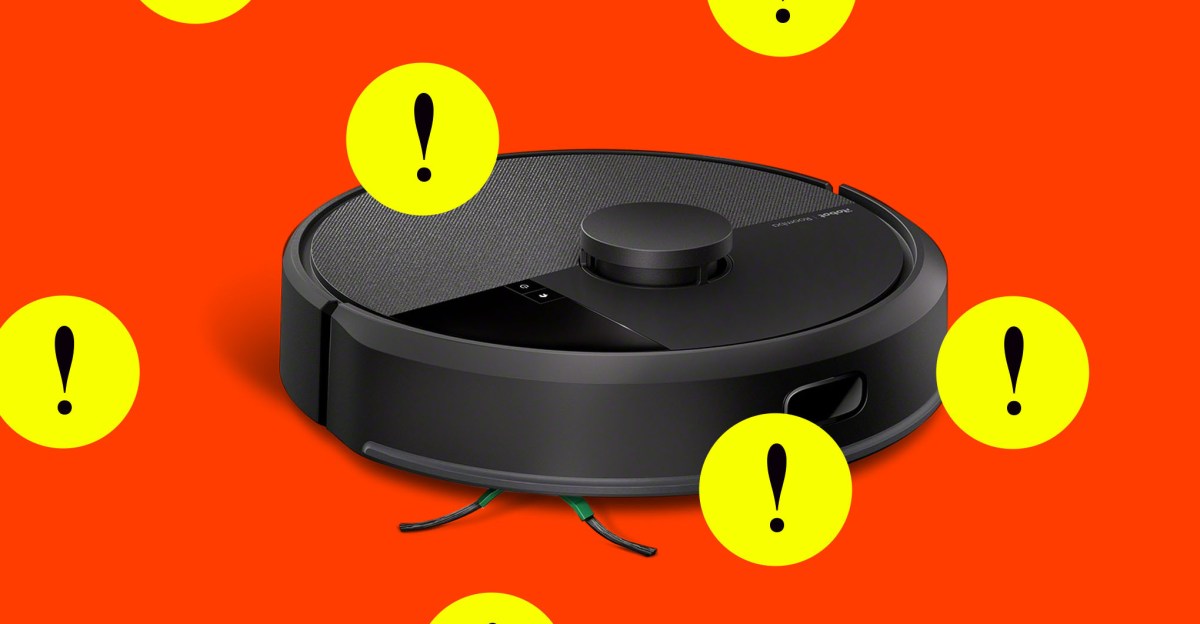
The FCC robot vacuum ban is broader than the humanoid-robot crackdown suggested by the first wave of headlines. Katie Gorscak, the Federal Communications Commission’s media relations director, confirmed to The Verge that the Trump administration’s ban on “advanced robotic devices” entering the United States also applies to robot vacuum cleaners.
The rule does not reach into homes and confiscate existing devices. According to The Verge’s report, current Roombas and other already approved robot vacuums are not covered, and companies may continue importing and selling models that have already cleared the process. The fight is over future foreign robots, which the government says could create national security risks.
The FCC’s definition is doing most of the work here. The covered category includes new software-controlled robots that move across the ground, weigh more than 4.4 pounds including any dock, can sense their surroundings, and have wireless connectivity. That last requirement means ordinary networking hardware matters, because many home robots rely on Wi-Fi to move data across a room without wires and back to cloud services.
Does the FCC robot vacuum ban affect my current Roomba?
No, based on what Gorscak confirmed to The Verge. The ban is aimed at future foreign robotic devices, while existing Roombas and already approved models may remain in use and on sale.
The scope also reaches well past robot vacuums. The government’s announcement named humanoid robots and quadrupeds, but the criteria described by the FCC would also capture future robot lawnmowers, sidewalk delivery robots, and warehouse robots that move packages around facilities such as Amazon’s, according to The Verge.
The national security argument is tied to the sensors and radios that make these machines useful. A robot vacuum can map rooms, detect obstacles, receive commands, and communicate wirelessly. Legs are not required for a device to collect data or be remotely controlled. That is the mechanical bit that gets lost when policy is packaged as a humanoid-robot story.
The FCC’s National Security Determination explicitly points to prior reporting by The Verge about a DJI robot vacuum security failure in which one person was able to access 7,000 DJI robovacs worldwide. The document uses that case as part of its justification for treating connected robots as a security concern.
That does not mean the FCC is tailoring the restriction to vendors with documented bad security. The Verge notes that, as with the government’s consumer router ban, the robot policy is not aimed specifically at companies that shipped insecure products. Instead, it draws a broad line around foreign robotic devices that match the FCC’s technical definition.
The practical pressure now lands on companies that want to keep selling future robotic cleaners and similar devices in the US. The Verge reports that even robot vacuum companies are being asked to commit to US manufacturing. The government has framed the policy as a national security measure; for consumers, the near-term takeaway is narrower but still awkward: the robot already cleaning under the couch is fine, while the next foreign model may not get through the door.
This story draws on original reporting from The Verge.