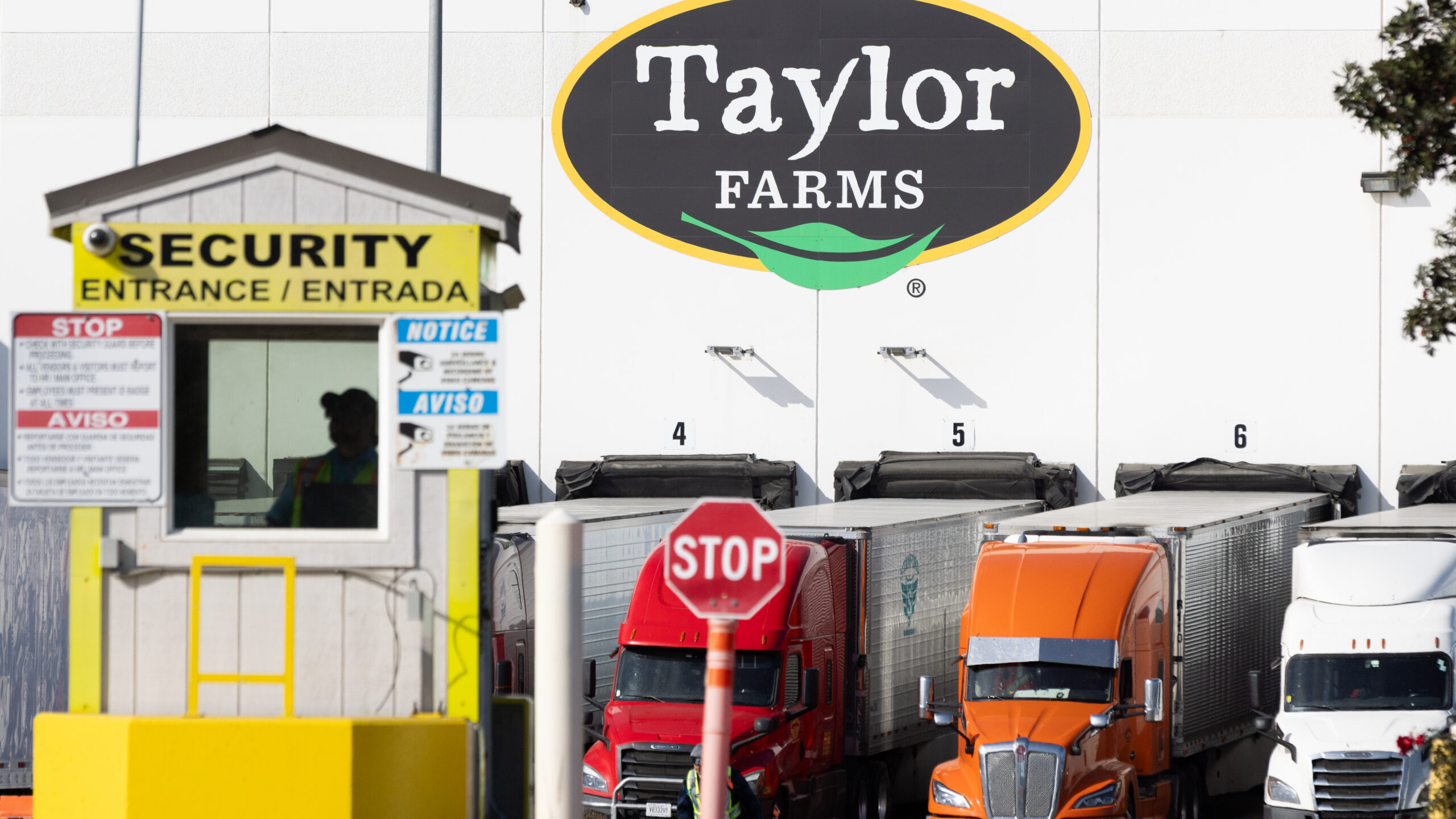
Federal health officials said Monday that Taylor Farms iceberg lettuce remains the leading source identified in a multi-state Cyclospora outbreak, despite a weekend lab reversal that the company portrayed as exculpatory.
The Food and Drug Administration and the Centers for Disease Control and Prevention identified Taylor Farms, also known as Taylor Fresh Foods, after FDA traceback work repeatedly led investigators to shredded iceberg lettuce grown in Central Mexico and supplied by the company. Traceback investigations start with sick people and the food they ate, then follow those products backward through restaurants, distributors, processors and farms.
That evidence, not a positive product test, prompted Taylor Farms to issue a voluntary recall Friday covering iceberg lettuce sourced from Central Mexico between June 29 and July 16, according to the FDA. The CDC initially framed the risk around shredded iceberg lettuce served at Taco Bell locations in Indiana, Kentucky, Michigan, Ohio and West Virginia, and said grocery-store lettuce and lettuce served elsewhere was not affected.
A lab result added noise, then vanished
The public message changed over the weekend. On Saturday, the FDA posted that a sample of Taylor Farms lettuce had tested positive for Cyclospora, a microscopic parasite that can cause prolonged gastrointestinal illness. On Sunday, the agency removed that statement and said additional review showed the result was a false positive.
FDA officials said Monday that the sample came from lettuce tested at the border and was outside the Taylor Farms recall. Because new illnesses were still being reported, officials said they disclosed the preliminary result quickly. The agency did not explain the precise cause of the false result.
Taylor Farms responded Sunday by saying the FDA had apologized to the company and that the agency had not identified any positive product test for Cyclospora. On social media, the FDA disputed the broader implication, saying the false positive did not change the epidemiological basis for the recall. Acting FDA Commissioner Kyle Diamantas repeated that point during Monday’s briefing. FDA officials also denied apologizing to Taylor Farms.
The distinction matters because fresh produce outbreaks often leave investigators without a contaminated leaf in hand. The food moves fast, gets eaten fast and spoils fast. In this case, federal officials say the traceback pattern remains the operative evidence.
The recall is wider than Taco Bell, but hard to read
Public information about where the recalled lettuce went remains thin. The New York Times reported that Walmart removed Marketside-branded lettuce products, and that Sysco, US Foods and Jack in the Box also said they were affected by Taylor Farms lettuce. The Times reported that some products were large food-service bags and some blends included romaine.
The FDA said Saturday that Taylor Farms had not publicly provided distribution information or a customer list for the recalled product, though that statement was later removed from the agency’s site. The recall notice still lists product codes and dates rather than a full retailer and restaurant map.
Taylor Farms said the potentially contaminated lettuce went to 27 states. The public picture is messier: New York and California have reported cyclosporiasis cases but are not on the recall list. CDC surveillance data cited in the outbreak reporting shows at least 34 states with cases. Michigan health officials reported 6,571 cases and 102 hospitalizations as of July 21.
The outbreak also puts renewed attention on FDA traceability rules. A Food Traceability Rule covering foods including leafy greens was scheduled for compliance on January 20, 2026, but the Trump administration delayed the deadline to July 20, 2028. The FDA has said the rule is intended to speed identification and removal of contaminated foods.
Matthew Cortland, a lawyer at Data for Progress, noted that Taylor Fresh Foods donated $1 million to the Trump-aligned super PAC MAGA, Inc. five days after the administration announced the delay in March 2025. Taylor Farms did not immediately respond to a request for comment, according to the reporting. An account for the Department of Health and Human Services called speculation about influence “FAKE NEWS” and said administration decisions are driven by science and public safety.
This story draws on original reporting from Ars Technica.