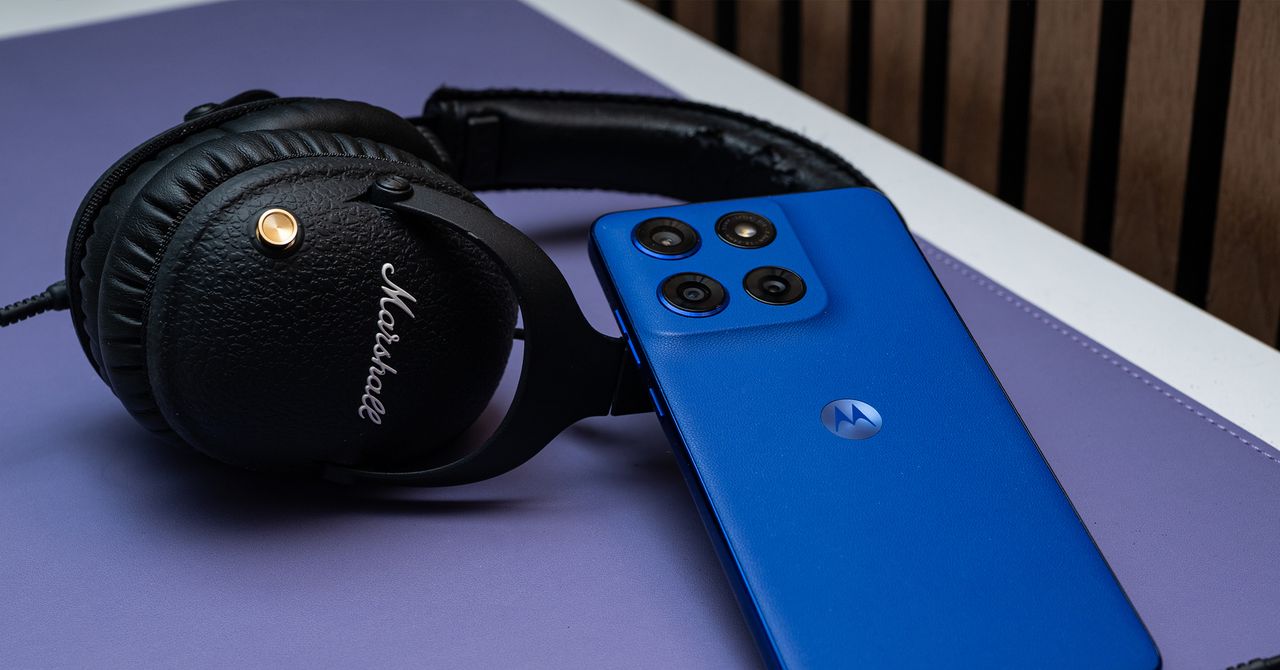
Headphone jack phones 2026 are becoming a mostly Motorola-shaped corner of the smartphone market. WIRED updated its tested guide in July and named the Motorola Moto G Stylus 2026 its top pick for buyers who still want a built-in 3.5-mm audio port rather than a dongle, Bluetooth earbuds, or another tiny thing to lose.
The shift is not subtle. Apple removed the jack from the iPhone 7 in 2016, after Oppo had already done it first, according to WIRED. Apple said the move saved internal space for a slimmer phone and a larger battery, while also pushing the wireless headphone market along. Other manufacturers followed, and the jack mostly retreated to cheaper Android models.
Even that refuge is thinning out. WIRED notes that Samsung stopped offering the port on its Galaxy A-series phones in 2025. Asus, once one of the remaining flagship-phone makers with headphone jacks, confirmed earlier this year that it is leaving the mobile business for now, ending new Zenfone and ROG Phone launches for 2026 while continuing promised support. Asus called the move temporary, according to WIRED.
What are the best headphone jack phones in 2026?
WIRED’s current recommendations put Motorola at the front. The Moto G Stylus 2026, listed at $500, is the best overall choice in the guide. It includes a headphone jack, an embedded stylus, a microSD card slot, wireless charging, and an IP68/69 rating. WIRED says the phone has a 6.7-inch 120-Hz OLED screen, a 5,200-mAh battery that can last two days with light to average use, and a 50-megapixel main camera that performs reliably when the phone and subject stay still.
The caveat is value. WIRED says Motorola raised the price while making limited changes from the 2025 version. The 2026 model uses the same processor as last year’s phone and starts with less storage, though expandable storage softens that a bit. Motorola promises two Android OS upgrades and three years of security updates, which WIRED criticizes as weak for a $500 handset.
The runner-up is the Motorola Moto G Power 2026, priced at $400 and shown at $370 on Amazon in WIRED’s listing. It keeps the headphone jack, NFC, a microSD card slot, 128 GB of storage, and an IP68/69 rating. WIRED says Motorola removed wireless charging, yet performance improved over the prior model despite the same MediaTek Dimensity 6300 chip and 8 GB of RAM. The battery is another 5,200-mAh unit, and WIRED says it can last two days with average use.
Motorola Moto G Stylus 2026: WIRED’s best overall pick, with a jack, stylus, OLED display, expandable storage, and wireless charging.
Motorola Moto G Power 2026: Runner-up, with long battery life, NFC, expandable storage, and a lower price than the Stylus.
TCL 60 XE Nxtpaper 5G: A $250 phone, shown at $180, built around a matte display with reading modes and a headphone jack.
Motorola Moto G Play 5G 2026: Listed by WIRED as its ultra-budget option, shown at $220 after a discount.
Does a headphone jack still change anything?
A wired connection can carry uncompressed audio, avoids Bluetooth pairing failures, and has little or no delay between the phone and headphones, according to WIRED. It also does not require charging the headphones, which remains an underrated feature for anyone who has met a dead earbud case at the wrong time.
Bluetooth has improved, though. WIRED says modern Bluetooth codecs are much better than they were five years ago, and most listeners probably will not hear a major quality gap between wired and wireless headphones.
For phones without the port, WIRED points to USB-C adapters and USB-C earbuds as workarounds. Apple’s USB-C to 3.5-mm adapter is listed at $9 and works with USB-C Android phones and iPhone 15 or newer models, according to WIRED. That solution works, but it is still a workaround for a hole that used to be built into the phone.
This story draws on original reporting from WIRED.