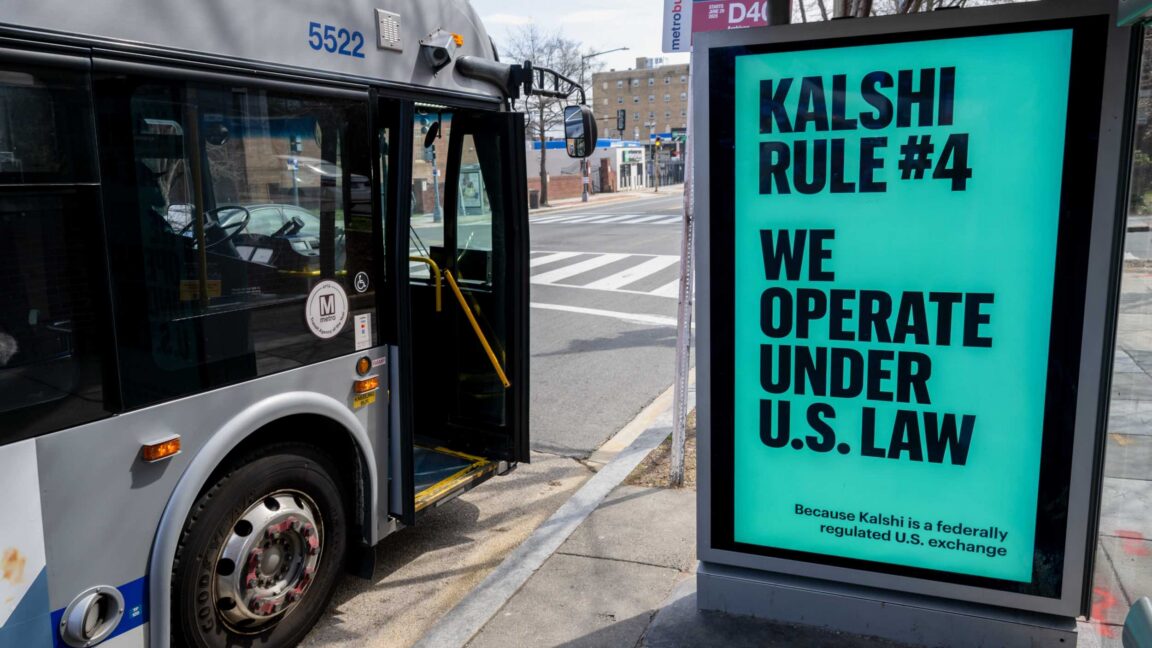
A federal judge in Manhattan refused to stop New York from enforcing its gambling laws against Kalshi, handing the prediction-market company a setback in its attempt to keep offering sports-event contracts in the state while its lawsuit proceeds.
US District Judge Analisa Torres of the Southern District of New York denied Kalshi’s request for a preliminary injunction against officials at the New York State Gaming Commission. Kalshi filed a notice saying it will appeal to the US Court of Appeals for the 2nd Circuit.
The immediate consequence is practical: New York can keep treating Kalshi’s sports markets as unlicensed sports wagering for now. Kalshi can still pursue the underlying lawsuit, but it did not persuade Torres that federal commodities law likely wipes out New York’s authority at this stage.
Kalshi is registered with the US Commodity Futures Trading Commission as a designated contract market, a status used for exchanges that list certain derivatives. The company argues that its sports-event contracts are swaps subject to the CFTC’s exclusive jurisdiction under the Commodity Exchange Act.
Torres did not decide, for purposes of the injunction motion, whether the contracts are swaps. She focused instead on preemption: whether Congress clearly meant to stop New York from applying gambling rules to these contracts.
New York can regulate around the federal regime, judge says
Torres wrote that the Commodity Exchange Act does not show that Congress meant to displace every state law that touches a designated contract market. In her view, the statute leaves states room to regulate issues adjacent to trading on those markets, including gambling, an area states have long policed.
The judge also rejected Kalshi’s argument that the CFTC’s decision not to restrict Kalshi’s sports-event contracts blocks New York from acting. Torres wrote that New York’s gaming laws work alongside federal law rather than against it.
New York Gov. Kathy Hochul and Attorney General Letitia James said in a joint statement that the state’s gambling rules are meant to protect consumers and that Kalshi had tried to disregard them. They said the state would keep applying its laws to gambling platforms, including prediction markets.
Kalshi sued New York in October after the Gaming Commission ordered it to stop operating, advertising, promoting, administering, managing, or otherwise making available what the commission called an unlicensed mobile sports wagering platform tied to sports events in New York.
The company began listing sports-event contracts in January 2025, including markets tied to the NCAA basketball tournament and the US Open golf tournament. New York officials have argued that unsupervised sports gambling would harm residents, especially people ages 18 to 24. State law also bars betting on sports involving New York-based college teams.
The preemption fight is spreading
To win a preliminary injunction, Kalshi had to show that it was likely to prevail, that it would suffer irreparable harm without court intervention, and that an injunction would serve the public interest. Torres found Kalshi had not shown that Congress had a clear purpose to preempt New York’s gambling authority.
She pointed to language in the Commodity Exchange Act saying CFTC authority does not supersede or limit jurisdiction given to other federal or state regulators. She also noted that Congress expressly barred state gambling laws from applying to swaps in some specific situations, which undercut Kalshi’s broader claim that all such state enforcement is displaced.
Torres also found that Kalshi had not shown it would be impossible to comply with both New York gambling law and the Commodity Exchange Act.
The ruling lands in a broader legal fight over who gets to control prediction markets that look a lot like betting products once they attach themselves to sports. The CFTC has taken a more permissive position than several states and has sued states seeking to preempt laws restricting or regulating prediction markets.
Courts are not aligned. In April, the 3rd Circuit ruled in a Kalshi case that New Jersey could not regulate sports bets offered through prediction markets. In another case, the 6th Circuit refused to grant Kalshi a preliminary injunction against Ohio gambling laws. The 2nd Circuit will now get New York’s version of the same argument.
This story draws on original reporting from Ars Technica.