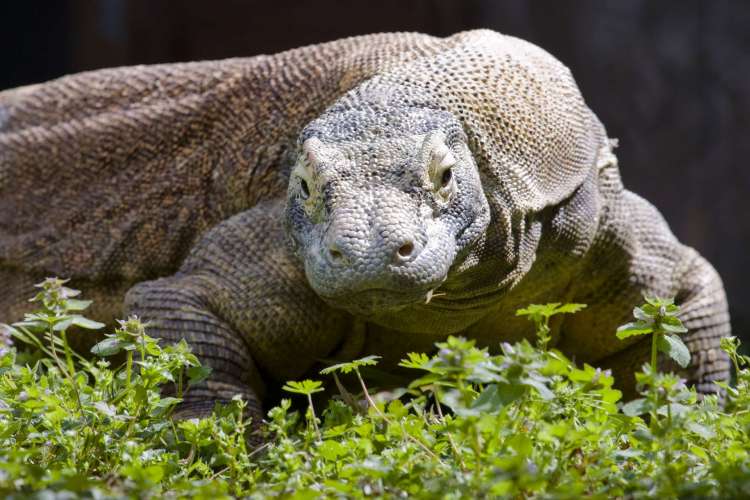
Elizabeth Veatch, an anthropologist at the University of Tübingen, and her colleagues argue that Homo floresiensis, the small-bodied hominin from the Indonesian island of Flores, was probably not bringing down pygmy elephants. The team’s study in Science Advances says the better read of the bones is less heroic and more practical: Komodo dragons killed or consumed the animals first, and the hominins cut meat from what remained.
That matters because the old picture made Homo floresiensis look like a tiny but capable big-game hunter, able to coordinate attacks on Stegodon, extinct elephant relatives that lived on Flores. If Veatch’s team is right, the case for that level of hunting behavior gets weaker, along with some assumptions about where these hominins fit in the human family tree.
Tooth marks beat the hunting story
The evidence comes from Liang Bua, the Flores cave where Homo floresiensis remains were found. Archaeologists had found Stegodon bones in the same sediment layers as hominin material, with both stone-tool cuts and tooth damage on the bones. Earlier interpretations treated that mix as evidence that the hominins hunted and butchered the animals.
Veatch and her colleagues tested a less flattering possibility by feeding an almost complete goat carcass to a Komodo dragon at Zoo Atlanta, then comparing the resulting damage with the fossil bones from Liang Bua. Komodo dragons have serrated teeth and tear flesh by gripping and shaking their heads, leaving marks that the team described as generally shorter, wider and shallower than cuts made by stone tools.
The dragon also targeted the richest parts of the carcass first. Veatch’s team says that pattern matched the Flores Stegodon bones: tooth marks clustered on meaty areas such as limbs, ribs and fat-rich feet. Stone-tool marks, by contrast, appeared on less desirable parts. That distribution fits scavenging after a predator had eaten, not first access to a fresh kill.
The team also reports no evidence for fire in the Homo floresiensis layers at Liang Bua, which suggests any scavenged Stegodon meat was not cooked there. That does not prove the species lacked every fire-related behavior everywhere, but it strips away one of the cleaner claims for complex subsistence at this site.
A messier origin story
The finding feeds into a larger fight over the ancestry of Homo floresiensis. One common hypothesis casts the Flores hominins as island descendants of Homo erectus, a species that appears in Africa around 1.9 million years ago and later shows up across Georgia, China and Indonesia. The oldest hominin bones found outside Africa are Homo erectus fossils from Dmanisi Cave in Georgia, dated to about 1.77 million to 1.85 million years ago.
Stone tools complicate that neat story. Tools from Shangchen in China have been dated to 2.1 million years ago, while tools from Xihoudu in northern China have been dated to 2.43 million years ago. If those dates hold, either Homo erectus is older than its known fossils show, or another hominin left Africa first.
Veatch and her colleagues write that evidence for complex behavior in Homo floresiensis, including fire use and sophisticated tool behavior, has become weaker over time. They suggest the species may have come from an older lineage in which large-game hunting and controlled fire use had not developed, such as Homo habilis or Homo rudolfensis. Other anatomical studies have also pointed away from a straightforward Homo erectus ancestry, including features of the feet and upper arms.
The case is not tidy. The inside shape of the Homo floresiensis skull has been interpreted as showing a prefrontal cortex with similarities to modern humans, despite the species’ small brain. And Veatch’s team notes that Stegodon hunting may have been a bad deal even for hominins capable of doing it. Based on their cost-benefit calculations, giant rats ranked much higher as prey than Stegodon, which may help explain why rat remains are common in both Homo floresiensis and later Homo sapiens layers at Liang Bua.
Komodo venom probably would not have poisoned scavengers eating leftovers, according to the researchers, because its proteins are too large to pass through a modern human stomach lining and would likely be broken down by digestive enzymes. The greater problem was the animal still attached to the carcass. A Komodo dragon can reach about 3 meters and 70 kilograms, a poor dining companion for a hominin a little over a meter tall.
The study does not settle the ancestry of Homo floresiensis. It does make the dinner table look rougher, riskier and less cinematic than the big-game-hunter version.
This story draws on original reporting from Ars Technica.


