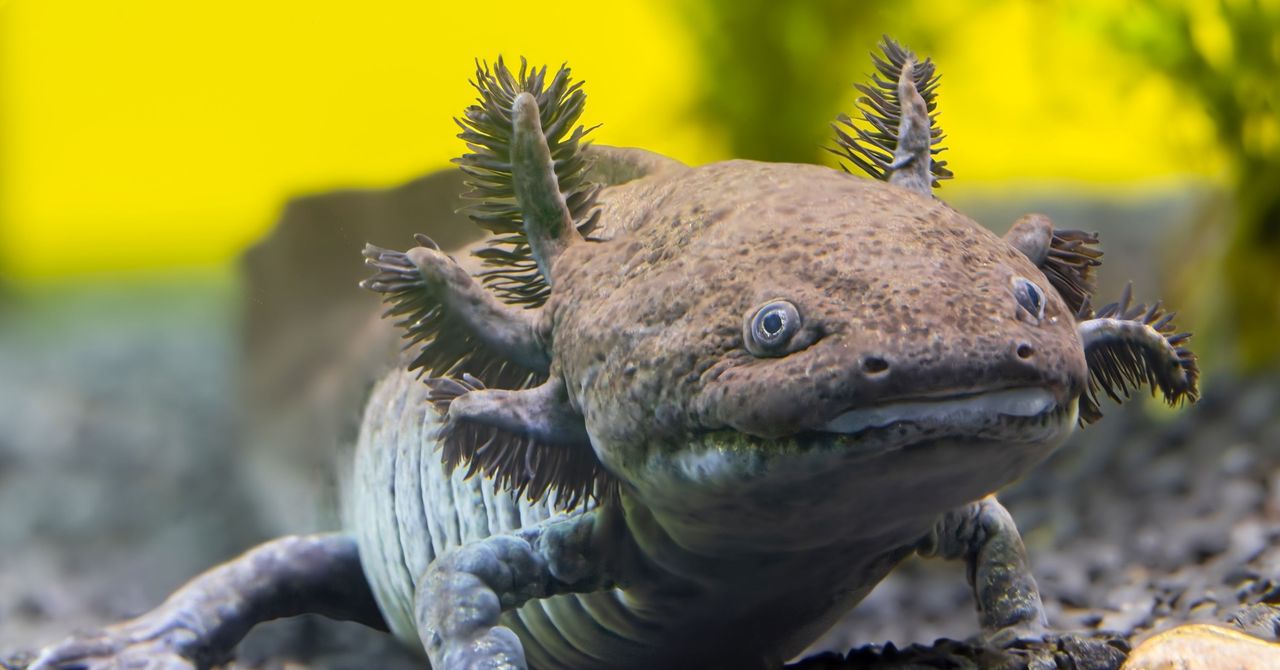
Researchers at the National Autonomous University of Mexico have identified a previously unknown fossil salamander from Hidalgo, adding a new branch to the family tree of the animals people casually lump together as axolotls.
The species, named Ambystoma quetzalcoatli, was described by scientists at UNAM’s Zaragoza School of Advanced Studies, known as FES Zaragoza. According to the research team, it is the first fossil salamander species formally described from Mexico and the oldest known Mexican record of the genus Ambystoma, the group that includes living axolotls.
The work, led by Jorge Herrera Flores and María Patricia Velasco de León, was published in Palaeontologia Electronica. UNAM said the find points to a deeper history for Mexico’s modern amphibian diversity, tied to lake systems that no longer exist.
The fossils came from Atotonilco el Grande in Hidalgo. The area once held a freshwater lake system of about 85 square kilometers, probably created when the Amajac River’s route was temporarily blocked, according to the researchers. That temperate, subhumid setting has produced fossils of plants, diatoms, gastropods, ostracods, beetles and fish. The amphibian material from the site had been sitting in the scientific equivalent of “we’ll get to it,” which is how paleontology often works when bones, scanners and grant calendars disagree.
The team studied 12 salamander fossils collected in the early 2000s by the FES Zaragoza Paleobotany Research Group. Several specimens preserved complete, articulated skeletons, giving the researchers enough anatomy to do more than squint at fragments and make a vibes-based call.
Herrera Flores, Velasco de León and colleagues used computed tomography scans and detailed comparisons with living salamanders to test the fossils’ identity. They compared the specimens with 13 living Ambystoma species, including Mexican endemics such as the Xochimilco axolotl, Ambystoma mexicanum, along with tiger salamanders from Mexico and the United States. The team also used three-dimensional imaging and CT data from international scientific collections.
To sharpen the comparison, the researchers examined complete skeletons of the living salamander Ambystoma velasci, using them as a reference for how modern bones are shaped and arranged.
The fossil species differs from living axolotls in several skeletal features, according to the study. Those include an elongated opening on the top of the skull, differences in the palate, changes in the arrangement of cranial bones and 17 trunk vertebrae. The vertebra count matters because modern axolotls have 16 or fewer.
The researchers also analyzed skeletal traits alongside earlier DNA-based studies of living salamanders to infer evolutionary relationships. Their conclusion: Ambystoma quetzalcoatli showed neoteny, the trait that lets an animal keep juvenile features into adulthood. Living Mexican species including the Xochimilco, Pátzcuaro and Alchichica axolotls also show that life strategy.
Neoteny is associated with stable, isolated lakes, where salamanders face less pressure to complete the full metamorphosis typical of many amphibians. The Hidalgo fossils suggest that this strategy was already present in Mexican axolotls during the Pliocene, several million years ago.
UNAM said the discovery supports the idea that Mexico’s present biodiversity has roots in vanished ecosystems. The fossils also confirm that Ambystoma salamanders were living in what is now Mexico far earlier than the country’s formal fossil record had previously shown.
This story draws on original reporting from WIRED.