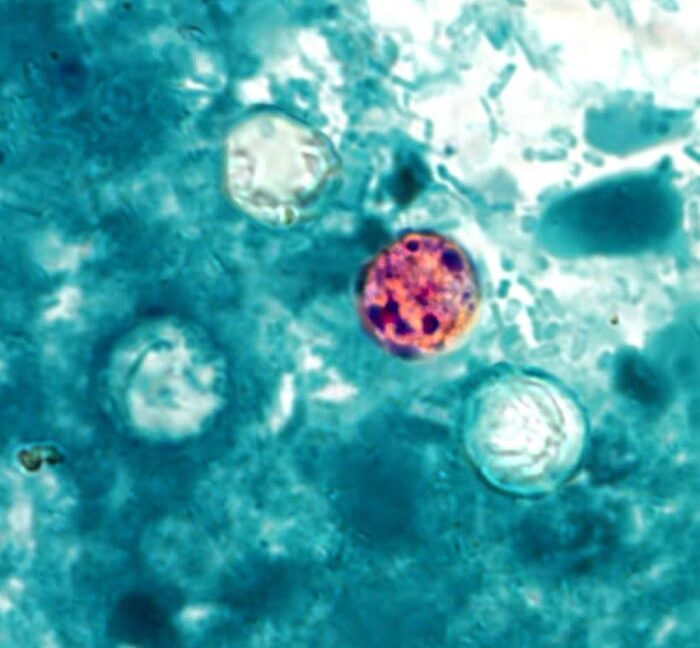
Michigan health officials are investigating a fast-growing outbreak of cyclosporiasis, a gastrointestinal illness caused by the parasite Cyclospora cayetanensis, after more than 700 cases were reported in roughly two weeks.
The Michigan Department of Health and Human Services said that, as of July 6, it had received reports of more than 700 infections since June 22. The department also reported 36 hospitalizations. The case count has climbed quickly: MDHHS reported 170 cases on June 30 and 572 cases on July 4.
For people caught in the outbreak, the immediate problem is not a mystery microbe with a dramatic name. It is days or weeks of gastrointestinal misery. The Centers for Disease Control and Prevention says cyclosporiasis commonly causes watery diarrhea with frequent and sometimes forceful bowel movements. Symptoms often last about a week, but the CDC says they can persist for two weeks or longer. Dehydration is one of the main risks.
Investigators have not named a food source
MDHHS says it has not identified a specific grower, supplier, or type of produce as the cause. The department is working with local health departments in southeastern Michigan, where most of the cases have been reported, to interview patients and look for shared exposures.
The state health department said it is also coordinating with the CDC and has shared Michigan case data with the federal agency.
Cyclospora cayetanensis spreads through fecal contamination. People shed the parasite in stool, and it can contaminate water or produce. MDHHS has noted that previous outbreaks have been tied to foods including bagged salad mixes and kits, cilantro, basil, raspberries, snow peas, and green onions.
The prevention advice is low-tech, because the transmission route is low-tech: wash produce thoroughly, clean it before eating, and keep up careful hand hygiene. That does not solve the traceback problem for investigators, but it reduces the odds that contaminated material reaches a plate.
Michigan’s numbers are far above its usual totals
The outbreak is unusually large for Michigan. CDC data show the state has generally reported around 50 cyclosporiasis cases per year in recent years. Its recent high was 97 cases in 2023.
Nationally, the picture is less clear because the CDC’s cyclosporiasis surveillance page only listed reports through June 16 and did not include Michigan’s current outbreak. Based on those older CDC figures, 17 states besides Michigan had reported 145 cases this year. Adding Michigan’s current total would put the national count above 845.
Ars Technica reported that the U.S. Department of Health and Human Services did not respond to questions about why the CDC surveillance page had not been updated, its work with Michigan, or current national trends. Cyclosporiasis cases in the United States have historically tended to peak in June and July.
The current Michigan surge does not, by itself, show that the United States is having an unusually large year. CDC annual data show the country has recorded between about 2,000 and 5,000 cases each year since 2018. The totals were 4,463 in 2023, 3,091 in 2022, 2,424 in 2021, 2,689 in 2020, 4,703 in 2019, and 3,519 in 2018.
For now, the practical status is blunt: Michigan has a large outbreak, the likely vehicle has not been identified, and investigators are still trying to connect patient interviews to a common exposure.
This story draws on original reporting from Ars Technica.