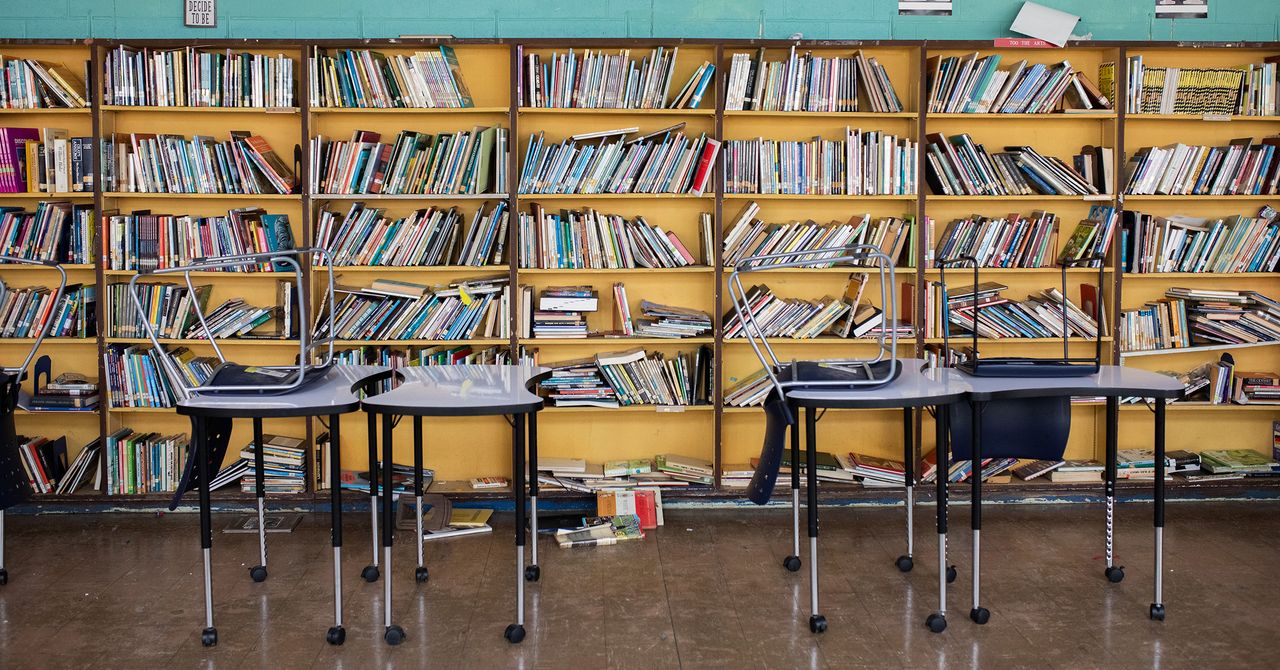
Mississippi’s celebrated rise in elementary reading scores is being built in classrooms where phonics drills, state exams and adult supervision sit on top of each other. WIRED reported from Jefferson County, a poor, rural district on the Mississippi River, where third-grade teachers are trying to get students over the state’s reading bar while eighth-grade teachers are still fighting a colder problem: many older students can decode school assignments but do not much want to read.
At Jefferson County Middle School, eighth-grade English teacher Candace Hamberlin is preparing students for the Mississippi Academic Assessment Program, the state’s annual standardized testing system. WIRED reported that one class period had 20 students enrolled, but only 10 present: six had been pulled for remedial work with a consultant hired by the district, while four were absent for unclear reasons. The students used StudySync, one of the adaptive software programs the school relies on for targeted test practice.
The stakes are not theoretical. WIRED reported that a schoolwide practice-test display showed Jefferson County Middle School would have earned 175 out of 700 points, an F, if the practice exam had counted. In Mississippi, weak grades can bring state monitoring, funding conditions and enrollment pressure. State law also lets students attend out-of-district charter schools when their home district is failing.
Hamberlin, who previously taught elementary school for 25 years, told WIRED she wants students to do more than pass a test. Reading comprehension, she said, trains people to interpret instructions, follow complicated text and understand what others mean. Her students, she said, are capable, but she has not seen a group so uninterested in reading.
Why Mississippi is being watched
National reading scores have been sliding, especially for adolescents. WIRED cited National Assessment of Educational Progress data showing 13-year-olds fell from 263 on a 500-point reading scale in 2012 to 256 by 2025, one point above the 1971 level. One-third of 13-year-olds score below basic, meaning they cannot identify a passage’s main idea.
Mississippi’s fourth-grade reading trend moved the other way. WIRED reported that the state ranked 49th on NAEP in 2013, then climbed to ninth by 2024. Jefferson County’s elementary school saw its own jump: 43 percent of fourth graders passed the MAAP in 2022, compared with 78 percent in 2025.
The state’s 2013 Literacy-Based Promotion Act is central to the debate. The law requires third graders who fail the reading test three times to repeat the grade, with exemptions for some students with documented disabilities, students already retained twice and students new to English. Jefferson County superintendent Adrian Hammitte told WIRED the “reading gate” creates pressure on families and schools to make sure children pass before fourth grade.
Fraud and selection-bias theories have followed Mississippi’s gains, as they tend to do when test scores rise fast. WIRED reported there is no evidence of widespread cheating, and Hammitte said Jefferson County held back no third graders in 2024 or 2025, which undercuts the claim that its fourth-grade gains came from excluding weaker readers.
The less flashy part: teacher support
The law also funded literacy coaching and teacher training. Michelle Nowell, Mississippi’s associate state superintendent for curriculum and instruction, told WIRED the state spends $15 million a year on the effort and has 57 coaches focused on kindergarten through third grade, with 22 more planned.
At Jefferson County Elementary, third-grade teacher LaTasha Glass teaches phonics concepts such as r-controlled vowels under heavy test pressure. WIRED reported that only five of her 40 students scored below passing on the final benchmark exam. She is not working alone: instructional coach Timothy Queen and principal Shameka Woods help in classrooms, splitting small groups and redirecting students during lessons.
That is the less tidy lesson from Mississippi. The model is not just a slogan about science of reading, or a punishment system for 8- and 9-year-olds. In Jefferson County, it is scripted curriculum, phonics, test pressure, extra adults and a district betting that reading scores can be moved by force of routine. The middle school down the hall shows the unresolved part: getting students through a test is one job; making them readers is another.
This story draws on original reporting from WIRED.