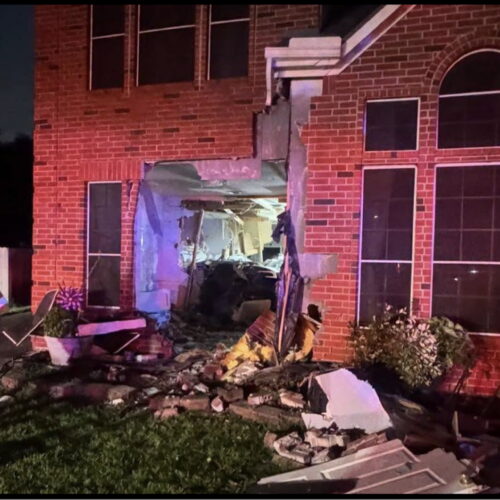
The National Transportation Safety Board said Wednesday that a Tesla involved in a fatal Texas crash had Full Self Driving engaged before impact, but that vehicle data showed the driver pressed the accelerator pedal to 100 percent, manually overriding the system.
The preliminary finding cuts against the account given to police by 44-year-old Michael Butler, who said last month that the car’s autopilot feature was engaged at the time of the crash. The crash killed a grandmother, according to Ars Technica’s earlier reporting cited in connection with the case.
The NTSB has not said what caused the crash. Its preliminary report addresses one narrower, technical point: whether Tesla’s driver-assistance system was active and whether the driver intervened before the collision. According to the agency, both were true.
What the vehicle data showed
In its preliminary report, the NTSB said electronic data from the Tesla showed that Full Self Driving, identified by the agency as FSD (Supervised), was engaged at the time. The same data showed that “the driver manually overrode FSD (Supervised) by pressing the accelerator pedal to 100 percent,” the agency said.
That distinction matters because Tesla’s system is not a driverless taxi mode. Under the naming Tesla uses, FSD (Supervised) is still a driver-assistance feature that can be overridden by a human driver. Pressing the accelerator is one way a driver can take control over the car’s speed command, according to the mechanism described in the NTSB’s findings.
The NTSB’s language does not clear Tesla, Butler, or the software of responsibility for the crash. Preliminary reports are an early factual snapshot, not a final probable-cause finding. The agency said its investigation has not yet determined the cause of the collision.
Tesla executives had made the same claim
Elon Musk disputed Butler’s account on X after Butler told police the autopilot feature was engaged. Musk wrote that Butler must have overridden the feature because, in Musk’s words, FSD drives slowly through neighborhood streets and the incident was a high-speed crash.
Ashok Elluswamy, Tesla’s vice president of AI software, also said before the NTSB report that Tesla’s internal data showed the driver had pressed the accelerator “all the way to 100 percent” in a residential area, manually overriding self-driving.
The NTSB’s preliminary findings match that specific claim from Tesla: FSD was on, and the accelerator pedal input reached 100 percent. The report does not, at this stage, answer the larger questions that follow every serious crash involving driver-assistance software, including what the driver saw, how the car behaved before the override, and whether any design choices contributed to the outcome.
This story draws on original reporting from Ars Technica.


