The RoboStore robot manufacturing pivot is now official: the former North American distributor of Unitree humanoid robots and quadrupeds has ended its distribution business and created Robo Inc., a manufacturing and systems-integration operation. RoboStore plans to open a 66,000-square-foot commercial-robot facility on Long Island, New York, by the first fiscal quarter of 2027, according to Ars Technica.
The change lands after the Federal Communications Commission placed foreign-produced advanced robotic devices on its Covered List on July 28. That action does not compel a distributor to abandon already authorized products. It does, however, generally block new foreign-produced robot models from receiving the FCC authorization normally required to import, market or sell them in the United States.
RoboStore had been the main North American channel for robots made by China-based Unitree Robotics, Ars reported. Founder and CEO Teddy Haggerty told the publication that the company had sold more than 1,500 robots and worked with customers including Cisco, OpenAI and Nvidia, as well as more than 150 universities. Those customer and sales figures are Haggerty's claims, not independently audited totals.
RoboStore says it will continue providing parts, repairs and upgrades to customers that already have robots. Its new business, Robo Inc., will focus on designing, producing and integrating its own systems in the U.S.
What does the FCC restriction on foreign-made robots actually cover?
The shorthand “robot ban” misses several moving parts. The FCC's Covered List rules apply to new foreign-produced advanced robotic devices, not only Chinese-made machines. Covered equipment cannot receive new FCC equipment authorization, which the agency says most electronic devices need before entering the U.S. market.
Existing robot models that had already received FCC authorization are not swept into a recall. The FCC says they may continue to be imported, marketed and sold, while people who lawfully bought such devices may continue using them. A foreign-produced robot or class of robots can also seek a Conditional Approval if the Department of War determines it does not pose the specified risks.
The FCC says an executive-branch interagency review found foreign-produced advanced robots posed unacceptable national-security and safety risks. The agency cited possible supply-chain disruption and cybersecurity threats to critical infrastructure. The FCC's Covered List records the addition of foreign-produced advanced robotic devices on July 28.
What does Robo Inc. plan to build?
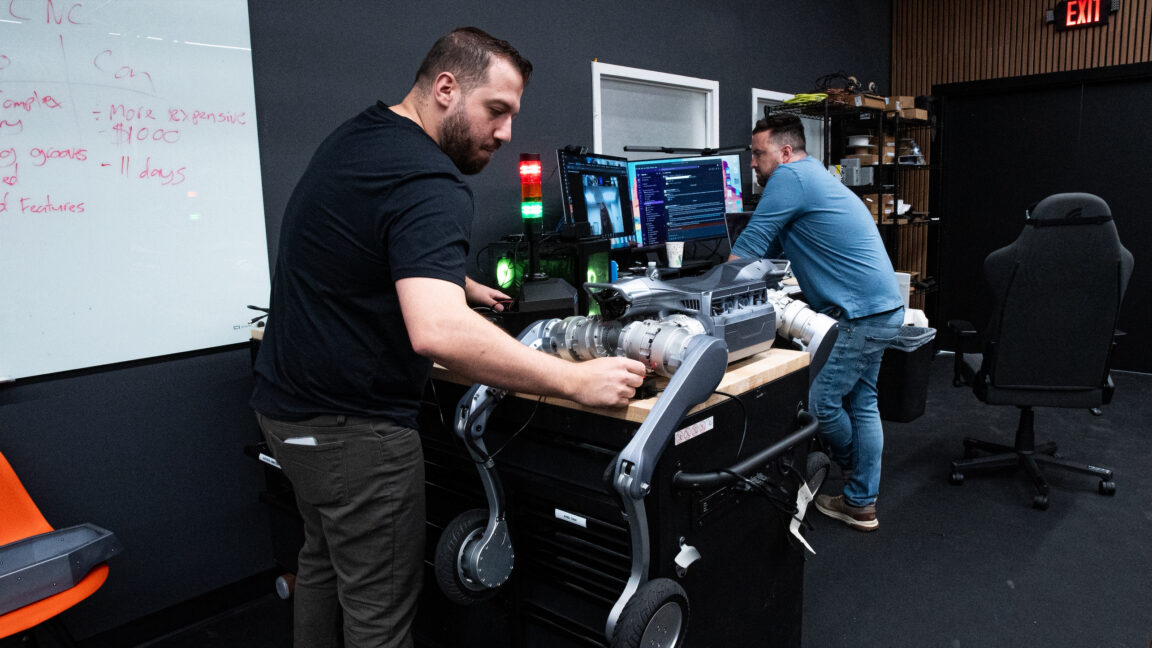
Robo Inc. is testing several product concepts, Ars reported. They include a wheeled machine topped by a humanoid torso, aimed at healthcare and concierge work; a specialized quadruped for security; and a humanoid platform for educators and researchers.
The healthcare-oriented concept would use cameras and sensors to collect routine measures such as temperature and blood-oxygen level, according to the report. The company has used 3D printing for prototypes being tested with certain customers, but commercial production remains a target rather than a finished factory line.
Haggerty told Ars that task-specific systems can fit many businesses better than a general-purpose humanoid. Robo Inc. also plans its first significant outside fundraising round after operating without outside investor money, the report said. The new plant and products will test whether an experienced robot distributor can turn a policy-driven opening into actual manufacturing capacity.
This story draws on original reporting from Ars Technica.