Schlage’s Sense Pro is a $399 smart deadbolt built for people who would rather have the door recognize them than fish for a key, a phone, or a keypad code. According to The Verge reviewer Jennifer Pattison Tuohy, the lock uses ultra-wideband to unlock as an authorized user approaches the door, and in her testing that system was quicker and more dependable than hands-free locks that lean on geofencing or other radio tricks.
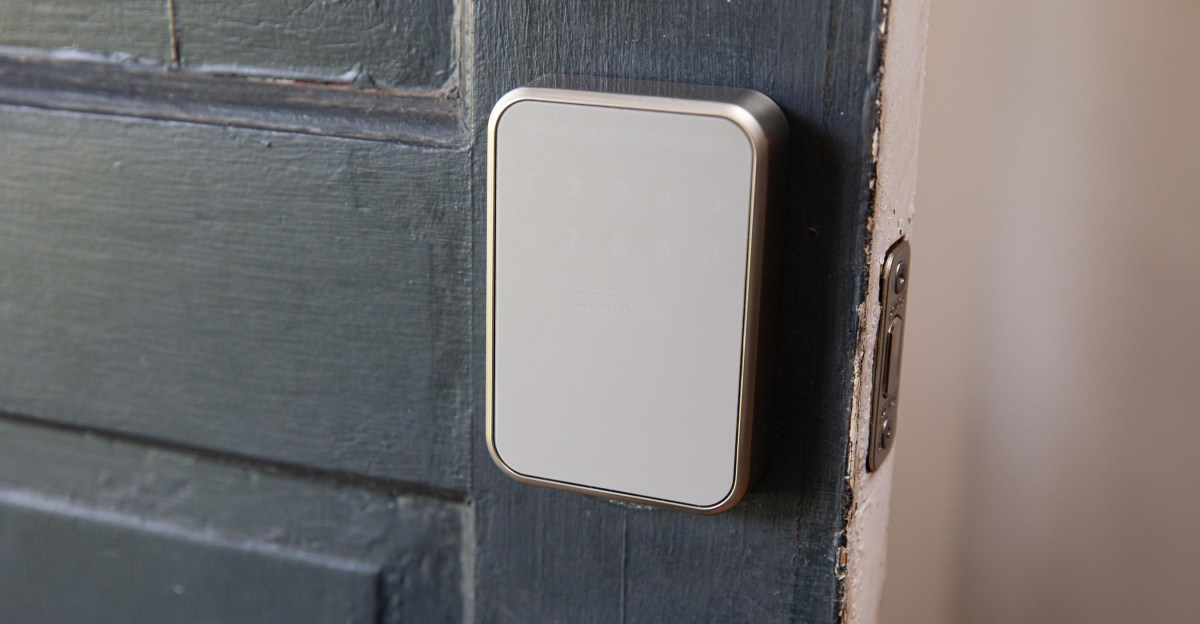
The trade-off is obvious from the hardware: Schlage removed the physical keyhole. The Sense Pro is the company’s first smart lock with ultra-wideband auto-unlock, its first Matter-over-Thread lock, and its first model without a conventional key slot, The Verge reported. That makes it cleaner to look at and less forgiving for anyone who still wants metal as the backup plan.
Apple gets the good part first
The Sense Pro works with Apple Home Key for both hands-free unlocking and tap-to-unlock access using an iPhone or Apple Watch, according to The Verge. The hands-free feature is the headline: the lock can open when the right Apple device is near enough, rather than waiting for a user to wake a screen, scan a fingerprint, or punch in numbers.
Ultra-wideband is the important bit. Instead of treating “near home” as good enough, as geofencing often does, UWB is designed for more precise short-range location. That precision is why Tuohy described the Sense Pro’s auto-unlock as the first hands-free system she trusts after testing several approaches. That is still one reviewer’s experience, not a universal guarantee for every front door, phone, router, and household chaos configuration.
For now, the lock’s most polished access story is Apple-only. The Verge reported that support for Google and Samsung is expected later through Aliro, the smart lock standard backed by major platform companies. Until that arrives, non-Apple households are being asked to buy into a promise, which is the least charming kind of smart-home compatibility.
Matter-over-Thread, no keyhole, minimal faceplate
The Sense Pro also supports Matter-over-Thread, which should make it fit into newer smart-home setups without depending on older Wi-Fi-only lock behavior. Matter is meant to let devices work across different platforms, while Thread gives low-power devices such as locks a mesh networking option. The review material does not provide performance numbers for battery life or Thread reliability, so those remain outside what can be said here.
Schlage also made a visible design choice by hiding most of the interface. The front of the Sense Pro has no obvious hardware beyond a subtle Schlage mark, and the keypad appears only after the user taps the lock, according to The Verge. It is a smart lock that wants to look less like a gadget bolted to a door and more like part of the door.
Tuohy framed the lock as a strong fit for people already comfortable with smart locks, remote control, and digital guest access. The same facts point to the caution: a $399 deadbolt with no physical keyhole asks users to trust phones, watches, radios, batteries, standards, and apps. That may be fine for smart-home diehards. For everyone else, Schlage’s smartest lock is also a neat little test of how much door you want your computer to be.
This story draws on original reporting from The Verge.