WIRED has updated its guide to subscription-free security cameras, adding Synology as a recommended brand and giving more detail on encryption, local storage and privacy trade-offs. The pitch is familiar but still useful: keep home video on hardware you control, or at least closer to it, instead of paying a vendor to warehouse clips in the cloud.
The July 2026 update also mentions IC Realtime and refreshes prices and links, according to WIRED. The publication says its editors independently select products, while also disclosing that it may earn compensation from retailer links or purchases made through those links.
Which subscription-free security cameras did WIRED recommend?
WIRED’s main brand recommendations include Eufy, Synology, TP-Link Tapo and Aqara. The update gives the most detail on Eufy and Synology, two very different answers to the same problem: one tries to make local storage easy for consumers, while the other looks more like a small-business surveillance setup that happens to fit in a house.
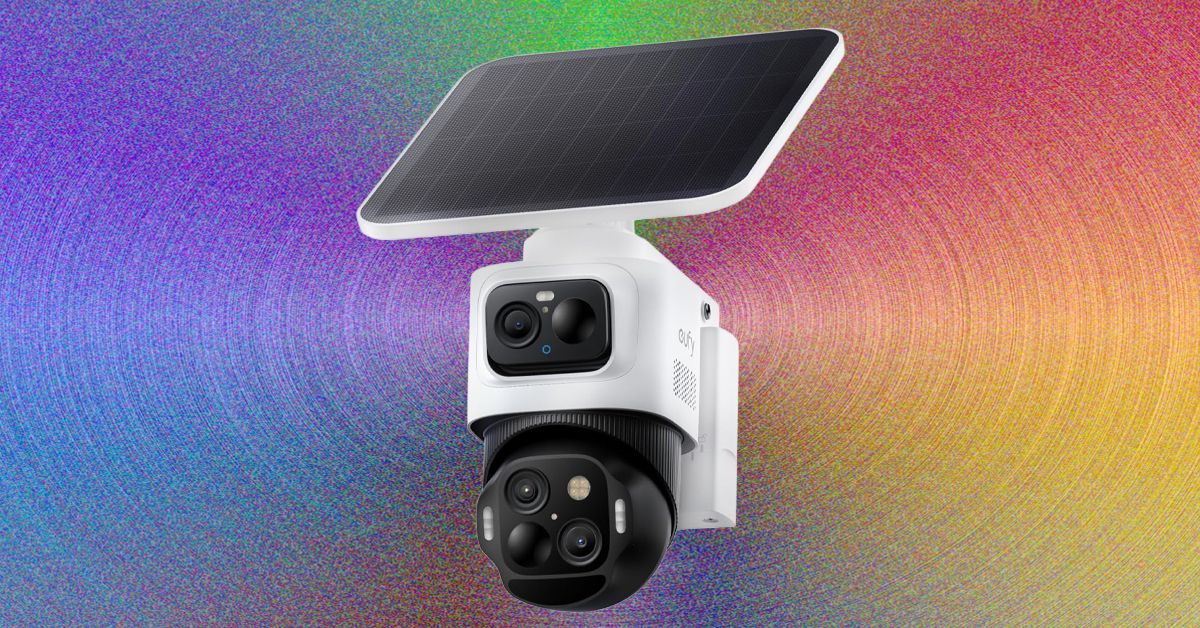
For most people, WIRED puts Eufy first. Eufy, an Anker sub-brand, sells a wide range of cameras with multiple local storage options, according to the guide. WIRED highlights the EufyCam S4, a triple-lens system with a 4K fixed camera covering 130 degrees and two 2K lenses that pan 360 degrees and tilt 70 degrees. The cameras can zoom in on subjects or license plates from more than 150 feet away, WIRED says.
The EufyCam S4 also includes on-device AI for detecting people, pets and vehicles, plus activity zones and adjustable detection sensitivity. Each camera has 32 GB of internal storage, expandable to 256 GB with microSD. When paired with Eufy’s HomeBase S380, the system adds 16 GB of storage, expandable to 16 TB with hard drives, and local facial recognition, according to WIRED.
WIRED’s caveats are the useful part. It says Eufy’s local AI does not match Google Nest’s cloud-based Gemini system for accuracy. The S4 is also capped at 15 frames per second, which can make fast motion look smeary, and its two-way audio and remote feed loading are weaker points.
WIRED also notes Eufy’s history. After earlier controversy over data breaches and claims about local storage, Eufy improved its security practices with end-to-end encryption and clearer disclosures about when data goes to the cloud, WIRED says, citing reporting from The Verge.
How does local camera storage work?
Local storage means video is recorded on hardware such as a camera’s microSD card, a base station, a network-attached storage device or a network video recorder. That can reduce cloud dependence, but it also moves responsibility for installation, capacity and backups onto the owner. Convenient, until the box under the desk becomes your evidence locker.
Synology is the more local-first option in WIRED’s update. Its cameras are made in Taiwan and are National Defense Authorization Act compliant, meaning they avoid components from certain banned manufacturers and can be used by U.S. federal agencies, according to WIRED.
Synology’s setup is more involved. WIRED says its best cameras use power over Ethernet, which requires Ethernet runs plus a PoE switch or injector. Pairing the cameras with a Synology NAS or NVR running Surveillance Station enables local recording, continuous capture, multi-camera viewing, people and vehicle detection controls, restricted areas, zones and trip lines. The DS Cam mobile app provides remote viewing.
WIRED singles out the Synology CC400W indoor camera, priced around $170 at Amazon in the update, with Wi-Fi, USB-C power, a magnetic adjustable mount, 2560 x 1440 video, a 125-degree field of view, HDR and 30 fps recording. It also supports microSD “Edge recording” as a fallback if the network or NAS fails.
This story draws on original reporting from WIRED.