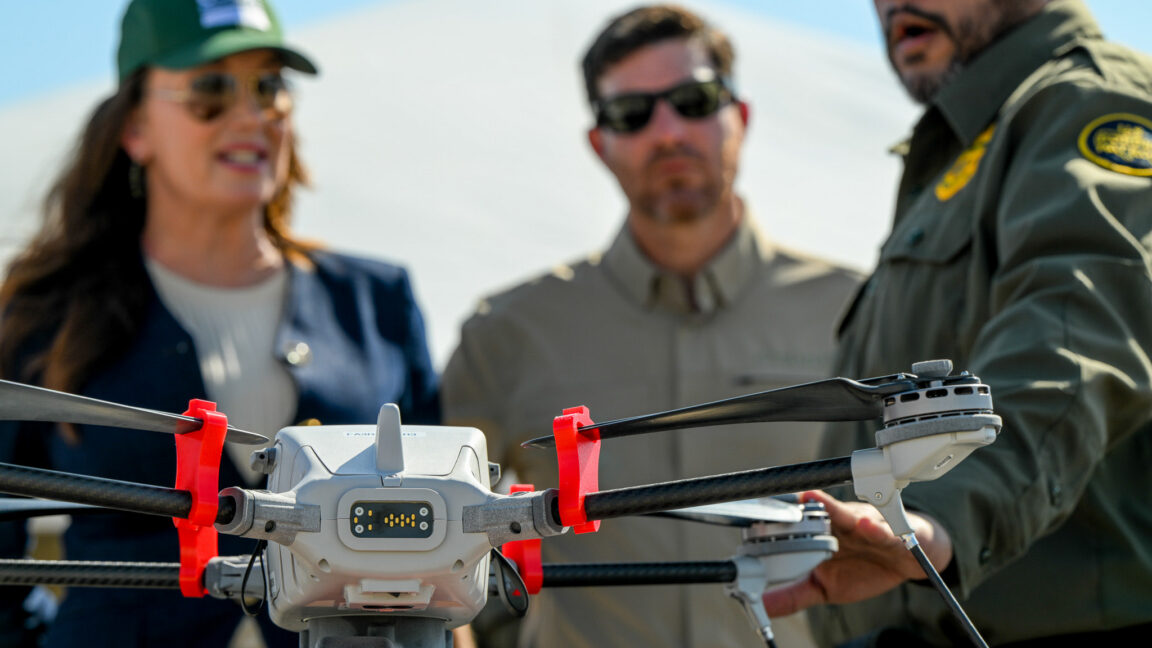
Texas screwworm drone surveillance has expanded after New World screwworm was found in the state, putting Department of Homeland Security aircraft to work scanning livestock and wildlife for animals that may need closer inspection. The drones can cover ranchland that is hard to reach on foot, but they are a triage tool, not a diagnostic machine or the main eradication measure.
Ars Technica reported that at least 200 DHS drones had been assigned to the effort and that the US Department of Agriculture had counted more than 1,000 flights and surveys of more than 22,000 animals. Those figures have not been independently documented in the USDA material reviewed here. Ars also reported that a USDA dashboard listed 45 confirmed cases in domesticated animals in South Texas and New Mexico as of August 12, mostly cattle and sheep, along with several dogs and a goat.
The formal outbreak record began June 3, when USDA's Animal and Plant Health Inspection Service confirmed larvae in the umbilical area of a 3-week-old calf in Zavala County, Texas. That announcement said there had been no further detections at that time. The later reported case count is therefore a separate, dated update, not a contradiction.
How do drones help find screwworm in Texas?
Drone teams use thermal imaging to spot warm-blooded animals against cooler ground, especially shortly after sunrise, according to USDA operations described by Ars Technica. Heat readings may flag an animal with an elevated temperature associated with a secondary bacterial infection. High-resolution color cameras can also help crews look for open sores or behavior that warrants inspection, such as an animal separated from a herd.
That is a useful filter, not proof of infestation. USDA is researching artificial-intelligence analysis of drone images to find wounds, identify animals and prioritize inspections, Ars reported. The available evidence does not establish that a drone flight has directly led to a confirmed US screwworm case.
New World screwworm is the larval stage of a fly. The larvae enter through wounds or body openings and feed on living tissue in warm-blooded animals. USDA says the pest can affect livestock, pets and wildlife and, less commonly, people and birds.
What is the government doing besides flying drones?
USDA's June response included a 20-kilometer infested zone around the first detection, quarantines, animal-movement controls, increased trapping, wildlife surveillance and local outreach. Cameras and fly traps add another layer of monitoring: Ars reported more than 26,000 trail-camera observations and more than 8,000 monitored traps, with no trap detections tied to screwworm despite the reported animal cases.
Sterile-male-fly releases remain the central control method. USDA said it was deploying ground-release chambers while already dispersing 4 million sterile flies per week by air in the affected area. The objective is biological math rather than airborne surveillance: sterile males mate with wild females, preventing viable offspring and shrinking the fly population over time.
USDA advises owners to check pets and livestock for enlarging or draining wounds, discomfort, larvae, or eggs around wounds and body openings, including the navels of newborn animals. Suspected cases should be reported promptly to a state animal-health official or USDA area veterinarian. USDA also says screwworm does not infest meat, fruit, vegetables or other food sources, and that the US food supply is safe. USDA's June outbreak notice lists its reporting guidance and initial containment steps.
This story draws on original reporting from Ars Technica.