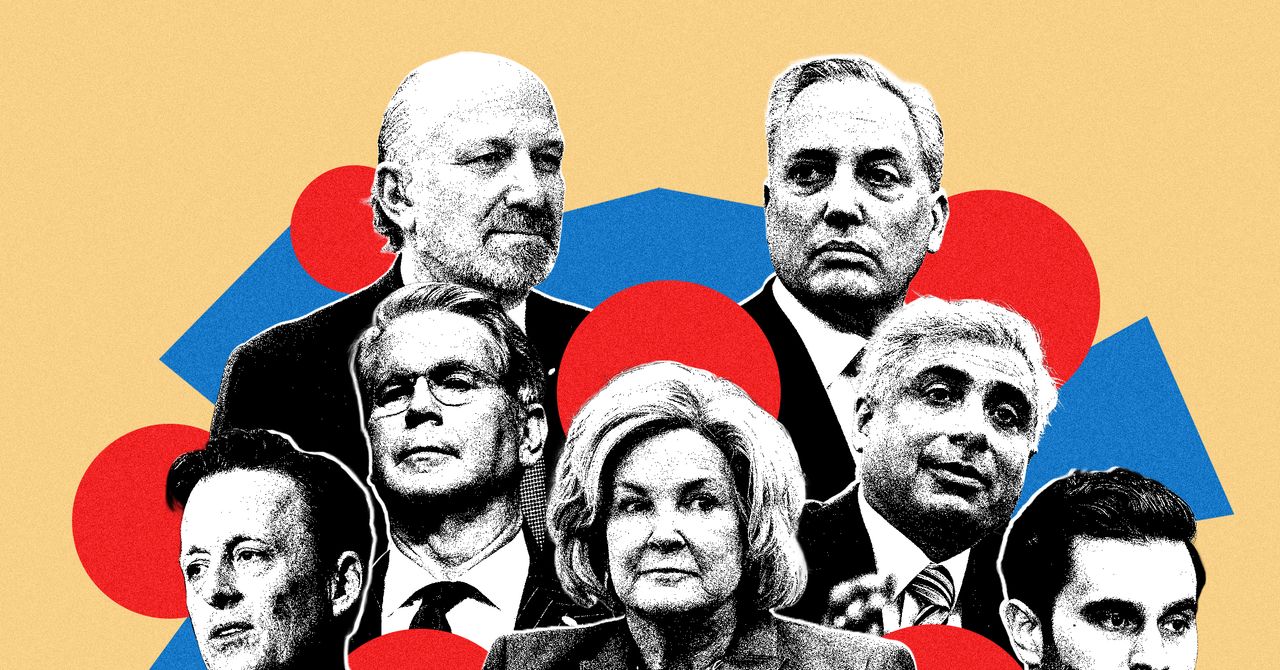
Trump AI advisers are split over how hard Washington should push against increasingly capable Chinese open-weight models, according to WIRED, leaving a small set of officials and outside allies with unusual leverage over policy. The fight matters because any restrictions could hit AI labs, chip exports, model access and the US government’s broader attempt to stay ahead of China without kneecapping its own companies.
WIRED reported that the group spans the Commerce Department, Treasury Department and White House, with limited coordination among agencies. A senior White House official told WIRED the debate has more than two camps, describing it as an argument with “ten sides.”
Who are Trump’s AI advisers on Chinese AI?
Commerce Secretary Howard Lutnick has become a central player because his department oversees export controls through the Bureau of Industry and Security. According to people familiar with the matter cited by WIRED, Lutnick has considered incentives for leading US AI labs to release their own open-weight models as a counter to China, and has spoken with several lab leaders.
Open-weight models make key model weights available outside the company that trained them, which can help developers build on them and competitors study them. That openness is also why officials are arguing about restrictions: the same availability that helps adoption can make powerful systems harder to contain.
Lutnick has taken a mixed posture. He imposed export controls on Anthropic, according to WIRED, but has also pushed back against alarm over Chinese models. On X, he said Commerce officials found Moonshot AI’s Kimi K3 lagged leading US frontier models on major benchmarks.
Arvind Raman, acting director of the Commerce Department’s Center for AI Standards and Innovation, has become Lutnick’s top deputy on the issue. WIRED reported that Raman took over after Chris Fall resigned following weeks of talks with Anthropic over safeguards meant to stop jailbreaks of its Fable 5 model. CAISI staff and Anthropic’s technical teams worked through safeguards before Fable 5 returned online, according to WIRED.
Why is distillation such a flashpoint?
National Cyber Director Sean Cairncross has taken a harder line toward Chinese AI labs. WIRED reported that he has authority inside the White House to develop policy on AI national security risks and helped assemble Trump’s June 2 executive order setting a framework for evaluating the most powerful AI models.
Cairncross and his chief of staff, Lara Smith, have focused on distillation, a practice in which one model is trained using outputs or behavior from another model. Officials are concerned that Chinese labs could use leading US systems to improve their own models without bearing the same development costs.
Treasury Secretary Scott Bessent has taken one of the most aggressive positions, according to WIRED. In an X post, Bessent called distillation “IP theft” and warned that Chinese labs could face sanctions or placement on the Entity List, the US trade-restriction list. WIRED reported that Bessent has become more involved ahead of Chinese President Xi Jinping’s expected White House visit in September and the APEC summit in November.
Bessent has told White House Chief of Staff Susie Wiles and others that the US, Europe, Japan and other allies need to move faster on open-weight models or risk losing ground to China, according to a person familiar with his thinking cited by WIRED. Luke Pettit, Treasury’s assistant secretary for financial institutions, is helping execute Bessent’s approach at staff level alongside Treasury chief information officer Sam Corcos.
David Sacks, who left his AI czar role in March, remains influential through his access to Trump and his large X following, WIRED reported. Sacks has argued for a lighter regulatory approach and backed Lutnick’s view that panic over Kimi is overdone. Wiles, meanwhile, has been reviewing proposals before they reach Trump, with Lutnick, Cairncross and Bessent taking positions to her directly.
White House spokesperson Elizabeth Huston told WIRED the administration’s talks on Chinese AI are focused on strengthening US AI leadership. For now, the confirmed picture is messier than a single doctrine: export controls, open-weight competition, sanctions threats and model-safety reviews are all on the table, and the people closest to Trump may decide which tool gets used first.
This story draws on original reporting from WIRED.