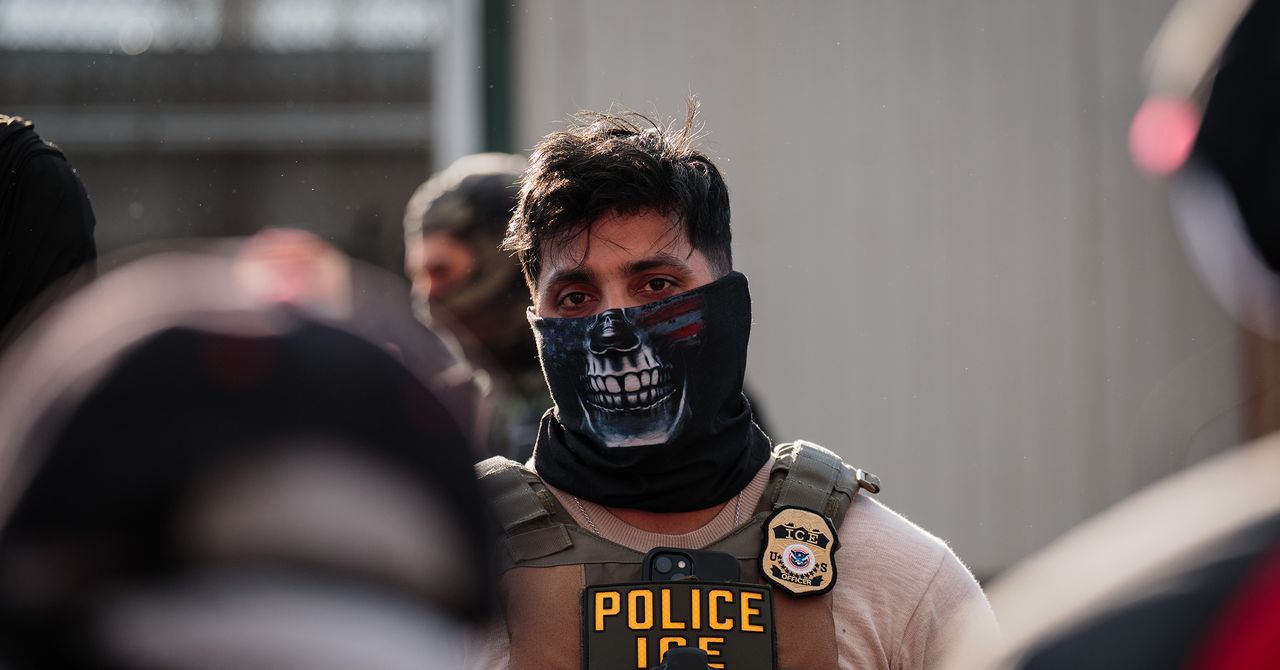
The Trump administration is suing at least five states and Philadelphia to block laws that would make law enforcement officers, including Immigration and Customs Enforcement personnel, show their faces or wear individual identifiers during operations.
The cases target rules in New York, Virginia, Connecticut, New Jersey and Philadelphia, with California facing a similar earlier lawsuit. Supporters of the laws say they are basic accountability measures for officers conducting immigration raids and other enforcement actions. The Justice Department says the rules would expose ICE officers to danger.
In complaints filed against New York, Virginia, Connecticut, New Jersey and Philadelphia, federal lawyers argue that people photograph ICE officers and run those images through facial recognition systems connected to social media and doxing sites. The complaints specifically name ICESpy, an art project by artist Kyle McDonald. The California complaint did not mention ICESpy, according to WIRED.
McDonald told WIRED that the government’s theory badly overstates what his project can do. ICESpy is built from names, job titles and photos of people who described themselves as ICE employees on LinkedIn around 2018. WIRED reviewed a version of the underlying list and found a little more than 700 entries. The most common title was assistant chief counsel, and many entries appeared to belong to executive, administrative or legal employees. Only 39 had deportation officer in the title, with 27 more using related enforcement titles.
That age problem matters. ICE said in January that it had increased its agents and officers from 10,000 to 22,000 in a few months. Those new hires would not appear in ICESpy unless they had worked for ICE in 2018 and advertised it online. McDonald told WIRED that the idea of using ICESpy to identify an active deportation officer in 2026 was not plausible.
The project also appears to have almost no traffic. WIRED reviewed ICESpy logs from June 30 to July 6 and found 84 page views. Two face-match attempts were made that week, and McDonald said both produced results too poor to match anyone in the database. ICE did not respond to WIRED’s request for comment.
DOJ also points to ICE List
Federal lawyers also cite ICE List, a site that tracks people involved with ICE and other deportation-related agencies, as well as vehicles and incidents tied to enforcement work. Its individual pages generally list names, job titles, field offices and alleged incidents with links to public material. WIRED reported in January that ICE List also relied heavily on LinkedIn information posted by people identifying themselves as ICE employees.
Dominick Skinner, ICE List’s maintainer, told WIRED that a small group associated with the site has tried face recognition, but that its effectiveness has been exaggerated. He said the work mostly depends on manual research. The site does not offer visitors a public tool to analyze uploaded faces, though some pages include headshots.
Skinner also told WIRED that ICE List does not publish agents’ home addresses or relatives’ addresses, and argued that commercial data broker sites expose more sensitive personal information. Older Department of Homeland Security guidance advises people to request removal of personal data from such broker sites.
The Justice Department has not provided numbers in its complaints showing how many ICE officers were identified through ICESpy or ICE List. DOJ spokesperson Kiersten Pels told WIRED that people have used facial recognition and doxing tools to identify and harass federal law enforcement officers, and said such sites often change domains or reappear under new names. Pels did not provide WIRED with a specific example of a protester using ICESpy to identify an ICE officer.
State lawmakers defending the laws say identification requirements respond to accountability failures. Virginia state senator Saddam Salim criticized DOJ for challenging the restrictions after the federal government won an injunction pausing Virginia’s SB 352, which bars law enforcement in the state from wearing masks among other provisions. Connecticut state senator Bob Duff, who worked on his state’s challenged law, told WIRED that states have both a right and a responsibility to protect residents when they believe federal conduct is unconstitutional.
The fight comes amid scrutiny of ICE shootings and internal oversight. WIRED reported that ICE officers were not wearing congressionally mandated body cameras when they fatally shot two people in Maine and Texas this month. Federal officials also withheld evidence from Minnesota investigators for months in two fatal shootings until courts compelled production, according to WIRED. The agency’s Office of Professional Responsibility, its internal misconduct watchdog, has also been investigating civilians who criticize the federal government and immigration policy online, WIRED reported.
This story draws on original reporting from WIRED.