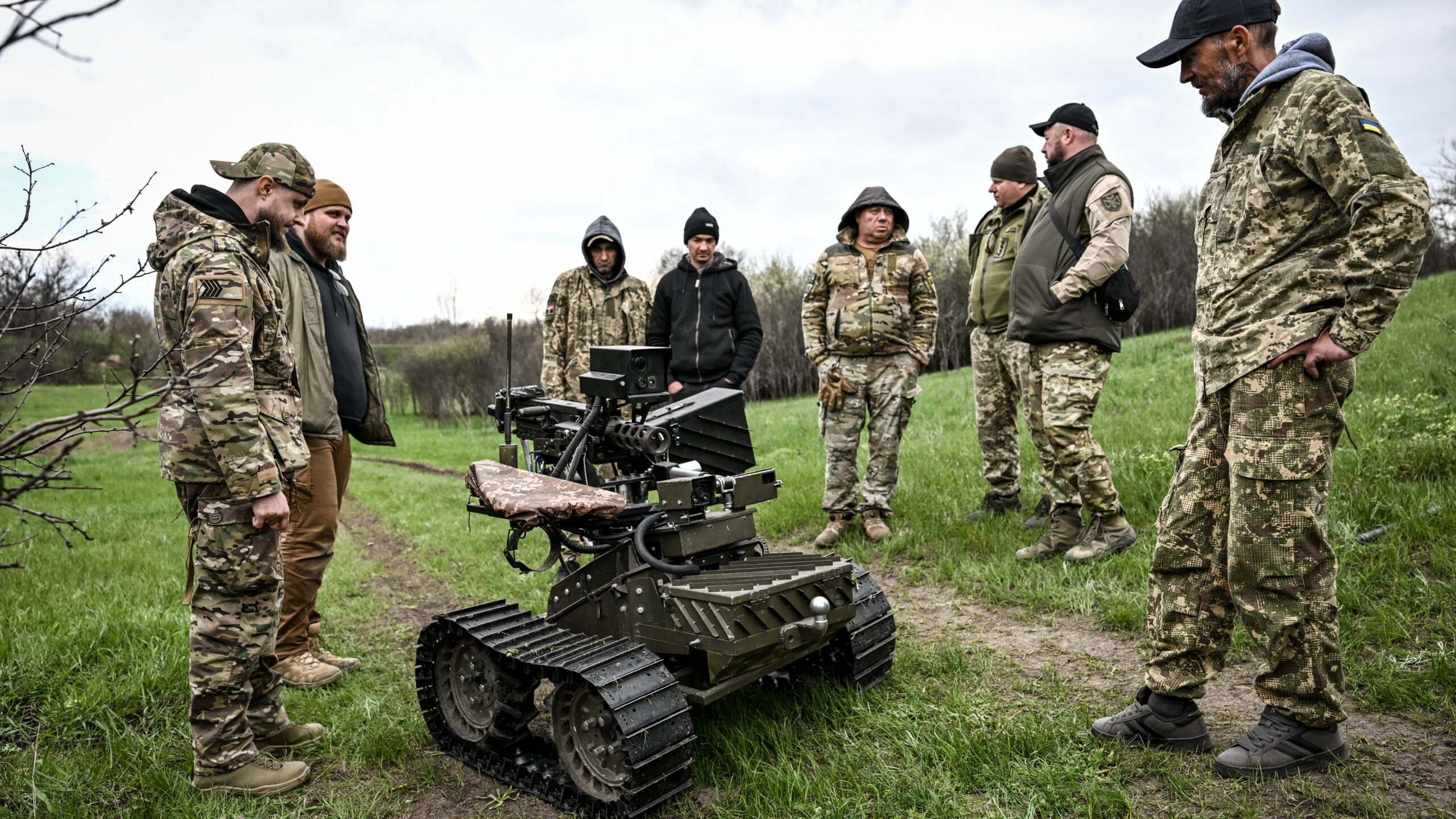
Ukrainian forces have begun using drones as battlefield delivery trucks for ground robots, according to Ukrainian government material, Russian military social media posts, and outside analysts. The point is practical, not sci-fi theater: wheeled robots are useful, but mud, sand, mines, trenches, and Russian surveillance make the commute to the target a good way to lose them.
The newer method skips part of that trip. A flying carrier can drop a robot nearer to Russian lines. A drone boat can put one ashore from the water. Both tactics let Ukraine push machines into places where sending infantry would be expensive in the usual, grim sense of that word.
United24, a Ukrainian government-run news platform, reported that on July 19 a Russian military Telegram channel published video of a Ukrainian hexacopter carrying a ground robot beneath it on a cable. The Telegram channel identified the payload as a four-wheeled ARK-1 robot fitted with explosive anti-tank mines, and said the drone set it down so it could continue toward Russian positions.
The result of that specific mission has not been confirmed. The mechanism, though, is plain enough. A heavy multicopter does the high-risk delivery leg, then the ground robot handles the final approach. United24 has described the ARK-1 as capable of nearly 28 miles per hour, though not all battlefield robots move that quickly.
That matters mechanically because a robot rolling across open ground is a target for drones, artillery, and bored people with optics. Carrying it part of the way may reduce the time it spends exposed, while letting operators avoid terrain that small wheeled vehicles handle badly.
A robot lands on Kinburn Spit
Ukraine also used a naval drone to deliver a ground robot during a June 25 operation on Kinburn Spit, according to video shared by the Ukrainian government on July 13. The narrow sandy peninsula reaches into the Black Sea and remains contested after Russian forces captured it in June 2022.
The video showed a drone boat lowering a ramp and releasing a remotely controlled ground robot onto the spit. The robot then fired a machine gun. Michael Bohnert, a defense researcher at the RAND Corporation, wrote on social media that the fighting appeared limited and was followed by a Ukrainian flag-planting demonstration.
Bohnert called the operation an impressive demonstration, while warning that the concept does not appear ready for more intense combat. That is the sober read. A robot driving off a boat with a gun is useful propaganda and a useful test, but heavy fighting tends to be rude to prototypes.
The Institute for the Study of War reported that Russian forces began pulling back from Kinburn Spit in early June as Ukrainian medium- and long-range drone strikes put pressure on Russian supply lines. The peninsula had helped Russia threaten Ukrainian access to Black Sea ports in the south.
Ukraine’s robot tempo is rising
The carrier-drone experiments fit a larger Ukrainian push to use unmanned systems where Russia has more people to spend. United24 reported that Ukrainian ground robot missions increased from just under 7,500 in January to more than 16,600 in June. Those missions included moving supplies, evacuating wounded troops, handling mines, and direct combat roles.
Ukraine has also used larger flying drones to carry first-person-view explosive drones closer to targets, while high-altitude balloons have reportedly carried one-way attack drones and missiles into Russia before release near target areas. Russian forces have adopted carrier-drone tactics of their own, according to reporting cited by Forbes.
At sea, Ukraine has fitted drone boats to launch FPV drones against Russian positions near the Black Sea coast, according to Kyiv Post and Defense News reporting. Ukrainian drone strikes have also disrupted Russian movement of fuel, grain, and other supplies through the Sea of Azov.
The pattern is clear enough without dressing it up as autonomy magic. Ukraine is chaining cheap or expendable machines together so each one solves a specific problem: range, terrain, exposure, or payload. The robots still need operators and planning. They also keep more soldiers out of the most predictable kill zones, which is the part armies tend to care about after the demo reel ends.
This story draws on original reporting from Ars Technica.