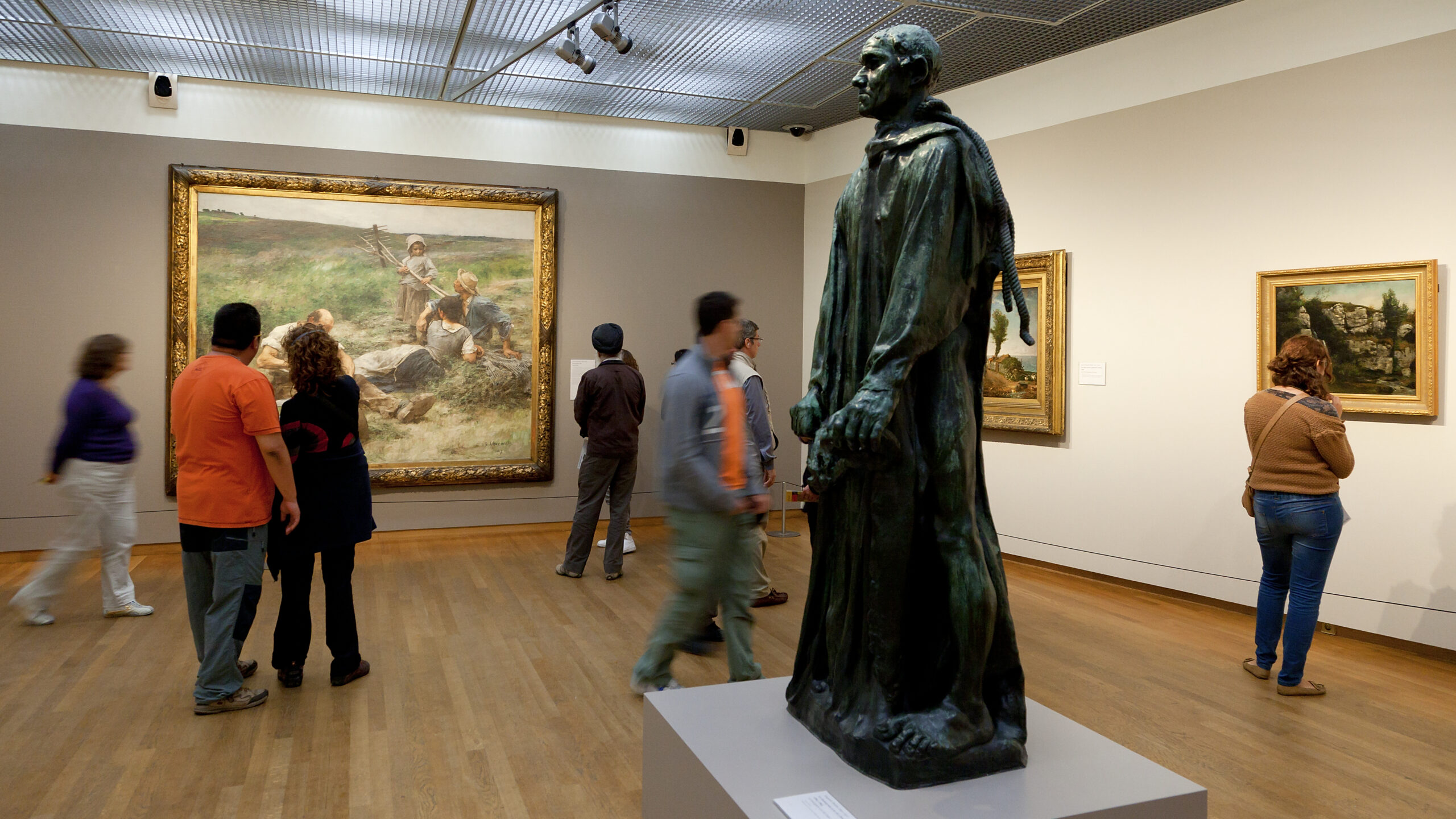
Van Gogh Museum data from digital multimedia guides is giving curators a sharper view of how people actually move through galleries, and how small interface choices can redirect a visit. A study published in the April 2026 print issue of Management Science found that visitors at Amsterdam’s Van Gogh Museum responded both to where art was hung and to how works were ordered in the museum’s digital guide.
The research, by Ali Aouad of MIT Sloan School of Management, Abhishek Deshmane of Georgia Tech’s Scheller College of Business, and Victor Martínez de Albéniz of IESE Business School at the University of Navarra, used a random sample of 25,000 visits drawn from 1.5 million visits between 2019 and 2021. The team combined guide interactions with information about the museum’s floor plan and collection, which includes more than 4,600 works, with roughly 200 on view at a time.
The goal was not to let a spreadsheet cosplay as a curator. The researchers built a model, called pathway multinomial logit, to estimate what visitors were likely to do next: look at another painting, change floors, or leave. They cautioned that the model shows associations rather than proving cause and effect.
How does museum visitor data change what people see?
Digital guides can record which stops a visitor selects, the order of those stops, and the time spent with each work. Museums can use that information to test whether a different guide sequence or gallery arrangement would lead visitors to see more art, avoid bottlenecks, or spend longer with parts of the collection they might otherwise skip.
At the Van Gogh Museum, the researchers found that guide users often followed suggested works in the order presented. Lisa van den Bos, who was product manager for digital education at the museum during the study, said she was surprised that small changes in the guide’s order affected visitor flow.
The model also picked up less obvious behavior. According to the researchers, visitors appeared to want variety in period and size, while preferring continuity in subject and theme. As visits wore on, people became more likely to prioritize the museum’s best-known works. Deshmane also said congestion could increase engagement up to a point, because a crowd near a painting may act as a quality signal.
The team did not physically rearrange the museum for the study. Instead, it simulated alternative layouts and predicted how visitors would respond. The researchers reported that moving highly attractive works away from “leaky” areas such as stairs or lifts, and making strategic swaps, could increase the number of works seen and lengthen visits without abandoning curatorial goals.
When tested against data not used to train it, the model predicted transitions between works with 63 percent accuracy. The researchers also reported 81 percent accuracy for predicting whether visitors would reach particular works and 96 percent accuracy for departure rates. They said broader versions may be needed for larger collections or more complicated buildings.
Museums have data, but often do not use it
Audio guides have been around since at least the 1950s, and digital versions are now common. Sandy Goldberg, who creates museum content including for the Van Gogh Museum, said museums returned toward audio after experimenting with more interactive formats because visitors often wanted a device they could put away and ignore while looking.
The data trail is richer than many institutions use. Deshmane called digital guide data a “gold mine.” Sietze de Jong, creative and managing director of Tapart, said museums commonly ask for analytics in guide systems but often do not review the results, citing limited staff capacity. Tapart maintained software for the Van Gogh Museum’s guide during the study period.
Use is growing. Van den Bos said most visitors still do not use multimedia guides, but uptake has risen. In 2023, 36 percent of the Van Gogh Museum’s average 4,600 daily visitors booked guides, up from 25 to 31 percent during the study period, according to de Jong. He said paid-tour uptake across comparable institutions was usually closer to 10 percent.
In 2025, the Van Gogh Museum announced a redesigned multimedia tour using Samsung-powered hardware and software from NOUS Digital. The museum said the redesign drew on research about how visitors use guides.
The personalization problem is cultural, not just technical
Data can help museums manage crowding, alter opening-hour decisions, and vary recommendations in response to congestion. It can also personalize visits, including through machine learning and AI systems that suggest works inside one museum or across partner institutions.
That creates an obvious tension. Hilary Knight, director of Change& and former digital director at Tate, argued that museums should not only show visitors what algorithms predict they will like, because art also challenges people. She also warned that recommendation systems could reinforce the existing canon.
Other museums are testing technology beyond guide sequencing. Birgitte Aga, head of innovation and research at Oslo’s MUNCH museum, said museums need physical and virtual experiences that younger visitors find engaging. MUNCH’s New Snow exhibition, shown in 2024 and 2025, let visitors draw images and match them to Edvard Munch sketches; more than 70,000 visitor drawings were created.
Elena Villaespesa, head of digital analytics at Madrid’s Thyssen-Bornemisza National Museum, said AI is being used to analyze collection databases, visitor records, survey feedback, social media comments, and operational data. She urged museums to test new tools with evaluation behind them, rather than buying technology because it is fashionable.
For visitors such as Giovanni Kanter, a 25-year-old ICU nurse in New York who regularly visits museums and grew up around artists, the question is not whether museums use data. He said he is generally comfortable with it if institutions address privacy and make careful choices about disclosure. Museums can optimize the route. They still have to decide what kind of encounter they are optimizing for.
This story draws on original reporting from Ars Technica.


