WIRED has put Google’s new $100 Fitbit Air at the top of its July 2026 Fitbit recommendations, a quiet endorsement of a wearable strategy that does less on the wrist and more in the phone app. For people who want health tracking without another glowing rectangle demanding attention, that trade is the whole product.
The timing is useful context. Google bought Fitbit five years ago in a deal reported at $2.1 billion, taking over a company that had already swallowed Pebble’s assets in 2016. WIRED says the brand now lives under the awkward “Google Fitbit” label, though the devices still stand out for approachable software, lower prices, and designs aimed at people who do not want a sports computer strapped to their arm.
Fitbit Air gets the top slot
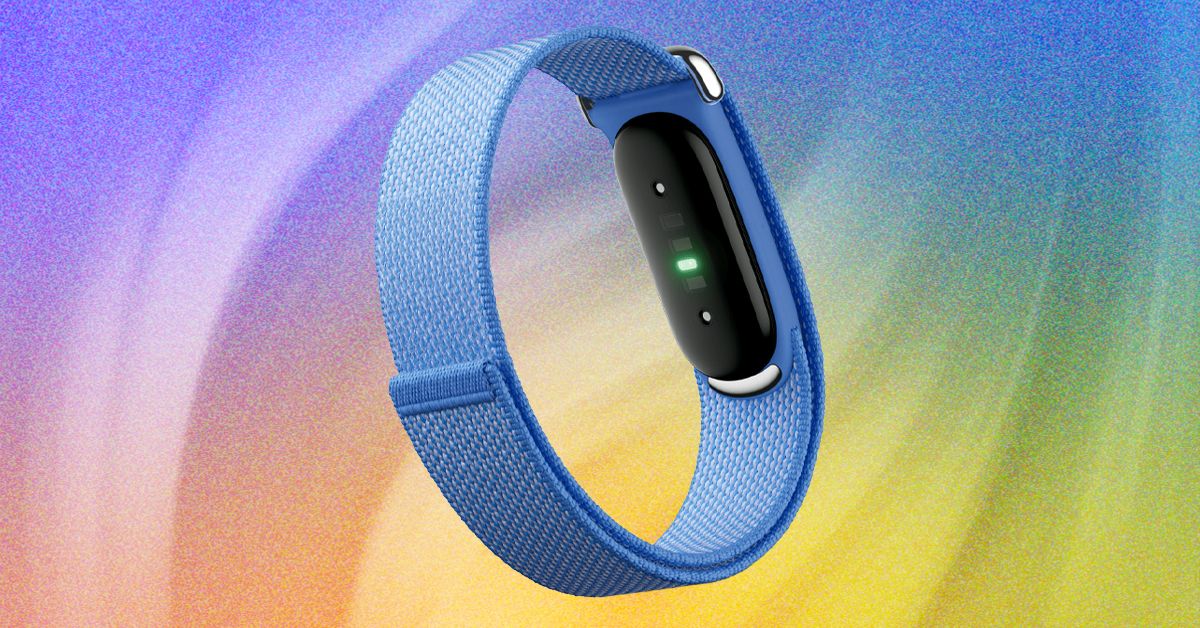
WIRED’s top overall pick is the Fitbit Air, a 12-gram tracker with no screen. The device records heart rate, sleep, daily activity, skin temperature variation, and menstrual health signals, then pushes the readout into Google’s Health app rather than displaying it on the band.
That mechanism is the point: the Air is closer to a sensor pod than a smartwatch. WIRED says it lasts about a week on a charge, and that a five-minute charge can provide roughly a day of use. The device’s housing uses recycled polycarbonate and PBT plastics, with textile bands and a stainless steel buckle.
The Air is not magic, despite the AI garnish. WIRED found automatic workout detection could confuse one activity for another, and said the AI Health Coach sometimes produced thin prompts. The guide also flags Google’s own health scores as too prominent. Those are familiar Fitbit problems with a new Google wrapper, which is to say: useful measurements, sometimes too much proprietary interpretation.
Charge 6 remains the beginner pick
For buyers who still want a screen, WIRED recommends the Fitbit Charge 6 for beginners. The tracker launched in 2023 and lists for $160 at Google’s store, with WIRED showing sale prices of $134 at Amazon and $140 at Best Buy at publication time.
The Charge 6 keeps the slim shape of the Charge 5, uses a bright AMOLED touchscreen with an optional always-on mode, and brings back a physical side button. It tracks heart rate, blood oxygen, and skin temperature. It also includes ECG and electrodermal activity scans, which Fitbit uses for irregular rhythm checks and stress-related insights.
Its more practical upgrade is less glamorous: the Charge 6 can send Fitbit heart-rate data to some gym machines, including NordicTrack treadmills and Peloton bikes, according to WIRED. The guide says its heart-rate readings compared well against an Oura ring in testing. Battery life is rated at up to seven days.
WIRED is less generous about the built-in GPS, saying it is useful for outdoor exercise but does not match dedicated sports watches for accuracy. The Charge 6 also lacks fall detection, had frequent Bluetooth connection glitches in testing, and did not consistently detect workouts automatically. Google Maps, Google Wallet, and YouTube Music controls are included.
Inspire 3 is the budget display option
The cheaper display-equipped choice is the Fitbit Inspire 3, listed at $100 through Google and Best Buy, with WIRED showing a $93 Amazon price. Its main advantage is battery life: up to 10 days, the longest figure in the Fitbit lineup covered by the guide.
The trade-offs are clear. Inspire 3 has no built-in GPS, offers 20 exercise modes instead of the Charge 6’s 40, and omits Bluetooth links to supported gym equipment, NFC payments, the EDA stress app, Google integrations, YouTube Music controls, and ECG. WIRED still says it is as accurate as the Charge 6 for the basics.
WIRED also names the Fitbit Ace LTE as its pick for kids, priced at $180 at Google’s store. The guide’s visible comparison gives parents the category and price, but the detailed testing notes shown for the other models matter more for adults choosing between Fitbit’s current low-friction trackers.
This story draws on original reporting from WIRED.