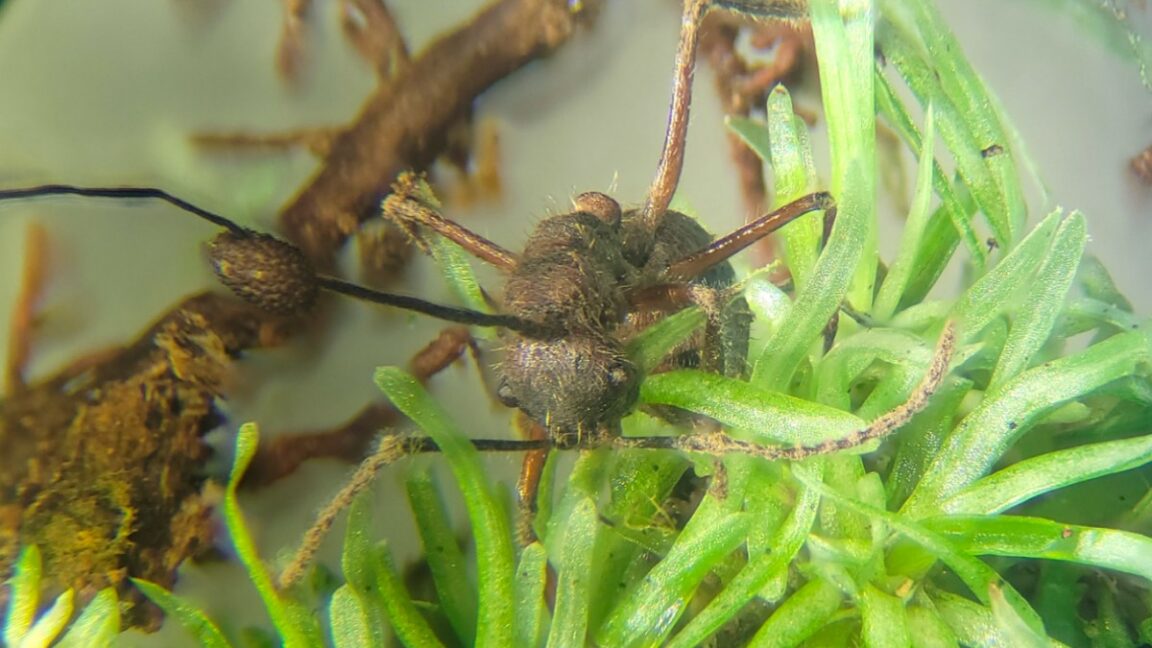
Zombie-ant fungus mosses are now linked by DNA evidence from central Amazonia: researchers report finding ant-specific Ophiocordyceps in bryophyte samples collected around infected insects, including samples at least 10 metres from infected cadavers. The work, published July 14 in IMA Fungus, supports a proposed plant-associated stage for fungi best known for killing and manipulating insects.
The study took place at the Adolpho Ducke Forest Reserve north of Manaus, Brazil. Its subject is Ophiocordyceps, a genus with more than 350 described species, not every fungus casually called Cordyceps. Some Ophiocordyceps lineages infect ants and lead them to fasten their jaws onto a substrate before death, providing a site for the fungus to reproduce and disperse spores.
What did the zombie-ant fungus mosses study find?
Tales Alves-Júnior and colleagues collected material from four places: fungal material on infected hosts; bryophyte leaves at the bite site; bryophytes at least 5 centimetres from that site; and bryophytes at least 10 metres away from infected cadavers. Bryophytes include mosses and related plants.
The team extracted DNA, amplified the TEF1-alpha genetic region and sequenced it with Oxford Nanopore technology. Their metabarcoding analysis, which identifies DNA from many organisms in an environmental sample, covered 45 libraries and identified 2,277 fungal taxa. Across bryophyte samples, the authors reported ant-specific Ophiocordyceps, including O. camponoti-nidulantis and O. kniphofioides.
The result matters because several Amazonian ant-infecting lineages are already known to favor bryophytes as final attachment sites. Earlier research has also shown that conditions such as temperature, humidity, canopy openness and height can affect where infected ants die. The new paper adds a suspect to that ecological crime scene: the moss may already contain the same fungal lineages detected in the ants.
What the DNA evidence does and does not establish
It shows: the researchers detected ant-specific Ophiocordyceps DNA in sampled Amazonian bryophytes, including distant control samples. The authors say that supports the hypothesis that ant-associated Ophiocordyceps has an endophytic stage, meaning a stage living inside plant tissue.
It does not show: that moss infection causes an ant to choose a particular bite site, or that every Ophiocordyceps species follows this life cycle. DNA detection alone does not settle how the proposed moss stage functions.
The authors propose that association with bryophytes could help the fungi persist when insect hosts are scarce and could help explain why some infected ants repeatedly attach to particular mosses. Those are hypotheses worth testing, not mechanisms this study demonstrated. For now, the clean finding is narrower and stranger enough: the insect parasite’s DNA turned up in the surrounding plant community, including where no infected ant body was nearby.
This story draws on original reporting from Ars Technica.


