Meta repeatedly blocked writer and investor MG Siegler from using WhatsApp this week, according to Siegler, cutting him off from a service he says he uses for ordinary household logistics in Europe, including childcare.
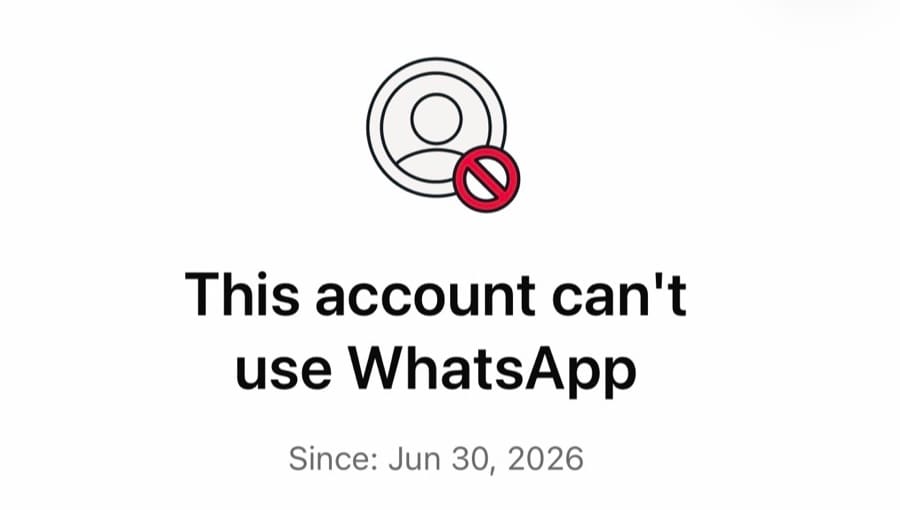
In a post on Spyglass, Siegler said WhatsApp showed him a short notice saying, “This account can no longer use WhatsApp.” He said Meta gave no reason before the ban and offered the same review process he had seen during earlier Instagram bans: submit an appeal and wait, with the company saying it would respond within 24 hours.
Siegler said the WhatsApp lockout appeared to begin after he claimed a username on the service. Meta opened WhatsApp username reservations this week, according to the BBC. After claiming his name, Siegler said WhatsApp logged him out of other active sessions. When he tried to sign back in, the account was banned.
That is his diagnosis, not a confirmed cause. Siegler wrote that his best guess was that the account system may have disliked many devices logging in over a short period, given what he called WhatsApp’s awkward authentication flow. He said the timing made the username rollout look connected.
The account did not stay fixed. In updates dated June 30 and July 1, Siegler said Meta restored his WhatsApp access, then the account was banned again after he tried to log in on a computer. On July 1, he said the same pattern repeated: reinstatement in the morning, followed by another immediate ban during desktop login.
Siegler said this was his third unexplained Meta ban in roughly three years. He previously wrote that Instagram banned him twice, and that those bans also disabled Facebook and Messenger. In those cases, he said he was able to get his accounts restored because he knew people at Meta, but did not receive a clear account-level explanation. He also said his first Instagram appeal failed before personal outreach resolved it.
The WhatsApp case is uglier because WhatsApp is not just another feed. Siegler said he lives in Europe, where many people treat WhatsApp as the default messaging layer. He wrote that a friend continued sending him WhatsApp messages after the ban and saw no indication that Siegler could not receive them.
If accurate, that behavior is the product problem in miniature: Meta’s enforcement system can tell the banned user to go away while letting contacts believe delivery is still possible. For a phone-number-based messenger used for childcare, appointments and daily coordination, silent failure is more than an annoyance.
Siegler also tied the incident to broader doubts about Meta’s stewardship of WhatsApp. He pointed to reports that Meta is installing CRED founder Kunal Shah as WhatsApp’s new chief and investing $900 million in Shah’s startup, as TechCrunch reported. Siegler initially suggested WhatsApp would be run from India, then updated his post to say Shah would move to Meta’s headquarters, citing later reports.
He framed that management change as part of Meta’s push to make more money from WhatsApp after years of difficulty doing so, citing coverage from the BBC and Financial Times. Those are Siegler’s criticisms and inferences; the confirmed user-facing facts he reported are narrower and more concrete: repeated bans, no stated reason, unstable reinstatement and apparently undelivered messages with no warning to senders.
This story draws on original reporting from Spyglass.