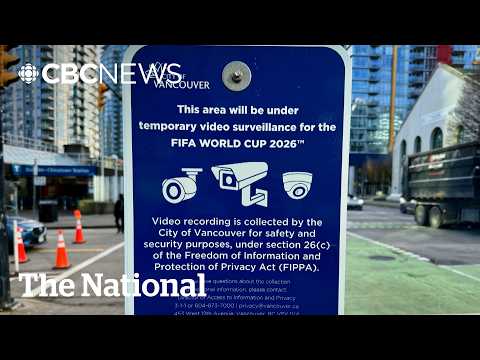
The 2026 FIFA World Cup is bringing more than soccer to North American host cities. In the United States, federal security money is helping police and private vendors expand drones, camera networks, facial recognition and data-sharing systems around stadiums, transit hubs and public spaces.
The Federal Emergency Management Agency said in June that the U.S. government had allocated more than $1 billion for World Cup security. FEMA described the money as support for transit protection, stadium and perimeter security, tactical teams such as bomb squads and SWAT units, and new or upgraded equipment. Bloomberg Law has reported that the spending has opened a fresh market for defense contractors and security technology vendors.
Anne Toomey McKenna, a Penn State affiliated faculty member who writes on privacy and surveillance law, warned in The Conversation that the security buildout means visitors may have their faces, movements, conduct and devices monitored by public agencies and private companies. The official rationale includes preventing unauthorized drone activity, a real security issue at major events. The hardware bought to address it does more than stop hobby aircraft.
Drones, cameras and face recognition
According to McKenna, host-city stadiums are using facial recognition cameras that can gather and analyze biometric data from people in and near venues. The privacy problem is mechanical, not mystical: a camera captures a face, software turns it into a biometric template, and agencies or vendors can compare that template with other databases. People in the frame usually do not control how long that data is kept or how it is reused.
States are also using federal World Cup security grants to buy or expand drone programs. New York Gov. Kathy Hochul, for example, announced $17.2 million in federal funding aimed at countering illegal drone activity. Civil liberties groups including the Electronic Frontier Foundation have long argued that drones can be loaded with cameras, microphones, sensors and other payloads, making them mobile surveillance platforms rather than flying traffic cones.
McKenna pointed to AI-supported drone software that can monitor areas, follow movement and collect intelligence. She also noted that some drones can carry technology that mimics a cellphone tower, allowing authorities to locate phones or intercept communications. Those tools do not become less capable when the final whistle blows.
Ground surveillance is expanding too. Reports cited by McKenna describe camera-equipped robot dogs in Dallas and New Jersey. In Seattle, Mayor Bruce Harrell moved to activate and expand a closed-circuit television system that had previously been shut down over biometric privacy concerns. Harrell has said the city is refining policies to protect the data, according to local reporting.
Travel warnings and border risks
The surveillance buildout has collided with U.S. immigration and identification policies. More than 120 civil society groups, including Amnesty International and the American Civil Liberties Union, issued a travel advisory for people visiting the United States for the World Cup. The advisory warned of invasive social media screening, electronic device searches, racial profiling, arrest, detention, deportation and death.
European governments have also issued warnings about surveillance and profiling. Germany and other countries have cautioned transgender and nonbinary travelers that they may be denied entry to the United States after President Donald Trump’s Jan. 20, 2025, executive order directing federal agencies to recognize only male and female sex markers on IDs. Critics have also said a Sept. 8, 2025, Supreme Court ruling opened the door to racial profiling in immigration enforcement.
The unresolved issue is what happens after the tournament. McKenna argues that the United States has little oversight for federally funded public-private surveillance partnerships, leaving the public with limited visibility into what data is collected, how it is shared, and whether these systems will remain in place after the World Cup leaves town. Lawmakers could impose privacy, AI compliance and transparency rules. So far, the cameras are arriving faster than the guardrails.
This story draws on original reporting from Techdirt.