Small businesses, bars and event promoters are running into a very offline problem created by generative AI: people can spot the flyers, and many of them hate the look.
404 Media’s Jason Koebler reported that ChatGPT-style posters have spread across social media and street advertising, from surf lessons in Venice Beach to skateboard shop closeout sales, Fourth of July parties, concert posters, drug delivery ads in Berlin, World Cup parties in France, junk-hauling promotions in South Carolina and fundraisers in Texas.
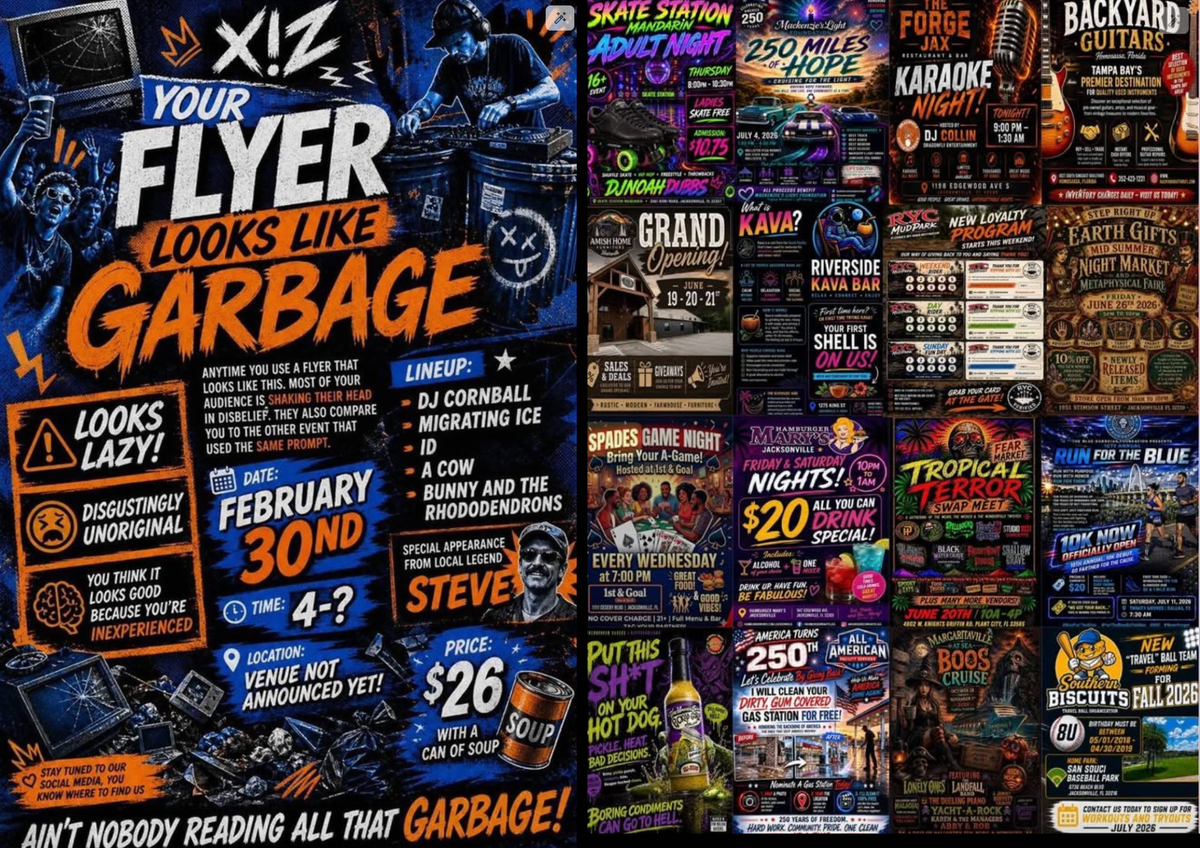
The common format is not subtle. These flyers tend to use bright block text on dark backgrounds, AI-made or AI-retouched images, small boxes of generic icons, arrows, checkmarks, underlines and callout lines sprayed across the page. The result is a recognizable visual template, which is awkward when the whole point of a flyer is usually to make a place, event or business feel specific.
The backlash has become a running complaint among graphic designers, musicians, bar owners and small businesses that see the style as a signal of low effort. A viral Threads post last month called it a “ChatGPT flyer pandemic,” according to 404 Media. Jill Oliver posted a parody flyer that read, “YOUR FLYER LOOKS LIKE GARBAGE,” and warned that if a flyer looks like that, she is not attending, donating or sharing.
Designers say the sameness is the point
Designer Kenzi Green made an Instagram video about customer pushback to AI flyers that had 870,000 views, 404 Media reported. In the video caption, Green wrote that public anger over graphics has reached a level she had not seen before, and argued that businesses replacing human design work with AI would face louder criticism.
Green said businesses using AI-looking logos, food truck wraps, menus and social graphics risk making customers choose competitors that appear to have hired a person. Her argument is blunt: saving money on design can make a brand look interchangeable with every other brand using the same tools.
Another Instagram video showing a graphic designer reacting to a stream of AI flyers, captioned as an “AI flyer pandemic,” had nearly 7 million views, according to 404 Media.
Some venues are pushing back
The reaction is moving beyond jokes. New Jersey sticker company Death By Stickers is selling rolls of 50 labels reading “CERTIFIED AI BULLSHIT,” marketed as tags for AI-made flyers. The Thomas House Bar in Dublin said on Instagram that it would no longer accept AI posters or flyers in the pub, adding that being next to Ireland’s biggest art college made the look especially bad.
404 Media also reported anti-AI flyer posts in Portuguese and German, including one asking people not to make flyers with ChatGPT. Some users said they would avoid events or businesses promoted with AI posters, comparing the risk to badly marketed immersive events such as the infamous AI-advertised Willy Wonka experience covered by Ars Technica in 2024.
Jonathon Yule, executive creative director for design at Toronto creative studio Concrete, told 404 Media that bad posters are not new. What has changed, he said, is that generative AI gives weak design a superficial finish while removing the accidental charm that came from tight budgets, limited tools or an inexperienced person making something by hand.
Yule also pointed to YouTube thumbnail culture, with exaggerated faces and click-tested typography, as one influence on the style. That tracks: the ChatGPT flyer look is less local noticeboard and more algorithmic shouting.
The technical side is uncomplicated. Koebler reported that ChatGPT can generate the format from a basic prompt describing a bar party or business ad. That ease is exactly why the style is spreading, and why the posters now look like they came from the same tired print shop in the cloud.
This story draws on original reporting from 404 Media.