A single cocaine exposure changed the three-dimensional organization of genomes inside mouse brain cells, and some of those changes were still detectable two weeks later, according to research scheduled for presentation Tuesday at the Federation of European Neuroscience Societies Forum 2026.
The work, led by Ana Pombo, Bloomberg distinguished professor of biology at Johns Hopkins University and guest group leader at the Max Delbrück Center for Molecular Medicine, focuses on dopaminergic neurons. Those cells are part of the brain’s reward circuitry, the machinery cocaine is known to perturb.
The finding does not show that one dose produces addiction in mice, and it does not establish the same effect in humans. It does suggest a plausible biological route by which an early cocaine exposure could leave the brain more reactive later. That is the part addiction researchers care about, because the first exposure is not usually the whole story.
Cocaine is used by an estimated 25 million people worldwide, according to the researchers. People can become addicted after trying it once, but repeated exposure is the more typical path. Scientists have mapped many of cocaine’s neurochemical effects over decades. Pombo’s team looked at a messier layer: whether the drug changes how DNA is physically arranged inside neurons.
How the experiment worked
Neurons, like most cells, carry the organism’s genome. That genome is not stored as a neat flat file. It folds, loops and brings distant regions into contact, and those contacts can affect how genes are regulated.
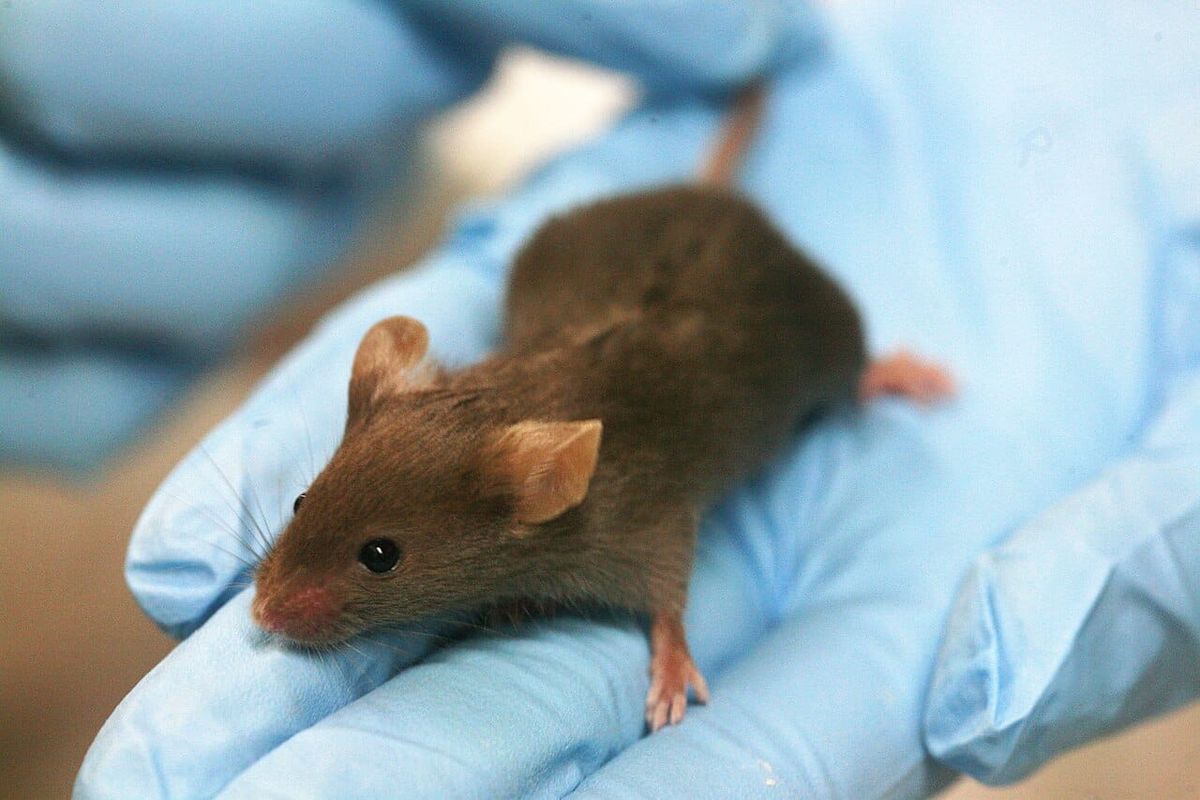
Pombo and colleagues compared neurons from mice given cocaine with neurons from control mice that were not exposed. They used genome architecture mapping, a technique that detects which regions of the genome sit close together inside the cell nucleus. The method gives researchers a way to infer changes in the genome’s 3D structure rather than just reading the DNA sequence itself.
After 24 hours, the cocaine-exposed mice showed multiple differences from controls. More strikingly, some of those differences remained after two weeks, the researchers reported. Pombo told 404 Media that her group had been looking for whether neurons carried any longer-term “memory” of cocaine exposure, an area she said had little prior data at the two-week mark.
She described the effect as a kind of silent injury: the animal may appear normal, while the genome inside affected neurons has been altered. Her hypothesis is that a later exposure could then produce a stronger consequence because the cell has already been primed.
What remains unknown
The study raises more questions than it settles, which is how biology tends to behave when asked to be tidy. Pombo’s team is now interested in whether the changes last far longer, including at six months or beyond, and whether the same pattern appears in other animals.
Individual variation is also unresolved. Pombo said responses may differ between animals, potentially depending on factors such as timing or recent experience. That matters because many people who use cocaine do not develop addiction, while some do.
Pombo said the broader goal is to understand why susceptibility differs. If researchers can identify which genomic regions are altered, they may be able to identify mechanisms driving the change. She also said that could point, eventually, toward ways to reverse or coax the affected nuclear architecture back toward its original state.
That is a long way from a treatment. For now, the claim is narrower and still notable: in mice, one cocaine exposure appeared to leave a measurable imprint on the folded genome inside reward-system neurons for at least two weeks.
This story draws on original reporting from 404 Media.