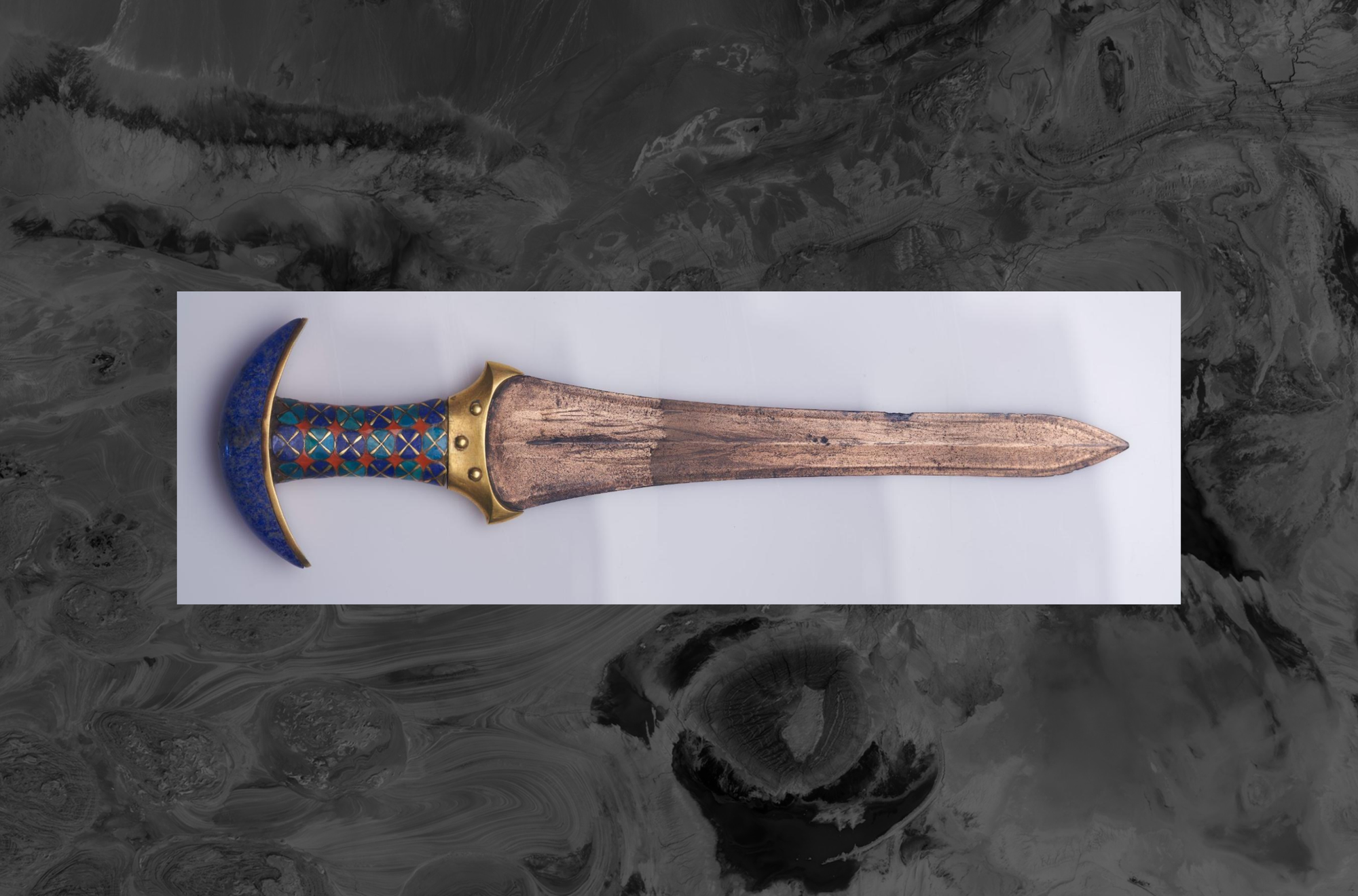
Five Egyptian princesses buried nearly 4,000 years ago with weapons may have used them in life, according to a new bioarchaeological study that re-examined royal mummified remains from Dahshur.
The study, led by Zeinab Hashesh of the University of Beni-Suef and published in Frontiers in Environmental Archaeology, looked again at skeletal remains from the late Middle Kingdom, roughly 1850 to 1700 BCE. The team focused on royals entombed in the pyramid complex of Amenemhat II at the Dahshur necropolis, a site archaeologists have been arguing over for more than a century.
The question was blunt: were the weapons in these women’s graves status props, or did the bodies preserve evidence that they had trained with them?
Four of the mummified individuals have been identified as daughters of Pharaoh Amenemhat II: Princess Ita, Princess Khenmet, Princess Itaweret and Princess Sathathormeryt. Their burials included objects more commonly associated with male graves, including bows and maces. Princess Ita’s tomb also contained a dagger. The researchers also examined Princess Noub-Hotep and her father, King Hor, who were buried in the same Dahshur complex with weapons among their grave goods.
Hashesh’s team used osteological analysis, X-ray imaging and spectroscopy to inspect the remains. The point of that toolkit is not mystical. Bone and muscle attachment sites can change under repeated stress. If a person spends years drawing a bow, gripping weapons or swinging heavy arms, the upper limbs can record that workload as asymmetry, enlarged muscle attachment areas and changes in hand bones.
According to the study, all of the examined individuals showed physical markers consistent with repeated use of bows and close-combat weapons. The researchers reported pronounced muscle attachments in the upper limbs, which they said fit “repetitive, high-intensity actions” associated with archery and weapon handling.
Princess Noub-Hotep stood out in the team’s interpretation. Her skeletal changes lined up with arrows found in her burial, the researchers said, making her a strong case for weapons as equipment she had used rather than symbolic kit placed beside her after death.
The finding does not turn the Dahshur princesses into action-movie characters, and it does not by itself establish where or why they trained. It does, however, make the old default explanation look lazy. If weapons in elite women’s graves were treated as decorative or ceremonial because the occupants were women, the bodies now complicate that assumption.
The study argues that the Dahshur burials should be read with the bones and the grave goods together. In this case, both point in the same direction: royal women in Egypt’s Middle Kingdom could be associated with weapons not only in death, but through repeated physical practice during life.
This story draws on original reporting from 404 Media.