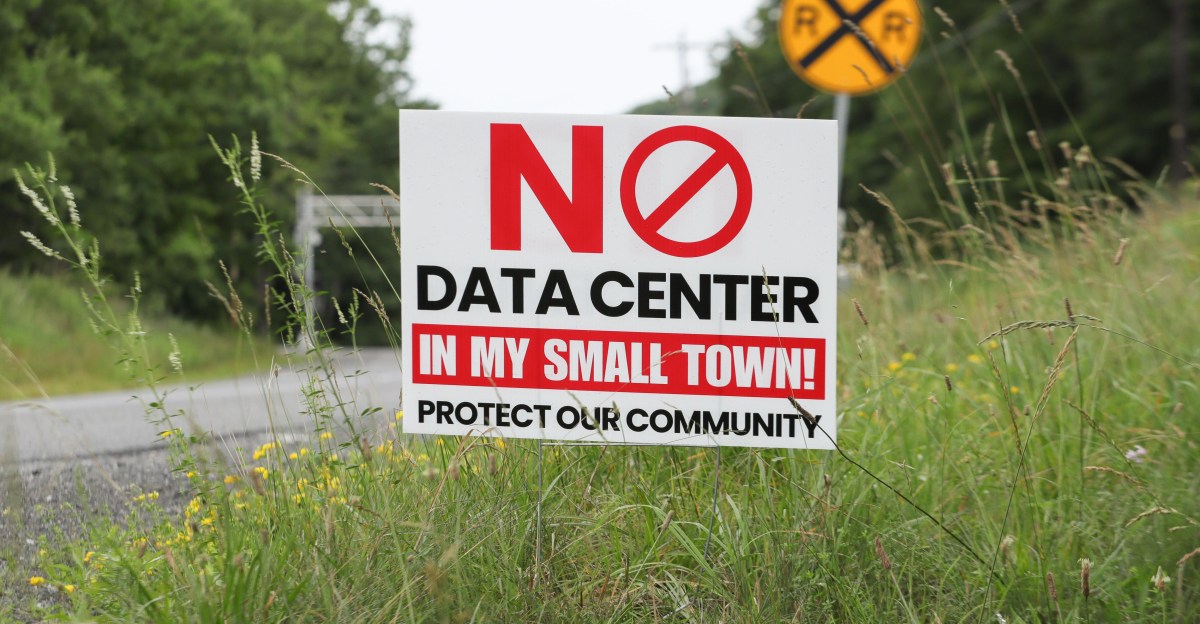
Data center expansion is running into a very offline constraint: people who live near the proposed buildings. The Verge’s Emma Roth reported that community opposition in the US and abroad is already making some companies reconsider data center projects as the AI buildout puts new pressure on local infrastructure, especially power.
The fight is often treated as a fresh side effect of generative AI, but the playbook predates the current chip-buying frenzy. A useful early case is Apple’s failed project in Athenry, Ireland, where a data center plan that arrived with local approval, green promises, and a household-name logo still became tied up for years.
Apple’s Irish data center became a warning
Apple announced in 2015 that it planned to build a data center near Athenry at a site of about 500 acres. The project was described at the time as costing roughly $1 billion and was meant to support Apple services in Europe, including iTunes, iMessage, and Siri.
Apple also tried to package the project as community-friendly. According to The Verge, the company said the site would include outdoor education areas, walking paths, and a program to restore native trees. Apple also said the facility would run on 100 percent renewable energy.
That was not enough to keep the project out of the planning grinder. Residents filed complaints with Ireland’s independent planning board, citing expected noise, light pollution, flooding, traffic, and effects on wildlife. Those objections are the boring, specific stuff that decides whether a data center gets built. A render and a renewables pledge do not make truck traffic or flood risk disappear.
The planning board approved Apple’s facility in 2016, according to reports cited by The Verge. Opponents then sought a judicial review in the Irish High Court. Apple won there in 2017, but the legal challenge did not end the dispute immediately. The Verge reported that the activists behind the appeal still wanted to continue fighting after that ruling.
The AI boom changes the scale, not the politics
The current wave of data center proposals is tied to AI systems that require large amounts of computing capacity. That means more sites, more electrical demand, and more attention from residents who may get the noise, land use, traffic, and grid effects without sharing much of the upside.
The Verge’s report says pushback from communities across the US and elsewhere is now making some companies reassess planned data center construction. The specific companies reconsidering projects were not named in the available portion of the report, so the confirmed point is narrower: local opposition has become a material obstacle, and the Athenry fight shows that even a wealthy tech company with approvals can spend years trying to get a single facility over the line.
For AI companies and cloud providers, the lesson is blunt. Compute is not only a procurement problem involving GPUs, land, and power contracts. It is also a zoning-room problem, a court problem, and a neighbor problem. Those tend to run on a slower clock than product launches.
This story draws on original reporting from The Verge.